Search This Blog

Showing posts with label Honors College. Show all posts

14 September 2023

Learning to Live in London

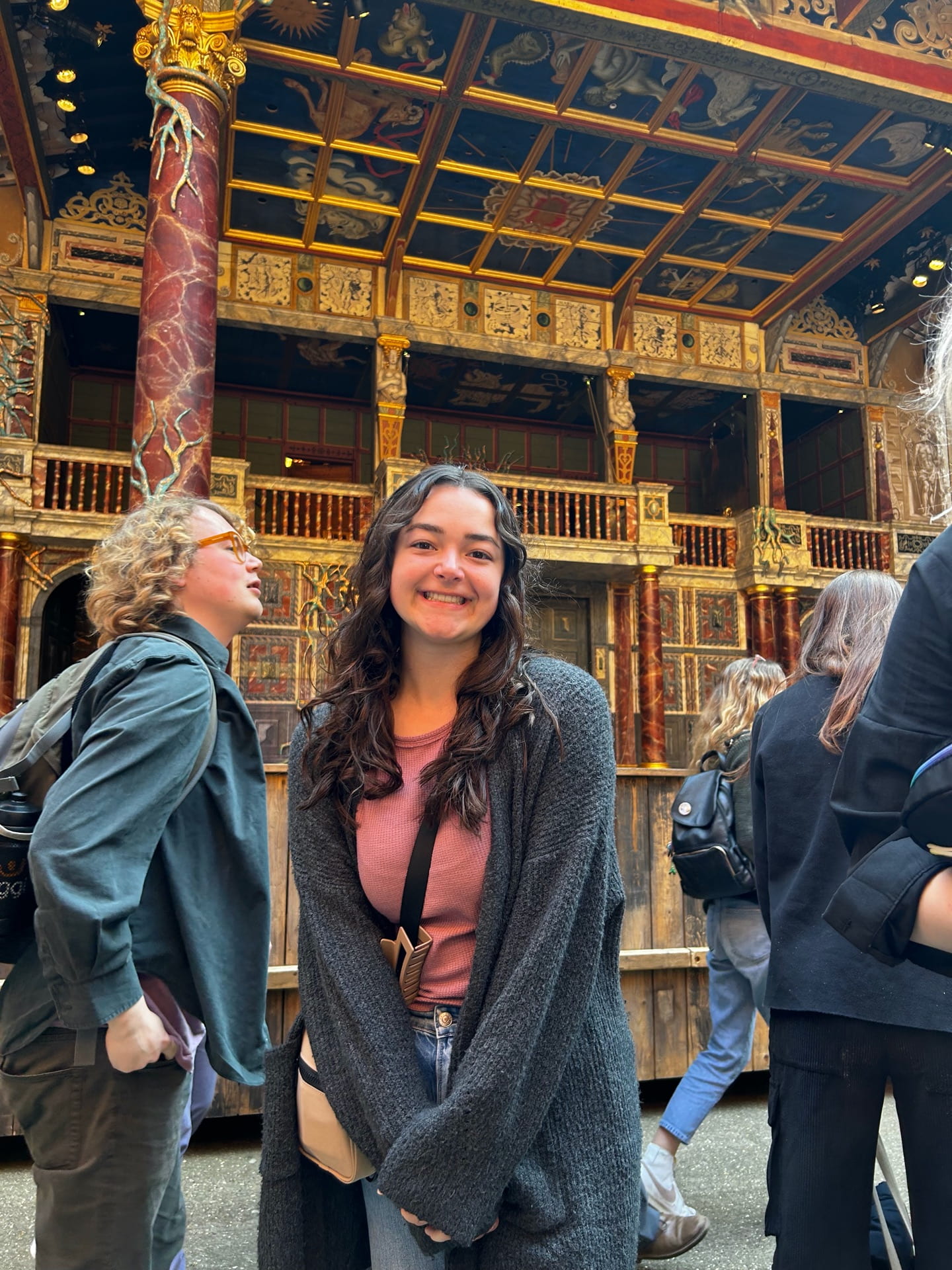
Attending a midsummer matinee

Blog post courtesy of the Honors College.

Amelia Hirsch is an honors English education major and theatre minor from Kansas City, Missouri who studied in London, England, this summer through the Theatre in London program at the University of Arkansas. While abroad, Amelia discovered a wider range of what education can be outside of the traditional classroom setting.

I’m minoring in theatre, so naturally, I was very interested in the program as theatre is in the title. But I was also excited to have the opportunity to see London, which is an experience that doesn’t come by very often. I have grown up surrounded by art and theatre, but due to cost, going to see shows or attend concerts is a very rare opportunity. At the very least, there were multiple productions and experiences that were included in the study abroad program cost. But the cost of tickets for nearly everything in London was significantly more affordable and allowed me the opportunity to see a wide variety of shows, including a spontaneous ticket to see Harry Styles at Wembley Stadium.

Shawn Irish, Head of Design & Technology and Lighting Design in the Department of Theatre, and Susan Marren, an associate professor of English, were amazing program leaders. They were so insightful and thoughtful about our lessons and teachings. In our class discussions the week before flying to London, Susan was incredibly well-versed in everything Shakespeare, which made analyzing the texts more manageable. Shakespeare is an incredible poet, but his writings are sometimes difficult to understand. Susan’s explanations and our classes’ open discussions about the text created a positive environment to understand Shakespeare without judgment. Then, when we were in London, after watching the shows at the Shakespeare Globe Theatre, hearing Susan and Shawn talk about the shows so passionately made me smile. Because of our class discussions over the text, when we finally saw the show, we were able to get into the story more as we knew what was going on.

Our classes abroad were very well structured and allowed us prior knowledge to build upon while we gained experience outside the classroom. I loved how our class was structured so I could go off independently and learn about things that interested me. As a student with ADHD, I like to explore independently as I find it difficult to focus on long lessons in a group setting. This structure really helped keep me engaged. This is a very different environment than any class at the U of A, as I had the opportunity to move around and look at things that may interest me more. Although a majority of our activities were self-guided, our blog posts gave us a goal to reach without being too demanding. I could still explore on my own without feeling that I wasn’t meeting the assignment requirements. We had a blog post that we completed prompts based on the class discussions and our activities. But, we were able to talk about anything that fits into the prompt instead of there being only one right answer.
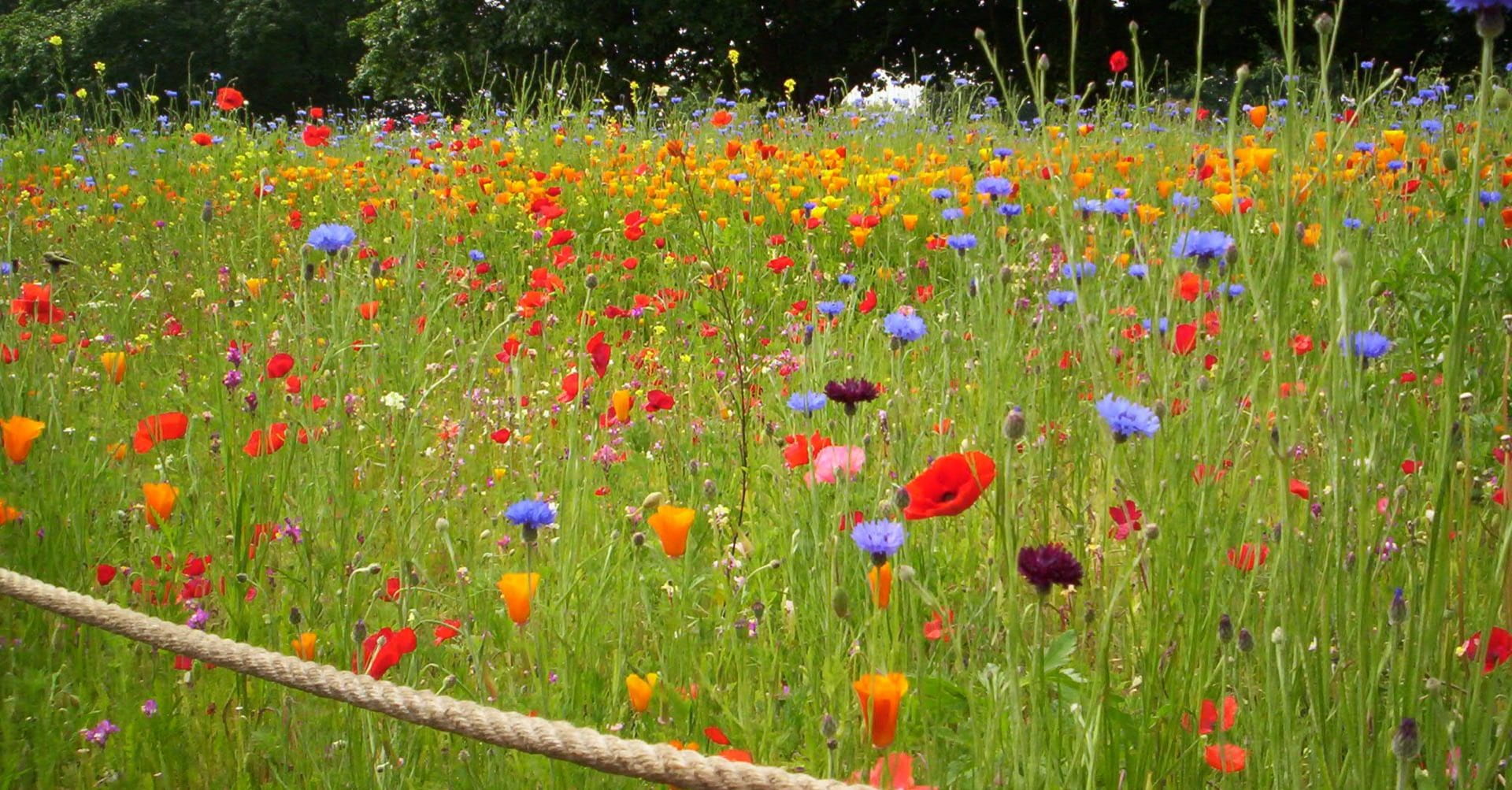
A wild bloom!

This trip helped me understand a wider range of what education can be. I don’t have to be a teacher in a “traditional” classroom where my students listen to me lecture and they regurgitate information back to me for a pass-or-fail test. Instead, I can use their curiosity and create lessons that interest them. I want to create that variety so no student feels forced to fit into a box. Based on our class discussions, I want my students to explore their interests and relate what they’ve discovered to them. Those connections strengthen the pathways of learning and create deeper and stronger connections that promote their learning. I think it was an amazing format for instruction and inspired me in ways I can’t describe.
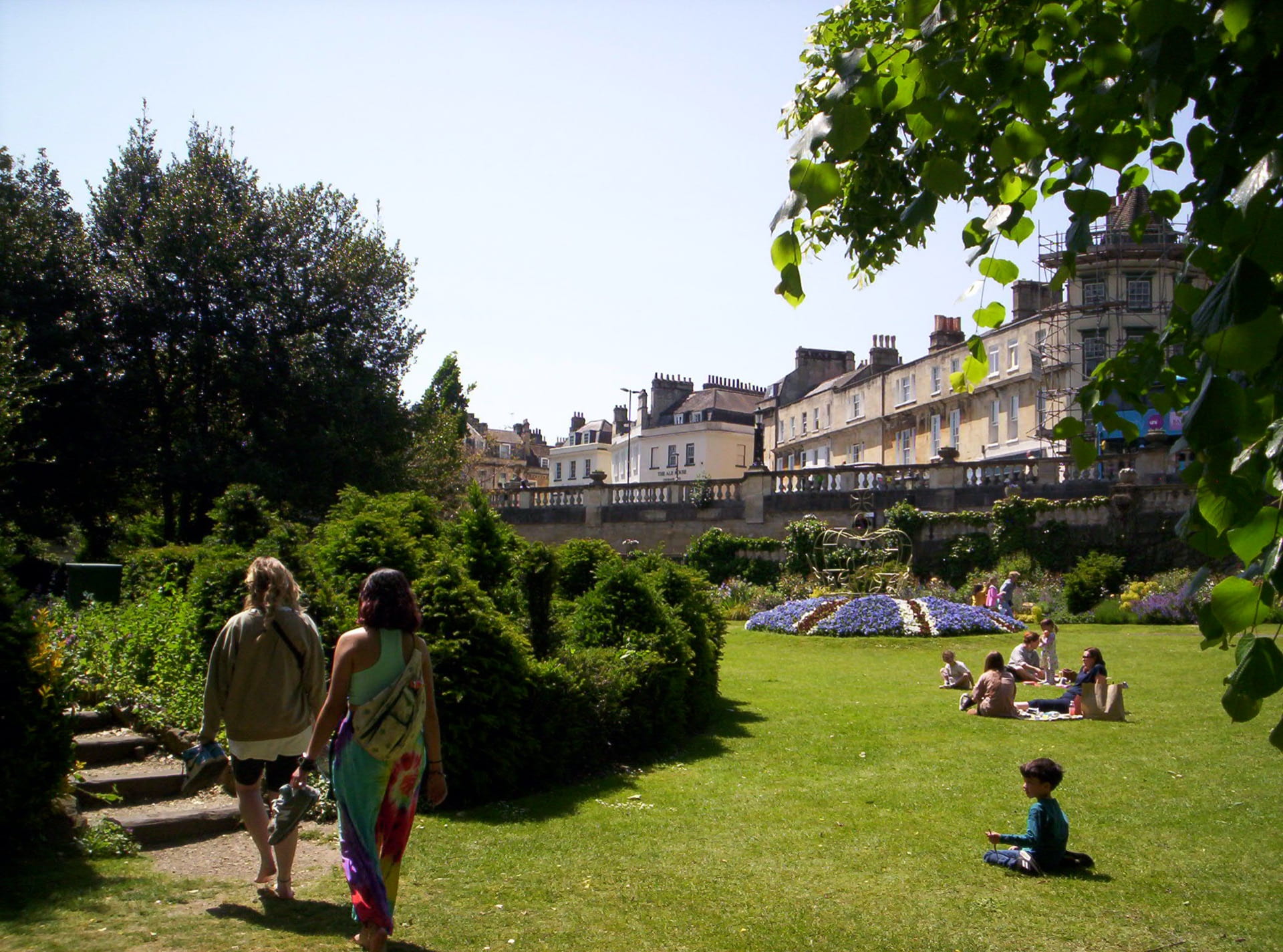
Bath time!

I have made so many memories on this trip. The blog helped me stay organized and created documentation of my memories. I was worried that after this trip, I wouldn’t be able to remember all the little details. So, I bought a journal to write down each day’s progress to ensure I didn’t forget anything. Naturally, with my ADHD, I forgot about the journal completely and didn’t write any entries. But, when I look back, I could tell you about every activity we did each day. Instead of being in a classroom where all the lectures seem to bleed together, I was out doing something different every single day. Each day had new foods and places to experience. Memories create such a strong emotional connection and make learning enjoyable and last. I only hope to create that environment in my classroom.

Outside of our meetings, I tried new foods I would have never had the guts to try. I also took a trip to Warner Brother Studios and Chessington World of Adventures. At both locations, I made so many amazing memories with a few people from our group I had only met a few weeks before. My bonds with these people grew to enormous lengths throughout the trip. We would take walks through London after dinner in a pub. A group of us went to Amsterdam for our free weekend, where we had a picnic in a park and explored yet another new city. In every city we explored, witnessing the locals be themselves was such a beautiful experience. I felt so lucky to witness a little boy get so excited over a plane landing with his father. I watched an older woman imitate a statue in the Victoria and Albert Museum. I overheard a grandfather explaining to his granddaughter how bees pollinate.
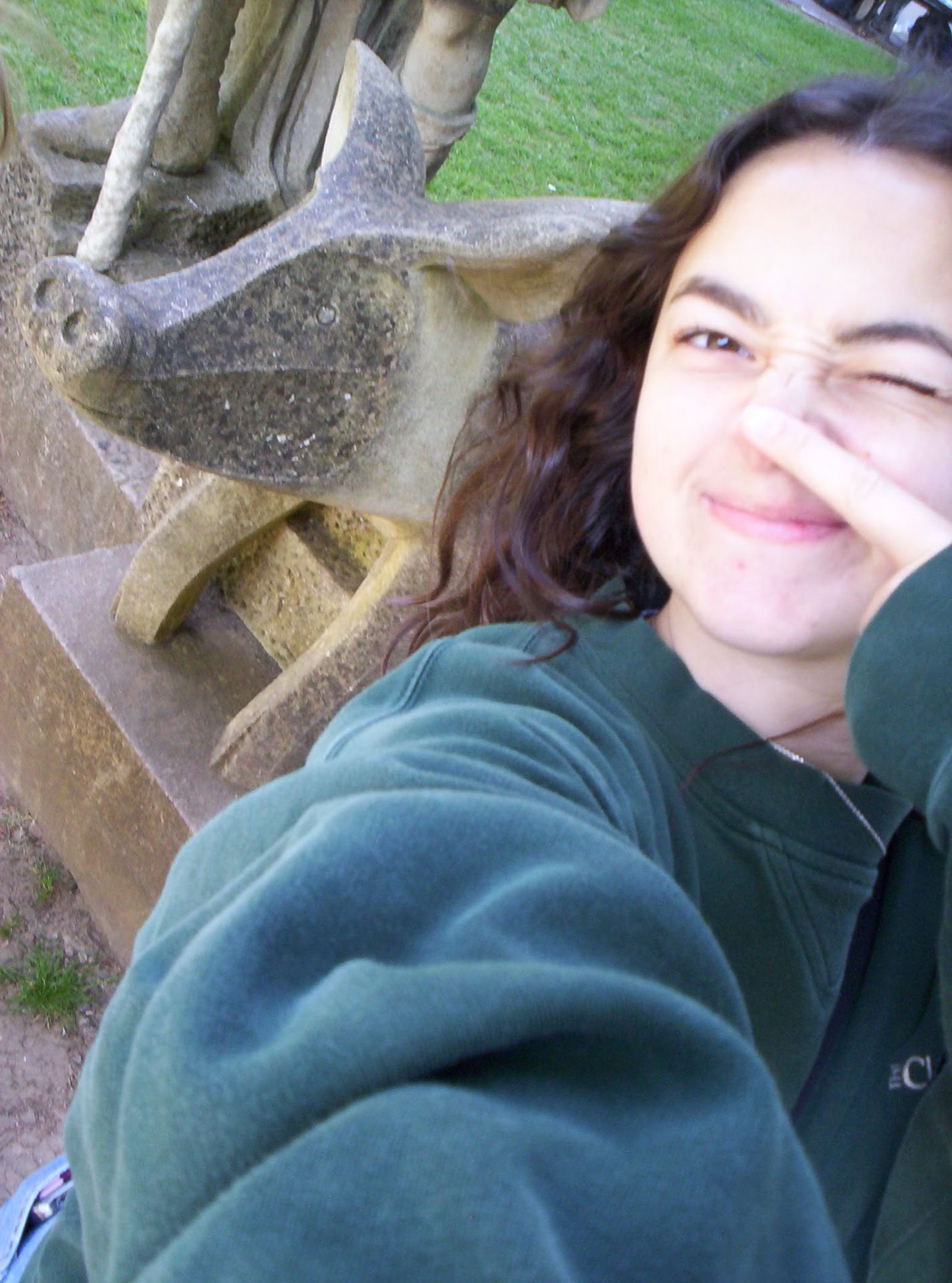
Woo pig!

After the flight back to the States, I first went home to my air-conditioned apartment, which was such a luxury. I have looked through all the videos and pictures I have gathered throughout my trip, and I will hopefully start and finish my journal soon. To be honest, this whole month has felt like a dream. I have always wanted to live in a big city, and London was an actual dream that became a reality. I would 100% recommend this trip to other students. I’m not a theatre major, and there were people who were on the trip with me who weren’t theatre majors either; we still had an absolute blast. Theatre aside, the experience of seeing so much history and learning about such a different lifestyle was so unique. Being there for a month allowed me to fully immerse myself into their lives in a way that other study abroad or rare vacations fail. This trip allowed me to learn about others, learn about myself, and learn to live.

03 July 2023

Uncharted Opportunities in Antarctica

Blog post courtesy of the Honors College.

Once Zoe Pitman (B.A. earth science, cum laude, ’23) discovered that students had not yet studied abroad in Antarctica, she knew she wanted to try. After years of research and applications, Pitman moved for a semester to Argentina (the gateway to the Drake Passage) to fulfill her dream and learn about climate change. In Argentina, Pitman was immersed in a new language, and the semester proved to be her most challenging. Her perseverance paid off – a week after her birthday, she was aboard an excursion to uncharted academic opportunities in the polar desert.

During my freshman orientation, I learned that students from the University of Arkansas had studied abroad in every continent except for Antarctica. That was the day that I knew I had to find a way to study abroad in Antarctica. The next three years were full of searching, applications, and cancellations, but in 2022, I finally traveled to Argentina to begin the most challenging and rewarding semester of my college career.
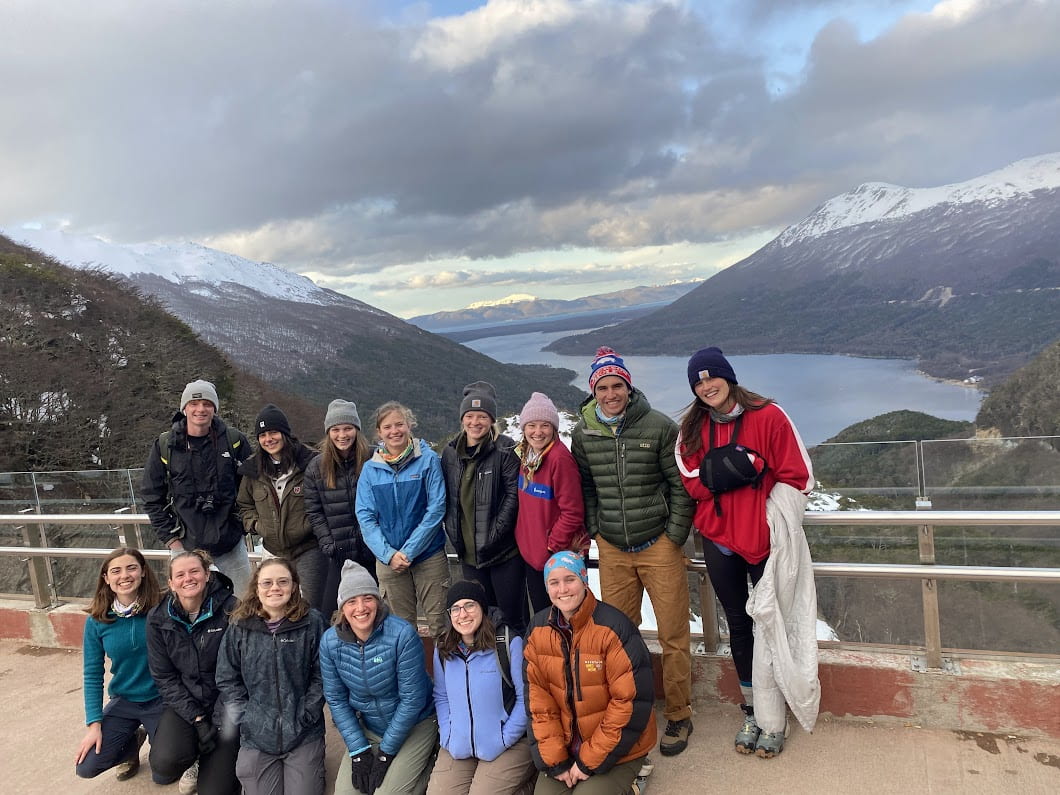
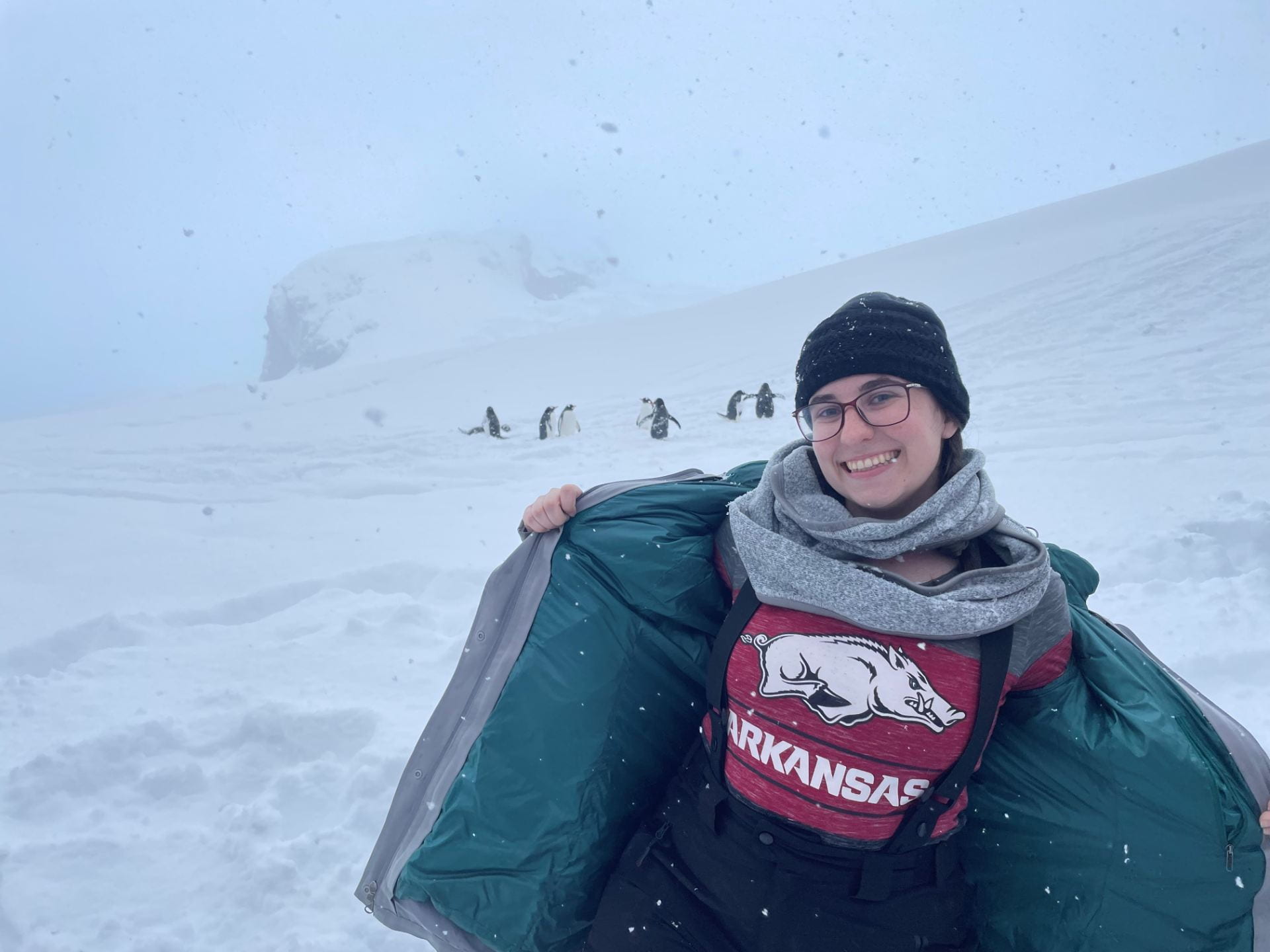
Zoe studied and researched alongside 14 other students.

Ushuaia, Tierra del Fuego, Argentina is the southernmost city in the world and a gateway to Antarctica. I spent a semester living and studying in Ushuaia with the School for International Training study abroad program People, Environment, and Climate Change in Patagonia and Antarctica.

When I arrived in Ushuaia, I was immediately immersed in Spanish. My host family did not speak English, and all of my classes were in Spanish. At first, it was overwhelming, and I worried I would never fully understand. After about a month, I realized that I could speak complete sentences and understand most of what people were saying. By the end of the program, I was engaging in full conversations and even translating between my host family and my family, who came to visit me for a few weeks after the program ended.

The program included a full 16-hour schedule of classes on climate change, ecology, research methods, local history and Spanish for the natural sciences. The material in the classes was generally easy, but everything was taught in Spanish, so the semester ended up being harder than any other semester at the U of A. The program directors taught most of our classes, bringing in guest lecturers weekly to cover a wider range of material. There were only 14 students in the program, so the smaller class size made it easier to ask questions and interact with the lecturers. The last part of the semester was an independent study project where each student had the opportunity to work with a local scientist on a unique research project. I studied the impact of precipitation changes due to climate change in Ushuaia, and I learned a lot about how to conduct research. The classes and independent study were really beneficial to me because I would like to go into climate research as my career.
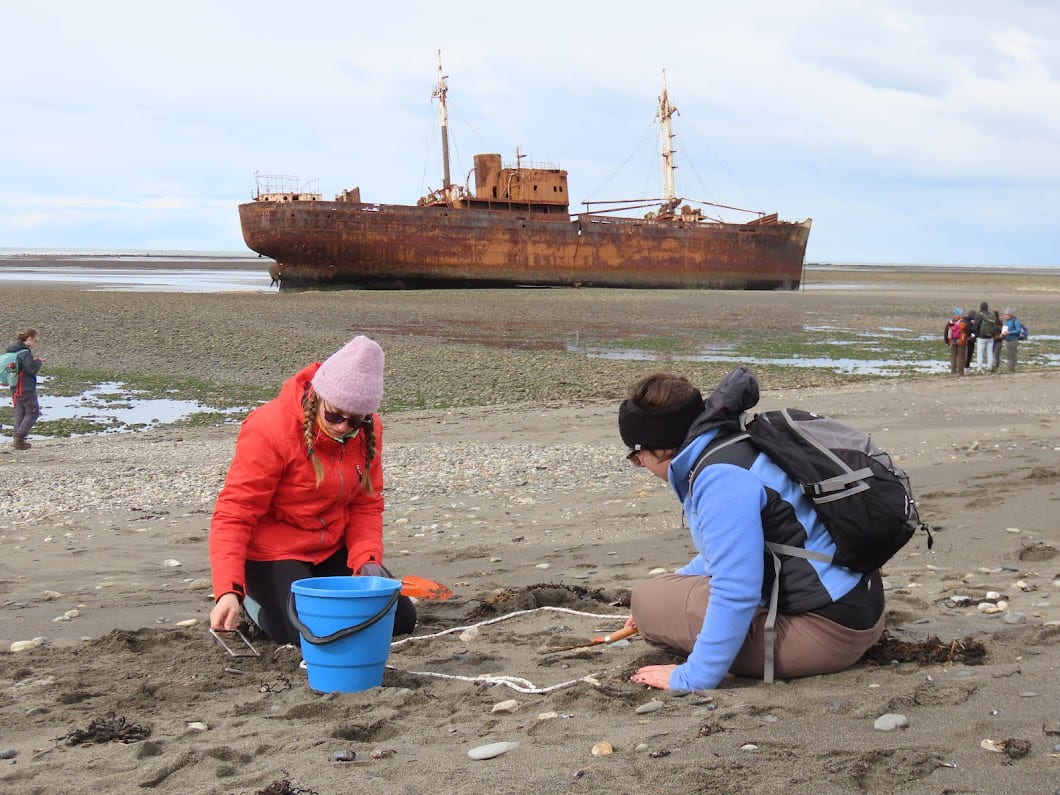
Students visit a local scout group in Tierra del Fuego to participate in a research project on microplastics.

Ushuaia is a beautiful city surrounded by mountains on one side and the ocean on the other. I went on a lot of hikes with my classmates and saw some amazing views. It was incredible to see the differences and similarities in the environment surrounding Ushuaia from the environment that I was familiar with. The locals in Ushuaia are very friendly and love to hike, so we got to meet many great people on our hikes, and they were always willing to help us practice our Spanish or teach us something about the area.

During the program, we got to go on three excursions as a group. The first excursion was Rio Grande, another city in Tierra del Fuego where we visited a local scout group and did a research project on microplastics. The second excursion was to Estancia Harberton, the oldest European settlement in Tierra del Fuego. The final excursion and the reason that I chose this program was to Antarctica. On November 3rd, we boarded the MV Ushuaia, a former research ship that had been converted into a small Antarctic cruise ship. We began our two-day journey across the Drake Passage, known as the roughest waters in the world. On November 5th, my birthday, we were set to arrive in Antarctica in the afternoon. Around noon, the crew gathered all the passengers in the ship’s bar to announce that a passenger had been injured, and we had to turn around. The runway in Antarctica was too icy for planes and the weather was too bad for helicopters, so the only way to evacuate the passenger would be to return to Ushuaia. We would not be going to Antarctica. I was devastated. I had been trying to get to Antarctica for three years, and I was so close to making it. I understood that it was necessary to evacuate the passenger and that it was the only option, but it was still a hard day. We turned around without ever having reached land and spent another two days on the Drake.

About a week after we arrived back in Ushuaia, our director contacted us with amazing news. The School for International Training had approved their request to let us get on the next trip to Antarctica. On November 21st, we left to cross the Drake Passage a third time. This time we actually made it to Antarctica. We saw breathtaking landscapes and some of the most amazing wildlife I have ever seen. We visited the Almarante Brown Antarctic base on our last day, an actual continental landing where I got to step foot on Antarctica.

I absolutely recommend this program to other students who are interested in climate change or environmental science. I would advise other students not to give up on going on their dream study abroad program because it’s worth it in the end. This program was indeed one of the best experiences of my life, and I will remember it forever.

13 June 2023

The Courage Not to be Unique


Blog post courtesy of the Honors College.

Kati Rod is an honors agricultural business and international business student from Kennedale, Texas. With an Honors College Study Abroad Grant, Rod recently finished a semester abroad in Rome, Italy with the University of Arkansas Rome Center. While in Rome, she was invited to visit a social cooperative, a Cooperativa Al di là dei Sogni, as a class and weekend excursion. Rod had the opportunity to volunteer at the cooperative, interview the owner and spend a few unforgettable days with the employees. Learn more about her solo adventure and how she discovered the courage not to be unique.

The Cooperativa Al di là dei Sogni is a social cooperative in Sessa Arunca, Italy. Rather than focusing on selling a product, it is centered on creating a space for its employees. Its mission to support people makes it unique, but being unique is the last thing that founder Simmaco Perillo wants. He dreams of his business model being replicated around the world.

Simmaco and his wife Paula have built a place where people are central, and second chances are standard. His goal was to “provide jobs to people to give a different kind of shine.” The Cooperative employs those with mental disabilities, criminal records, and current inmates who have the opportunity for work placements. Additionally, the Cooperative sits on a piece of property that was once an asset to the local mafia group, the Camorra.

A Place Beyond Dreams
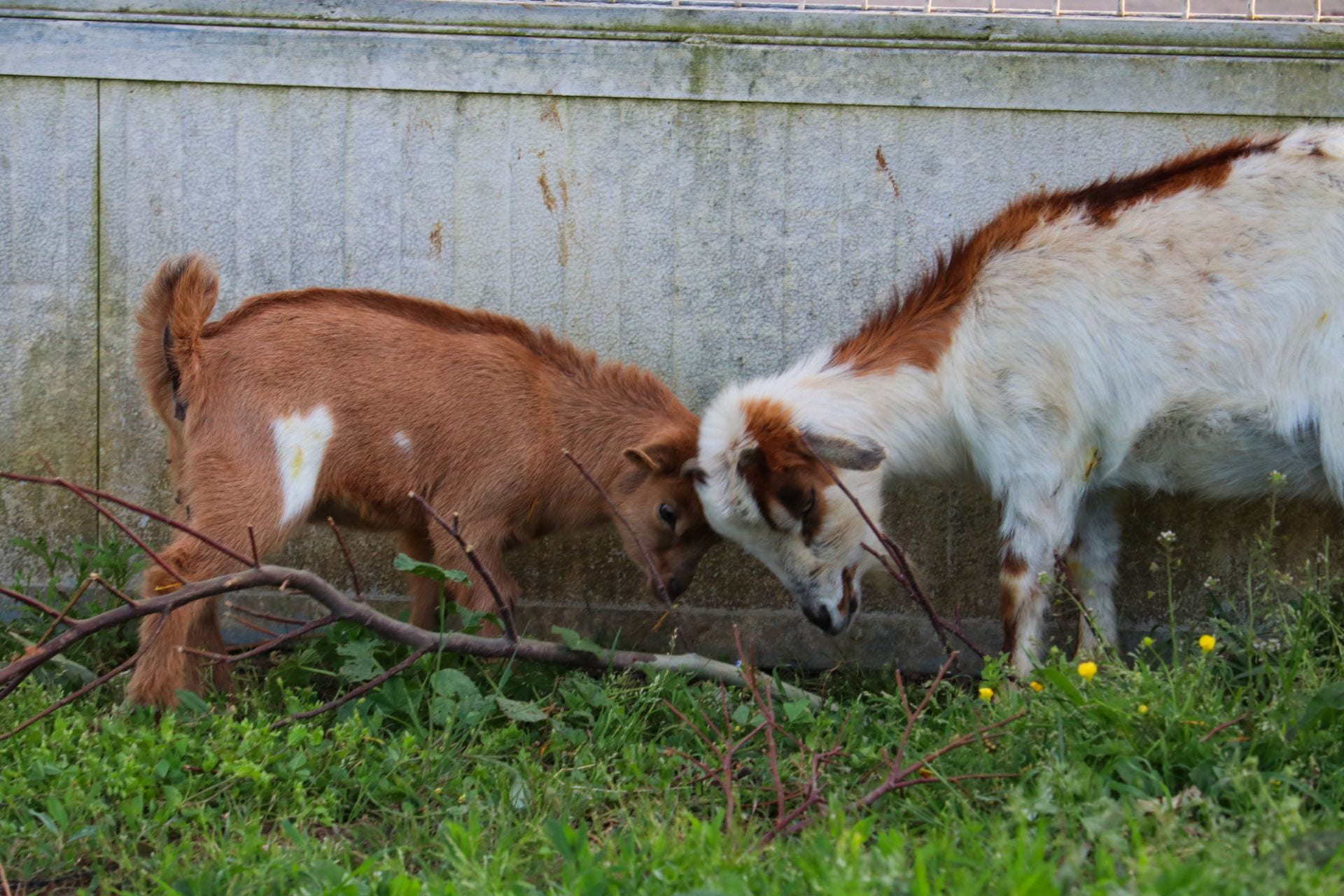
The goat on the right was a newborn the first time I went to Al di là dei Sogni. By the time I went back, he was twice the size and thriving all on his own!

I learned about Al di là dei Sogni in my Global Changemakers class at the University of Arkansas’ Rome Center this semester. We originally took a class trip to visit the cooperative along with several other repurposed mafia lands in the area. During this time, I spoke to one of their volunteers, Giulio, and he told me how the cooperative had impacted his life and gave me some insight into the company’s mission. Once back in Rome, I decided I wanted to go back to learn more about the company and how it achieves its unique goals. I spoke to my professor about it, and she created a project for me to complete and set up my experience at Al di là dei Sogni. With her help, I was able to spend two days staying and volunteering at the cooperative.

The name of the Cooperative reflects its mission as “al di là dei sogni,” or “beyond dreams.” During our conversation, I asked Simmaco what gave him the courage to create a place beyond what he alone could imagine. He told me that the word “courage” in Latin means “heart.” So, to do anything “with courage,” really means to do it “with heart.” Therefore, when you learn how to do things with passion, you already have courage. This means that everyone who is doing something that they are passionate about, is living life with courage. Simmaco added that everyone can relate to the feeling you get when you help someone. Why not make it his job?
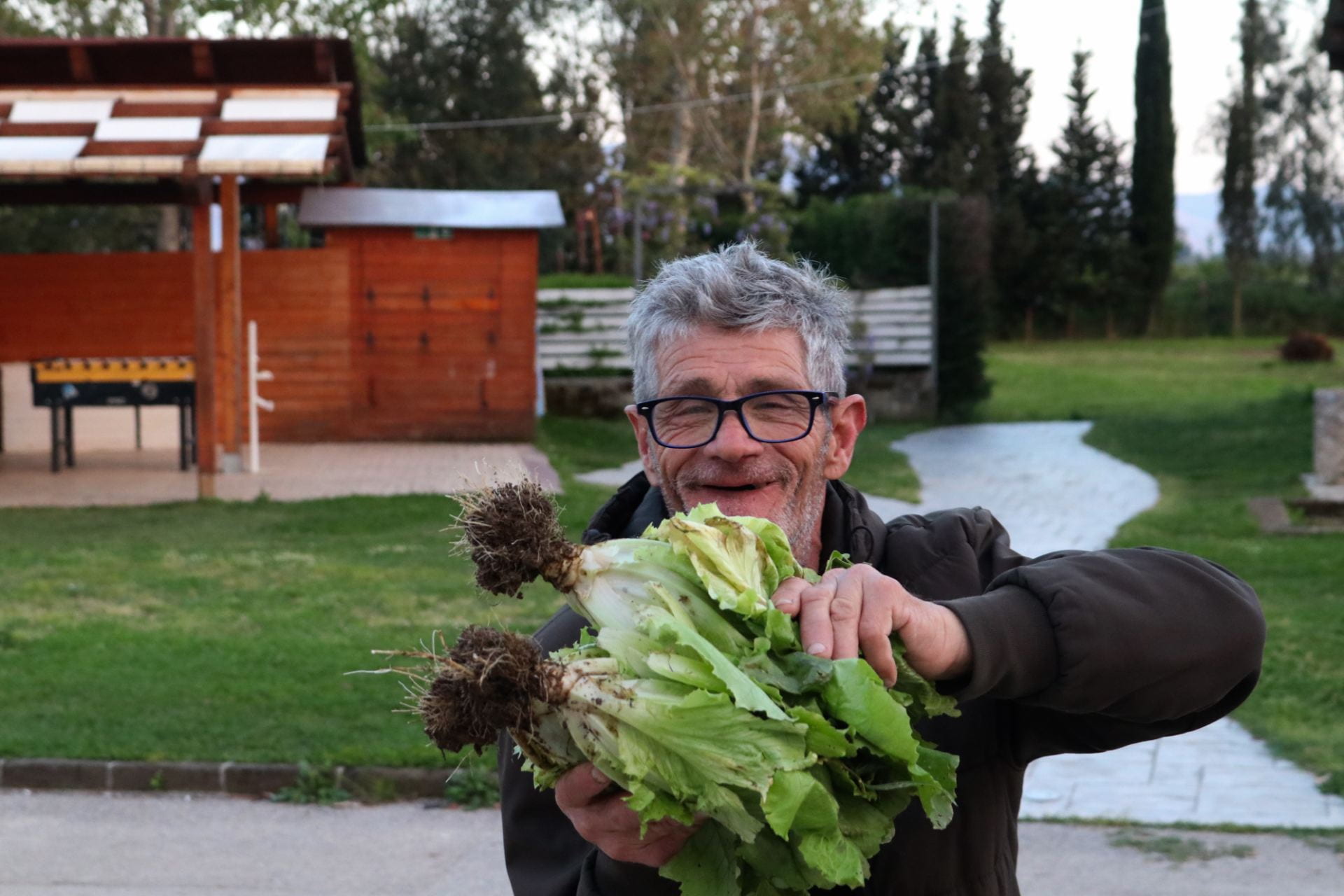
Erasmus picked lettuce for our dinner on Friday night and never failed to wave at me on the opposite end of the table.

Al di là dei Sogni currently employs about forty people on and off the farm. When the business first started, Simmaco relied on social services and the national health care system in his search for employees. However, as his business grew, his mission spread and soon people came to him. Here is where the Cooperative excels in building the business around its people. There is no set number of positions or designated roles. Rather, as people come, a space is created for them.

The Cooperative itself offers a hostel, restaurant, and several products that are made on the property. Additionally, they host school groups, trainings, retreats, and other events. They also sell boxes called Pacco alla Camorra (Package to the Camorra), that are collections of products made at the Cooperative and their partner operations. The names on the boxes honor and spread awareness about their mission of repurposing land that was once used by the Camorra.
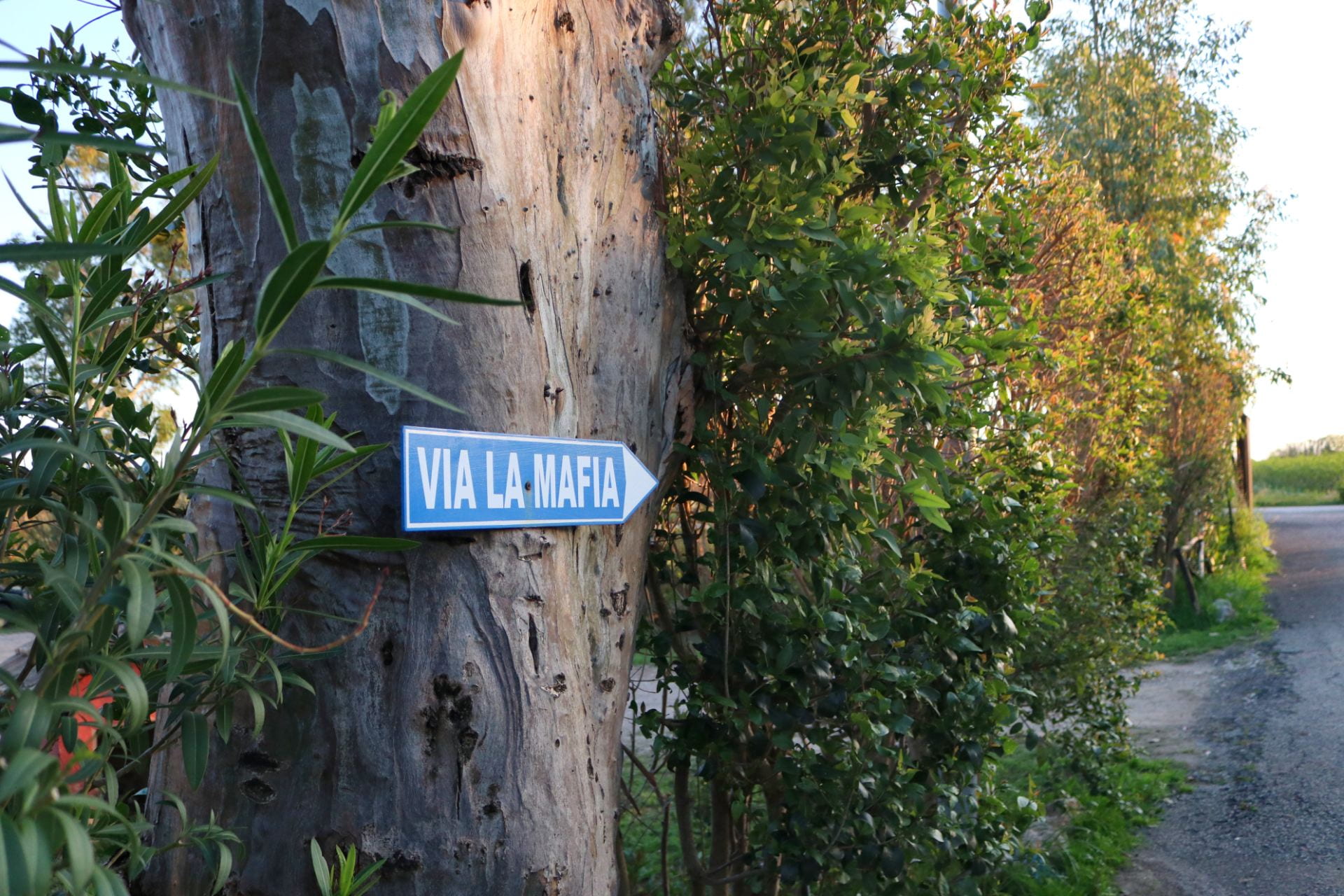
“Via la mafia” here is ironic becuase “via” in italian means street. This street that once used to be used as a mafia asset is now a means used to kick them out and demonstrate community support against the Camorra.

The Cooperativa Al di là dei Sogni has become successful because of its deep respect for people, its desire to overcome mafia history, and the value of the relationships that it has created. Moving forward, Simmaco’s hope is that the Cooperative would not be praised for its uniqueness, but rather become one of many replications around the world. He hopes that similar places will be created to serve all people, everywhere.

“You Need to Start to Dream Again”
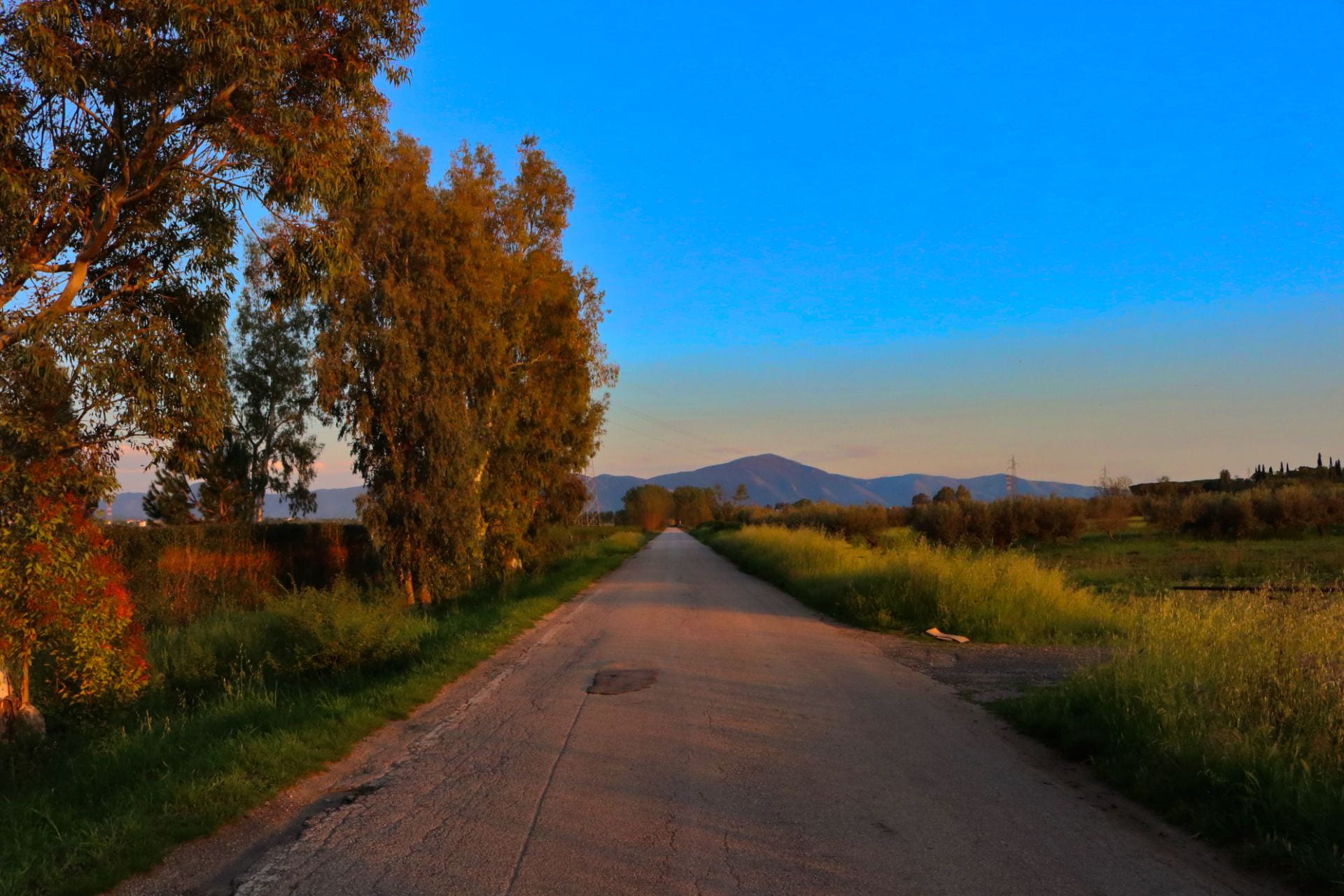
Sunset on the road leading to Al di là dei Sogni.

“You need to start to dream again” was Simmaco’s answer when I asked him if he had any advice for young people who want to make a difference but are not sure how to start. This had been a recurring theme in my life recently, and when Simmaco said that I could feel the weight of conviction in my chest as the air left my lungs. Dreams and community have echoed their way through my semester and my experience at Al di là dei Sogni was no different.

“You need to start to dream again.” As Simmaco put it, dreaming is not about taking in the beauty of the sky, but about believing in yourself. Dreaming is doing everything with passion, with courage, and with intentionality.

“You need to start to dream again, but you have not to dream alone.”

This was the second half of Simmaco’s advice. He told me that when you share your dream it’s going to be real because it is going to become part of your community. If not, it’s just you alone.
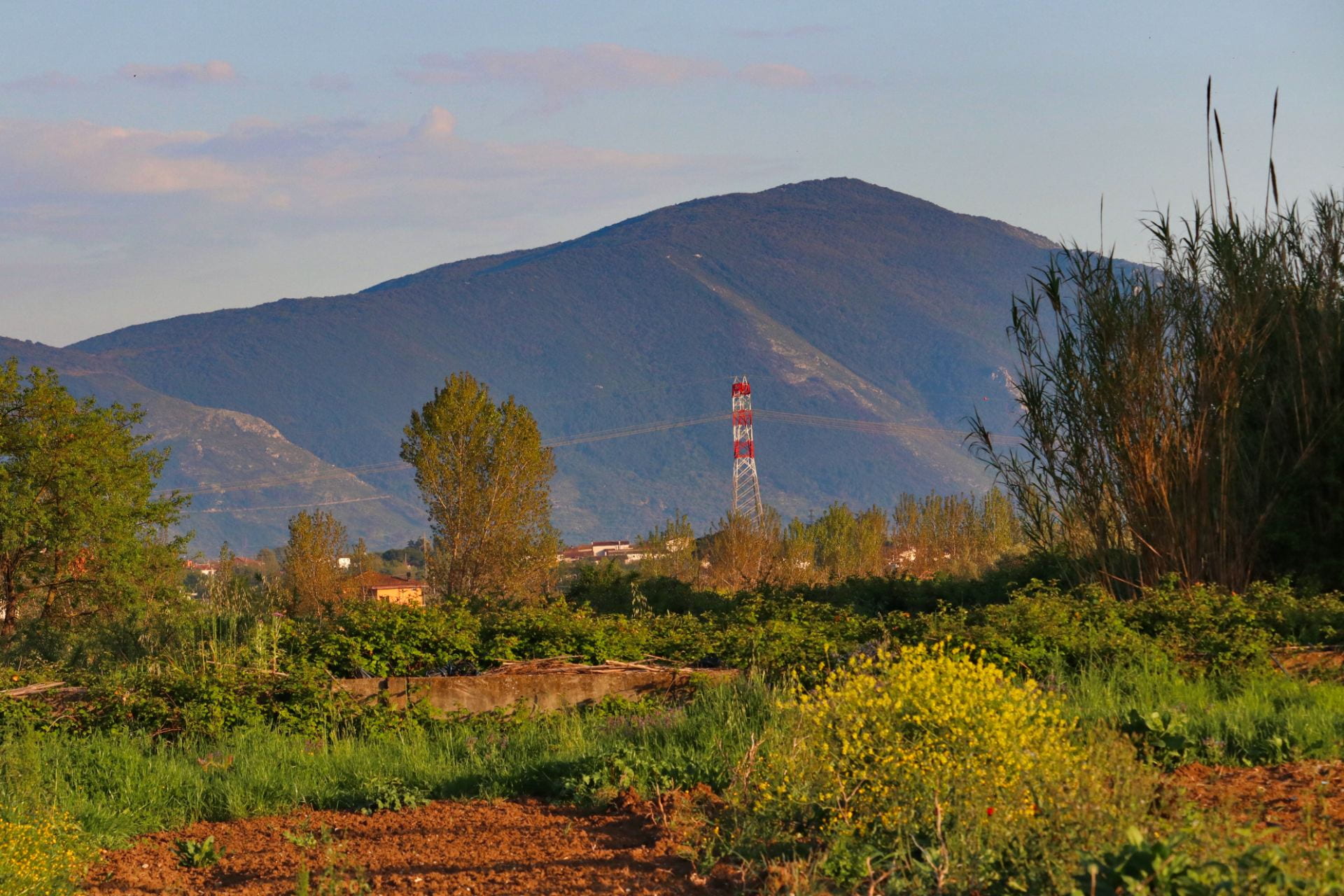
View from the field where I planted onions with Daniele. Street with bright blue sky: Sunset on the road leading to Al di là dei Sogni.

Building Community Without Words
Gaetano fixed my broken door that was not actually broken, and instead taught me how my door worked on my second day at The Cooperative.

I saw this principle put into practice while staying at Al di là dei Sogni. From the way that everyone had a seat at the table no matter how small that table was. Seriously, there were eight of us sitting around a table the size of an extra-large pizza one afternoon. I heard it in every desperate attempt at a conversation with the American girl who came to Italy knowing zero Italian. I felt it when my heart sank saying goodbye to people that I had met only forty-eight hours earlier.

While I was at Al di là dei Sogni, I made the coolest connections with people I could barely speak to. I love talking to strangers. In restaurants, on the street, in the airport–I love hearing their stories and perspectives. That is one of the things that I have missed most while being in Italy because I do not speak Italian. The most heart-breaking feeling I have come across this semester is the genuine look on someone’s face when they are trying to make you understand but you cannot comprehend their words. However, I have also been able to find an amazing beauty in the effort that overcomes language barriers. I have been truly humbled this semester by the amount of hand motions and chunky sentences that were used to communicate, and it was no different at Al di là dei Sogni.

Antonio wears a red coat and chef’s hat when in the kitchen, and I have never seen a more perfect icon of a chef.

However, the few employees at Al di là dei Sogni who spoke English made sure that I was taken care of during my stay. Monica took care of my schedule and always made sure that I had everything I needed. Besides making one of my favorite meals in Italy, Antonio, the chef at Al di là dei Sogni, spoke English and was happy to make conversation with me every time our paths crossed. The first night I arrived, he introduced himself and shared his story of learning English in London and how he ended up working at Al di là dei Sogni. At the end of our conversation, Antonio said something that I think is applicable everywhere you go: “we all have our problems, but we all have big hearts.” That is the mission of Al di là dei Sogni and I believe it is a good summation of what community looks like worldwide.

Errands and Ice Cream
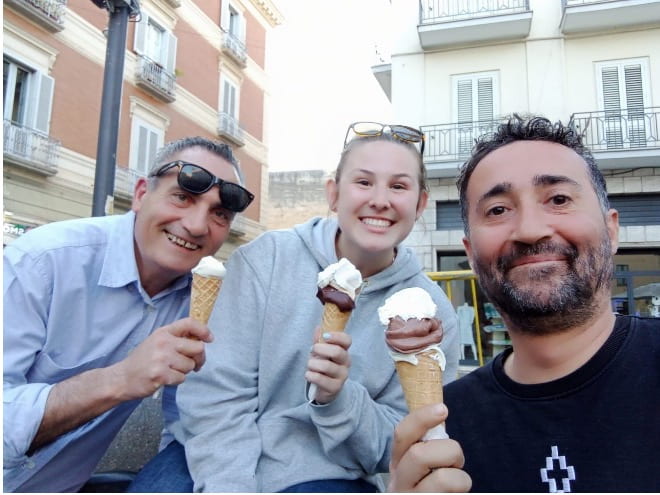
These are the men who came zooming through the gates to pick me up for ice cream. Francesco is on the right, and Mino is on the left.

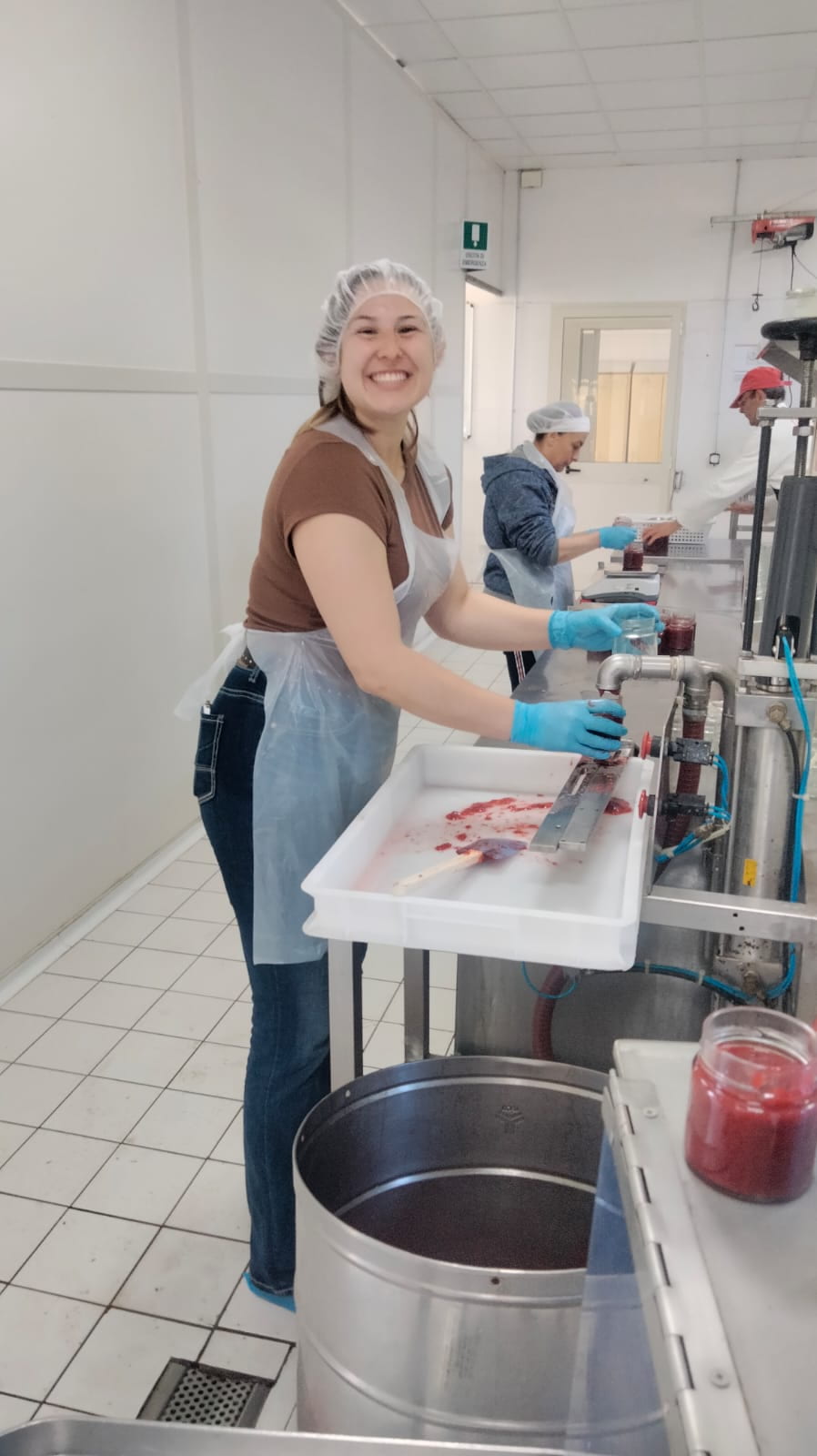
The next morning, I started work at 8:30. I had no idea what that entailed, all I knew was that I was going to the factory. As we walked in, Monica handed me a hair net, a plastic apron, and booties to cover my shoes. She introduced me to Anna, a short blonde woman with a sweet smile who took care of me all day. She instructed me to cut strawberries, taught me how to properly peel the skins of lemons, and made sure I had a front row seat to how everything worked inside the factory. This is also where I got to know Francesco, a father and the one in charge of operating the big machine that cooks the jam at the factory.

Later in the afternoon when all the work was done, in true “dad fashion,” Francesco asked me if I wanted to take a trip into town for gelato with him and Mino, another man I met the night before. I am never one to say no to ice cream of any kind, so of course I said yes. An hour later, the men came rolling up in style with the windows down, sunglasses up, and music blaring. I knew I was in for an adventure. Even though I do not speak Italian and they did not speak much English, it was one of my favorite adventures in Italy. It was on this trip that I began to understand why Italians are so keen on talking with their hands: it really does help get the message across. After taking care of the pickups and returns at the mall we went in search of the gelato shop. Once we found it, Francesco did not like the look of the gelato that was at that stand so Mino led us down the road near the seaside to a place that he loved. He was right, it was some of the best gelato I had in Italy and the view of the sea was incredible.

These are the rows of beans that Daniele and I planted with the help of the high school students.

When we got back to the Cooperative, the number of tables in the dining room had doubled from the night before and the patio outside was buzzing with people all around. That was the night that I met Lauradonna, Vincenzo, Erasmus, and so many others. I loved that dinner not only because it was just as good as the last, but because of the people who I was able to eat with. Conversation on my side of the table was limited because of the difference in language, but many smiles were shared, and I loved every second of it.

Sharing Our Stories
During day two at Al di là dei Sogni I planted onions and beans with a man named Daniele. Daniele is from Columbia originally and his first language is Spanish. I know some Spanish so that is how we communicated while we dug holes and placed seeds. While we worked, he told me about his life, his family, and how he ended up in Italy. Daniele’s story is one I will not forget. The joy he displayed in his work was inspiring and his guidance was thoughtful.
My day with Anna in the factory. Anna and I did not speak the same language, so she spent a lot of the morning demonstrating how to do things properly. I felt proud and encouraged as the whole factory celebrated as I caught on.

During this time, the high school group that was visiting for the day learning about the mafia came to join us in the field. They helped us plant and I got to speak with one of the girls who told me this was their last stop on a tour of seized mafia lands. Seeing them learning reminded me of all the things that I have learned this semester and all the things that I was still learning as I dropped seeds into the ground that day.

It also struck me that those students did not know Daniele’s story the way that I did. They were there to learn about the mafia while my goals related more toward business and community. Working and actively participating at Al di là dei Sogni gave me a new perspective of what a business model can look like and has inspired me to act in my own communities when I get home.

In forty-eight hours, I made jam, rode into town for errands and gelato, planted onions and beans, and made friends whose stories and smiles are still at the forefront of my mind. In forty-eight hours, I witnessed a dream go way beyond a business that had absolutely nothing to do with selling. In forty-eight hours, I learned what it means to have courage, and what it looks like to humble yourself and dream with the courage to not be unique.

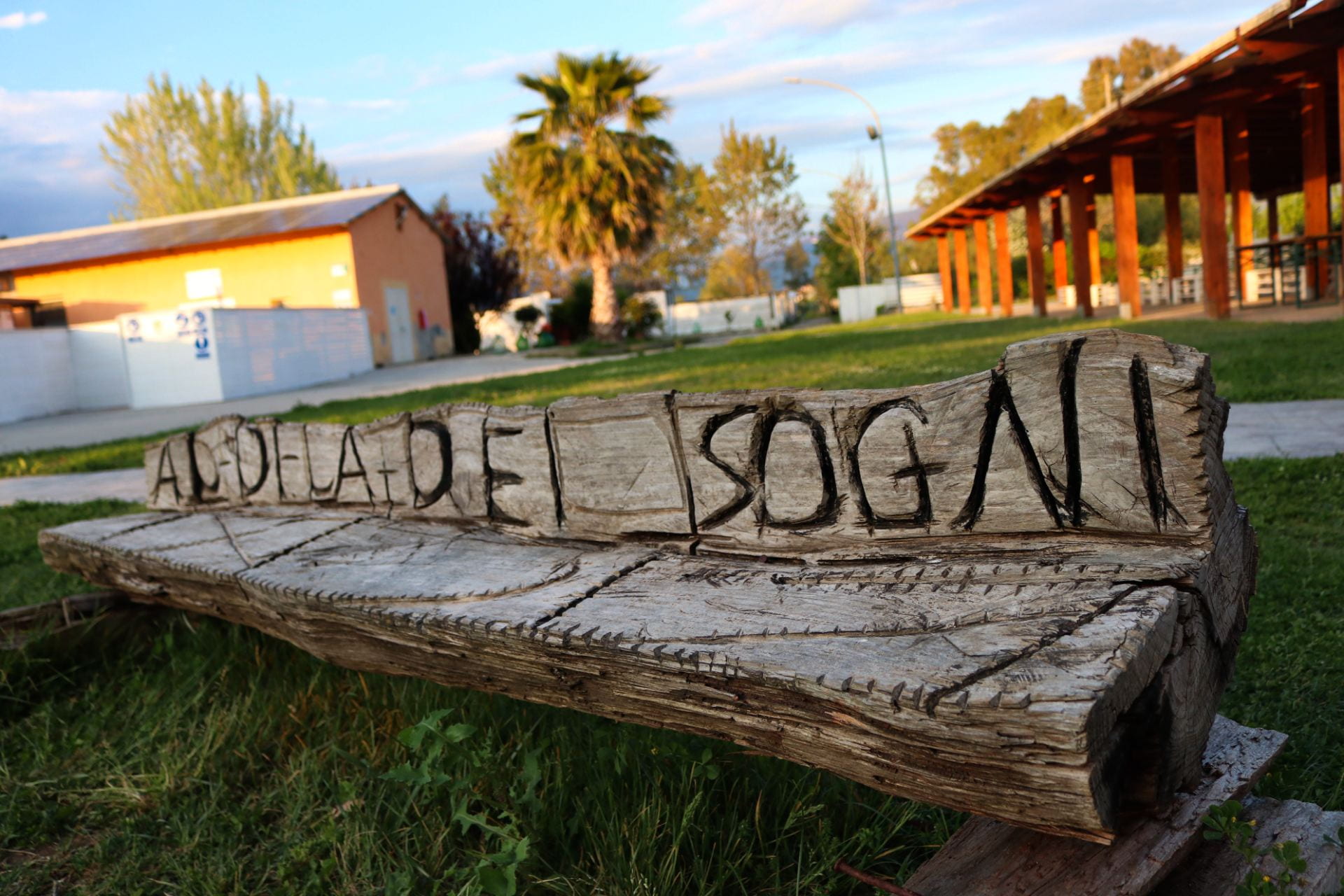
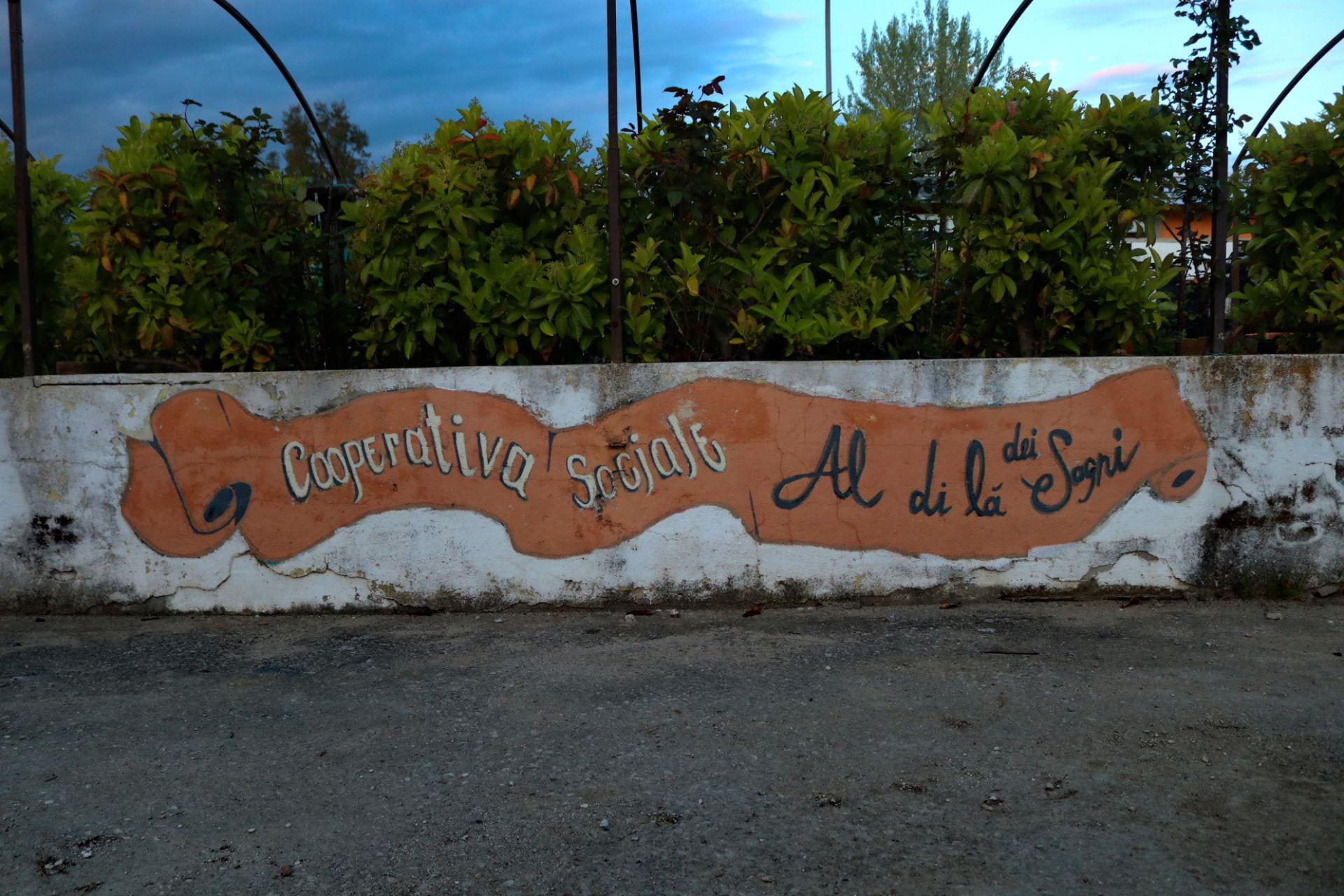
A wall painted along a walkway at Al di là dei Sogni.

02 March 2023

Adapting Abroad: 5 Questions with Hanna Strombom

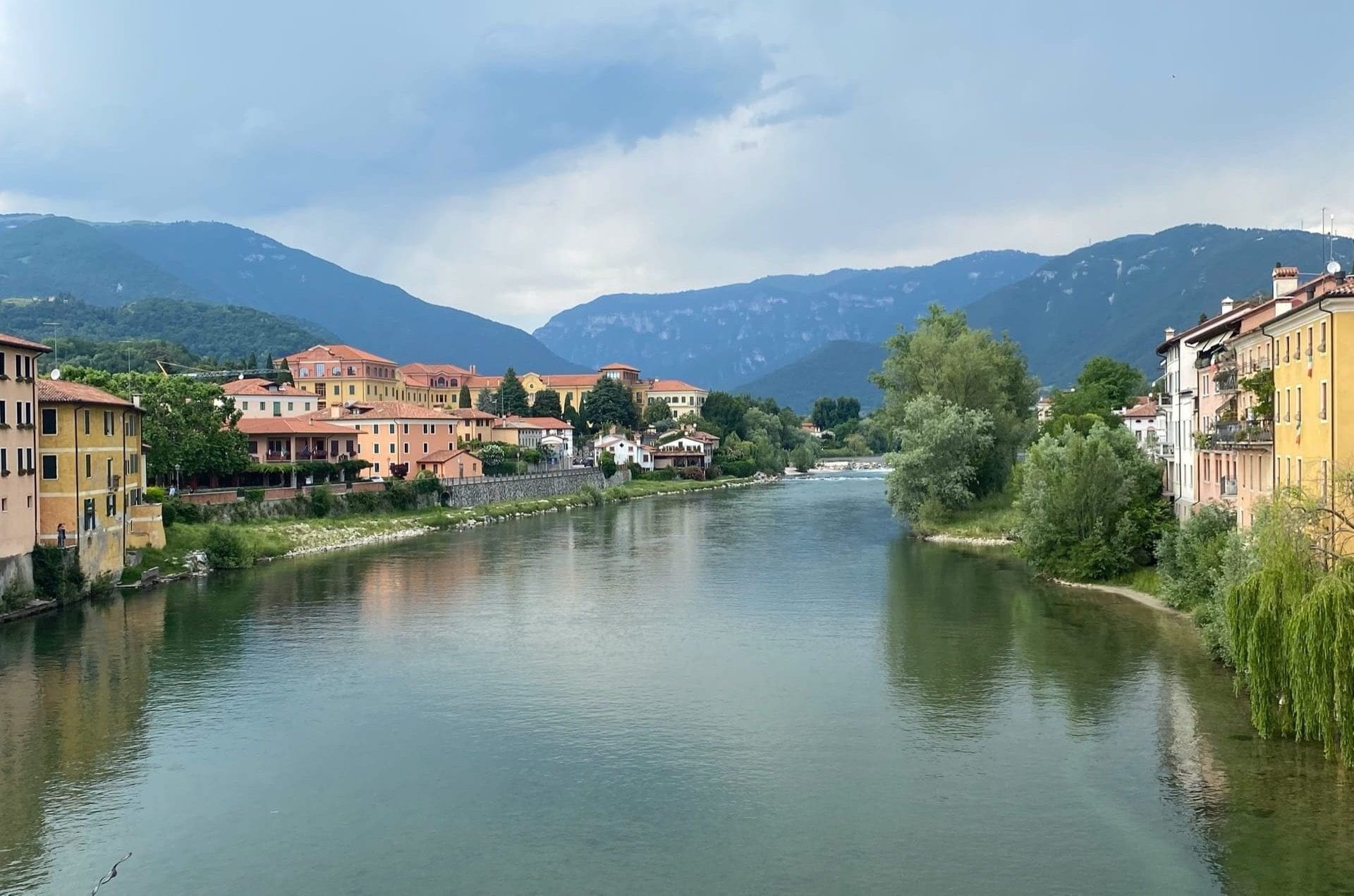
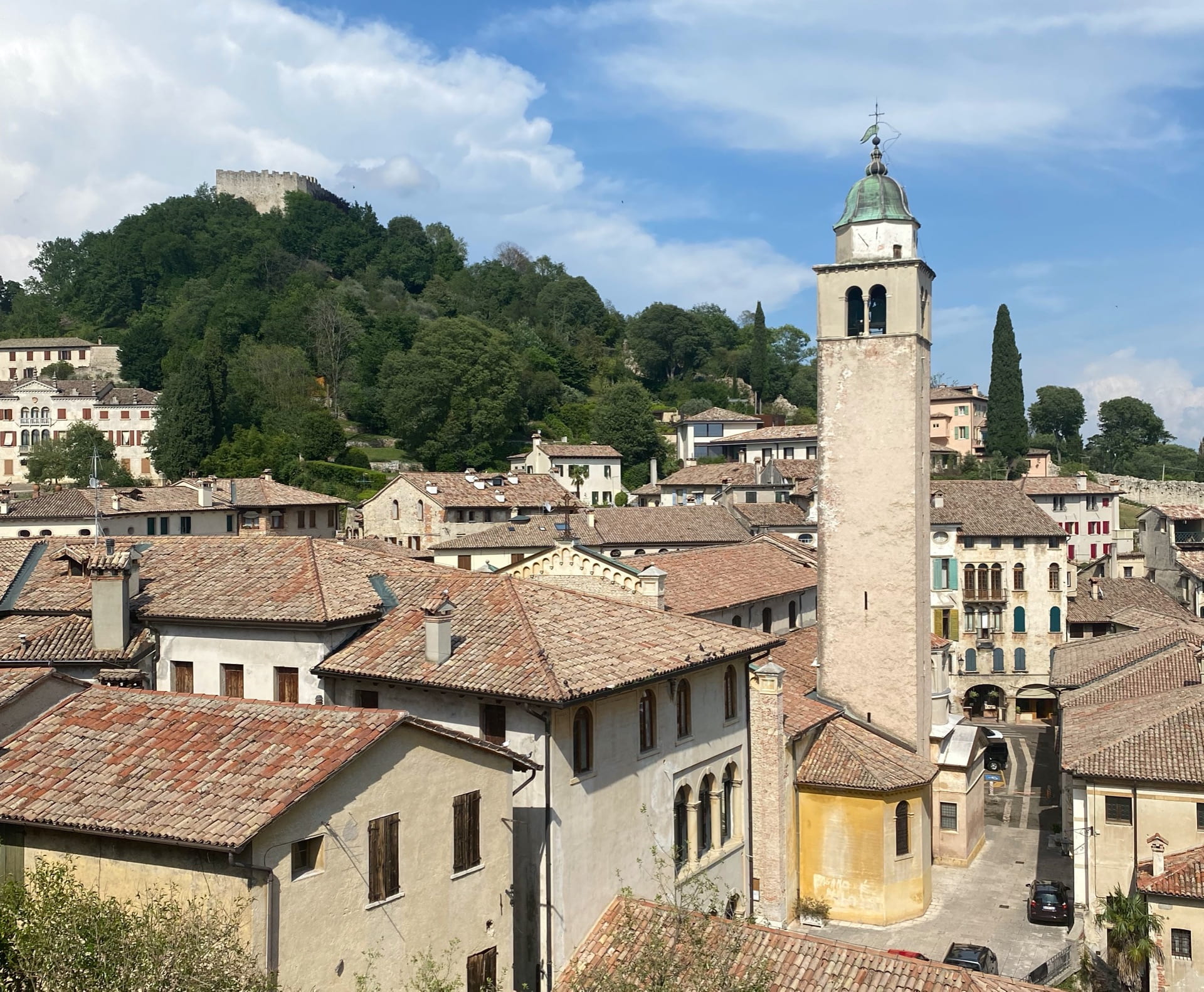
View of Bassano del Grappa, Italy.

Blog post courtesy of the Honors College.

Hanna Strombom is a fourth-year Pre-Med Honors student from Overland Park, KS, studying finance, accounting and biology. When Hanna had the opportunity to study abroad in Italy, she noticed that the experienced helped her emotionally grow and adapt. Her travels inspired her to research the correlation between studying abroad and improved mental well-being in college-aged students.

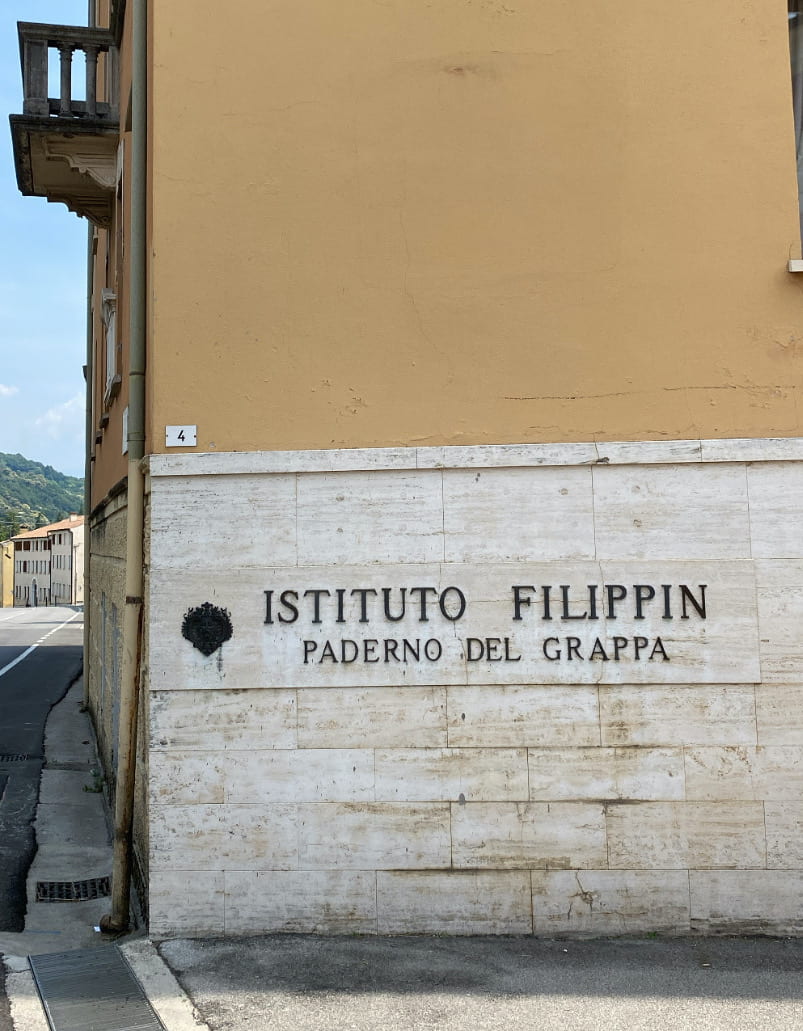
The site of classes and dorms on the Istituto Filippin campus in Paderno del Grappa, Italy

1. Why did you decide to research the mental health benefits of a study abroad experience?
I started with this topic because I studied abroad with the Consortium Institute for Management and Business Analysis (CIMBA) Italy Study Abroad Program in Paderno del Grappa with my thesis advisor Dr. Molly Rapert.

I am a business major but also pre-med, so I wanted to connect my interests in the medical field with my study abroad experience. I know that mental health is currently a concern for my peers. College-aged students are affected by mental health issues at alarming rates due to various pressures inside and outside the classroom. Since universities provide students with opportunities such as studying abroad to benefit their personal and professional growth, I wanted to see if there was a connection to their mental health.

I learned a lot of different skills during my study abroad experience. At home, I think I’m a naturally stressed-out person, I put 110 percent into all my schoolwork, and in Italy I learned to appreciate my relationships with people and to slow down sometimes.

Not everything went perfectly when we were traveling. For example, we ran into transportation strikes, so there was stress. But I was in the moment, and through those experiences, I met friends, and we worked together to problem solve.
 
Hanna with professor and thesis advisor, Molly Rapert, at a formal dinner at the end of the CIMBA program

2. What challenges did you face while researching your topic?
Through my literature review, I found lots of information that connected study abroad experiences to gaining new professional skills, learning adaptability or becoming more employable, but only short-term results were studied. My research focuses on the long-term effects and the emotional impact of the experience. One of the challenges was that I had to connect the mental health impact to the study abroad experience.

3. Your thesis uses pre-and-post data. What are the results telling you so far?
Students of the Summer 2022 CIMBA study abroad program participated in a pre-survey prior to their departure and a post-survey at the end of the program. The surveys included questions on the state of their mental health using the Psychological Wellbeing Scale and Hero Wellness Scale, which focuses on six main categories: autonomy, environmental mastery, personal growth, positive relations with others, purpose in life and self-acceptance. The survey also asked about program-specific aspects and their impacts on the growth of the student. Upon analysis of the survey responses, I compared the difference in responses between the pre- and post-surveys. The results show an increase in positive emotions and were statistically significant. For example, I saw across-the-board increases in the statement, “I like my personality.”

I also have an open-response section where students can leave comments. Many students mentioned challenges like cultural differences or language barriers, but I’ve noticed that most students traveling expect that there will be difficulties or times when they will feel uncomfortable. Still, they are excited to grow from the experience.
Hanna took a class field trip to the nearby town of Asolo and learned about the history.

4. Has your research experience impacted your post-grad plans?
It has impacted the medical programs I’m considering. I’m looking for schools that have study-abroad opportunities. My thesis has also inspired my travel plans; I went to Panama with Global Bridges this past winter break to serve on a medical mission trip. I want to see the world and not be confined to just the experience I’m used to here. It’s an incredible opportunity to learn from other people.

5. Do you have any advice for students pursuing their honors theses?
Connect with your interests first. I’m a finance major, and my thesis is not business related. The thesis process is a big task, but I’ve enjoyed working on mine because it interests me. I look forward to researching because learning about studying abroad is a passion of mine.

01 March 2023

The Importance of Feeling Present while Abroad

A picture containing outdoor, sky, mountain, person

Description automatically generated 

Hey all! Im Isaac Prud'homme and Im a Fulbright College Honors Student studying Geophysics and Earth Science. Over winter break I participated in CIEEs Kyoto program, and after having a few weeks back at home I believe that Ive finally consolidated my thoughts and feelings about my experience. 

Flying to Japan was my first time ever leaving the US, and going through customs was much smoother than I imagined it would be. After arriving in Kyoto, I was immediately impressed with its size, as I havent been to a place like New York or Seattle; Kyotos scale took some getting used to. 

There were 150 students taking part in the program, and after the first week I was becoming rather exhausted from all the large group excursions. I was worried that if I didnt completely pack each day with activities that I would feel like I missed something when I returned to the US. The best way to cope with these feelings for me was to stick with smaller group for outings, usually 5 or 6, and if someone had a place they really wanted to see, just tag along. This immediately took the stress of planning off my shoulders and allowed me to relax while in a new environment. 


Japan is full of beautiful museums, shrines, mountains, and country sides. All these places were perfect for taking a moment to breathe and feel present. These small moments of relaxation and meditation made the homesickness and stress wash away. One morning I was able to attend a Buddhist service at a nearby temple which helped me center myself and gave me the energy to kick off my day. 

The most important thing that has stayed with me from my time abroad is the ability to feel a places importance. Whether youre standing beneath a statue thats hundreds of years old, or at a shrine at the top of a mountain, the silence feels heavy. The places importance to the people living there can be incredibly moving. It's important to give yourself time to rest, experience the history, and breathe. 

A group of people posing for a photo

Description automatically generated