Search This Blog

Showing posts with label AIFS. Show all posts

06 October 2022

My Summer as an Immigrant Worker #HogsAbroad in Ireland

Hello! And welcome to my End-of-Summer-Abroad blog post. Before you go looking for a Start-of-Summer blog post, I will confess to you that there isn’t one. Though I have some great excuses in my back pocket as to why there isn’t one, the truth is that I just didn’t have it together when I got to Ireland. Not that I would’ve had many profound or productive things to say eight weeks ago; nothing had happened yet. Now, lots of things have happened. My abroad experience has been rather unique, I’d say, at least compared to the average Arkansas Abroad Experience. I am majoring in the largest major at our University (let’s hear it for the psychology department!) and yet am the only student from Arkansas who has gone abroad to this city (Dublin) with this program (Global Experiences). This fact has put me in a position of power: I (the blogger) get to tell my story however I like, and you (the reader) have nothing to compare my claims to. But don’t worry. I’ll do my best to give it to you straight, the good and the bad and the ugly of interning abroad as an American college student.

The comment I’ve gotten most often- and from people all over the world- is that I look oh-so American. I found this funny at first because I am not by any means a picturesque American girl. My hair is brown, my bust is small, and I have rather fair skin. Before coming to Ireland, I had this vision, this daydream, that I would come to Europe for the summer and blend flawlessly with the culture here. And though I have certainly been welcomed and immersed into the culture, it’s still very obvious that I have No Idea What is Going On. And nothing makes you look more American than that. 

The way I see it, America and Ireland have one big thing in common: both countries are isolated. Ireland is a relatively small island off the coast of Europe, accessible primarily by plane. For the Irish this phenomenon has brought them peace in recent years. Life here as of late is quiet, calm, and content. Many of their systems are the same as what you would find in central Europe, so they lack the ignorance we Americans have, but they have managed to stay out of any serious European drama (save the whole thing with Belfast). The Irish are perfectly content to mind their own damn business. America, on the other hand, is completely off in its own world. The USA is an island in its own way. With such minimal exposure to non-American lifestyles, we have no concept of how anyone else lives, or really that people live differently than us in the first place. We are raised with a value for centralized thinking that many European countries don’t have. Our generation of Americans is not expected to go travel before we are done growing up, and this cultural stagnancy has cost us a lot of knowledge. Something about living in a place where public transportation supports not just the city or country, but the whole continent, I truly believe makes a person invincible.

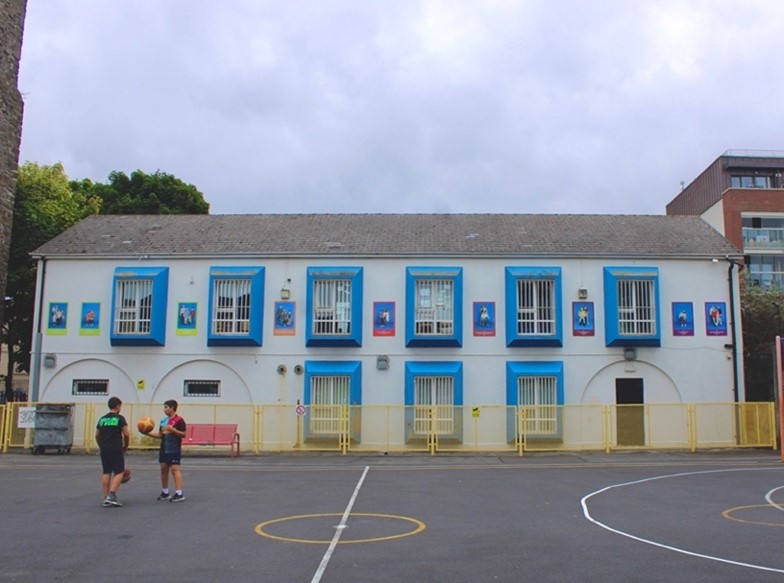
I am residing in Dublin, which is a huge immigration hub. This summer I am interning at a family resource center located in Dublin 1 (the descriptor “Dublin 1” serves as a zip code). Over 80% of the residents in the neighborhood are immigrants, and though the area is referred to as Dublin’s Chinatown, the residents come from all over. My job is to help habilitate immigrant families into the Dublin area. At least, that is how I will phrase it on my resume. The job is much less formal than the title implies. The organization I work with is called Hill Street. Before sharing any other information, I feel you should know that the property of “Hill Street” (which includes a main building, a basketball court, and 2 playgrounds) is also an old graveyard. It was literally built on top of a cemetery. The headstones still line the fence of the playgrounds because the city had nowhere else to put them. There is also a very old structure that isn’t technically a castle but definitely looks like a castle. Yes, they have a key and no, you cannot go inside (I asked). There are 8 employees at Hill Street; four are Irish, two are Chinese, one is Hungarian, and one is Brazilian. All are women. All consider each other- and now even seem to consider me- family. They are family to each other, and they are family to hundreds of families in Dublin. 

Throughout the year, Hill Street runs various programs to help set parents and children alike up for success in Ireland, as well as hosting a handful of events for the community. I call it a community, but I feel that word implies that this is a niche group of people with lots in common. That does not remotely describe the citizens of Dublin 1. The programs and events Hill Street puts on provide for thousands of people: families and children of business owners, technicians, office workers, merchants, and laborers, many of whom are immigrants or first-generation Irishmen. All of whom lack the village they need to raise their children. That is what Hill Street is there for. The program they are most renowned for at the moment is called “Prep for Preschool”. In Ireland, children are given two years of free pre-school before beginning real school at age 5. Often times immigrant children have never been away from their parents, since they have no friends or family in the area to help care for them. Many kids are incapable of handling more than a few minutes away from their mom and dad. Prep-for-Preschool introduces and acclimates them to a schooling environment slowly and builds their tolerance for being away from their parents. As the kids become more independent, and the length of their time apart grows, the parents are offered classes downstairs. There is a curriculum in place, covering everything from how to register for free healthcare to classes on speaking basic English. A plethora of information is made available to these parents while their 1- and 2-year-old children develop necessary social skills in another room, all for no financial burden. 

The event Hill Street is most renowned for at the moment is Chinese New Year’s. If you’re still reading this, please Venmo $5 to @peyton-mosman. I am saving for a plane ticket so I may attend in February of 2023. The celebration is incredible; it lasts several days and has over 5,000 attendees (even in COVID years)! There is even an avidly managed potluck style table set up, so families can share their culture’s cuisine. Authentic food from authentic people from China, Thailand, India, Poland, Ukraine, Brazil, Germany, Hungary, and many more countries, some I’d never heard of before. The children spend months preparing dances and performances. There is live music and a stage and even a cotton candy machine. I hope to attend someday, but luckily I was around for Hill Street’s Intercultural Family Fun Day (see photo above), which proved to be a slightly toned-down version of Chinese New Year’s, with about 1,000 people in attendance, including several members of the Dublin City Council.

If you’ve made it this far you may have pondered the question: how does Hill Street pay for all of this? Who coughs up the dough for an event for thousands of people? Who is maintaining the expansive property they use? To work in Ireland with children I was required to be trained and vetted by the Republic of Ireland, so I assumed this was going to be a government job. However, upon my arrival I learned that Hill Street is a privately run organization. Most of the funding comes from the Dublin City Council, and the money is directed towards an approved proposal. For example, Prep-for-Preschool and the Chinese New Year’s Celebration were approved proposals. More recently, when the conflict in Ukraine began just a few months ago, Hill Street proposed a bi-weekly day care for parents and children. This offered the mothers a place to network, to ask questions, to meet other Ukrainian families going through the same thing. It gave the children a sense of normalcy, access to playgrounds, and exposure to other kids. It gave them a community. The city of Dublin had placed dozens of Ukrainian mothers in the hotels in Dublin 1, where they stayed for months until more permanent housing became available, and their fathers and sons and husbands were able to come join them. 

Hill Street’s latest proposal is for a new building. My supervisor told me in my first week that Hill Street has a lot of respect from the citizens of Dublin right now. This proved to be true at the end of my third week when we got news from the Dublin City Council. They have approved a blueprint that will not disturb the really old building or graves. They have the backing of several important organizations and politicians. They have a timeline that estimates construction completed by 2028. The true details of how they have accomplished this are lost on me, naturally. My knowledge of how to obtain government funding in Ireland is minimal, but regardless, Hill Street is expected to have a new building by 2028!

As we approach the start of European Summer Holiday (the month of August), the entire country seems to be winding down. The Irish are very respectful of the 9-5 workday, and everyone gets a month off in August. If America is going to adopt any customs from Europe let it be that and the free healthcare. The program I have helped to put on over the last four weeks is referred to as Summer Camp. A group of 16 kids come Monday through Friday, 10 a.m. to 3 p.m., and we take them on three adventures. One to a local beach and one to a local park, both via public transportation, and one “Family Trip” via private rented bus. The family trip consists of the summer camp kids (a new group each week) and about 70 families from the area (a lot of the same faces I love). We are only responsible for the summer camp crew, with a ratio of 4 kids to every 1 adult. So, to put it in my perspective, I have spent the last month xtravelling Dublin, sight-seeing with some dear friends I have made over the summer, none older than seven or younger than two. Many of whom I am unlikely to see again. Some of whom don’t speak English, but hey, how much do you understand a three-year-old anyway?

Now, buckle in, because I am about to get to the most important lesson in this blog post. The cherry on top of this whole freaking thing. The fact is that the hardest part of study abroad is getting there. They give you so many hoops to jump through, so many meetings and emails and phone calls and decisions and scholarship opportunities that you really need because they also make study abroad so very expensive. And if you do all that, you will find yourself getting on a plane with no clue in the world what you are walking in to. And then you just live. And that is the lesson. Because if studying abroad has shown me anything it is that I can do it. I can make my way in the world. This is the first time I am the only one accountable for myself and this is the only time I will be accountable for only myself. I am so unbelievably young and free. And that is the beauty of being in your twenties.
And so, as this blog post (which has turned out to be far more heartfelt than intended) comes to its close, I want you to know that this summer I also travelled 6 out of the 8 weekends I was abroad. During the week I worked 9-4, but I got off early on Fridays and managed to see London, Spain, Italy, Switzerland, Belfast, and the Aran Islands. And although I could write an entirely unrelated blog post about why you should travel, the experience of actually working and living in another country is the part of my summer abroad that shaped me and enabled me to grow as a person over the last two months. They say the point of an internship is to learn what you want from your career. This experience has confirmed not only that this is the field of work I want to go into, but also that I want to work in Ireland. So, in a year, with a bachelor’s in psychology, I hope to go work and study in Ireland. It isn’t as warm as Texas, but with free healthcare and affordable education, Ireland has definitely won my heart.  

31 May 2022

The Do's and Don'ts of Packing for a Study Abroad Trip #HogsAbroad in Florence

Hey! My name is Katie Fowler. I am a Walton College Honors Student who is studying Marketing. I participated in the AIFS StudyAbroad Program in Florence, Italy during the Spring 2022 semester.

The anticipation leading up to a study abroad program is almost unbearable. One of the things I did to pass the time was creating an extensive packing list. I wanted to be prepared for whatever weather or event I may face during my program. In the weeks leading up to my departure I researched the average weather in Italy so I could accurately pack the clothing that I would need. I also took that time to expand my wardrobe so that I could better “fit in” with the fashion trends in Florence and not immediately be pegged as a tourist. Over the weeks I slowly took inventory of the items I wanted to bring with me. I tried to keep my packing list as minimal as possible so I would have extra space in my bags for souvenirs. Now that I am back home after the most incredible three months of my life, I can definitively say what was helpful and what was hurtful while packing.

My first piece of advice is to keep things simple. I was only brought one checked bag, one carry on, and one personal item with me to Italy. I wanted to make things easier on myself because I knew I would have to carry all my luggage up four flights of stairs. It was also helpful only having a small amount of luggage while getting around the airport. My main goal was bringing the things I needed while still being self-sufficient.

The key to packing is making your clothes as small as possible. One of the best ways to do this is to roll your clothes. You can find many tutorials online on how to do this, but simply it is slightly folding your clothes and then rolling them up as tight as you can. Then you can place all these items in your suitcase, and it takes up much less space than by folding your clothes. I was able to fit almost all my clothes in one half of my checked bag by using this packing method. In the other half of my checked bag, I put a few pairs of jeans, my shoes, toiletries, and miscellaneous items. I even had room to spare in my bag after I finished packing, and this was without the expandable portion in use.

Another thing I did to cut down on how much I packed was only bringing clothes I knew I would wear. I didn’t want to take up valuable space in my bags on clothing I would never wear. I also only brought four pairs of shoes with me to Italy. I packed two pairs of sandals for warmer climates, one pair of sneakers, and one pair of boots. Shoes take up the most space in your bag, so try to consolidate them and bring only what you need. The shoes I brought were versatile and comfortable, so I was able to wear them with many different outfits and circumstances. It’s also no surprise that you are going to want to purchase clothes while abroad. Take this into consideration when you are packing. Leave plenty of space if you know you are going to want to expand your wardrobe. Another piece of advice is to pack staple items that you can layer and re-wear to form different outfits. One item of clothing can become so many different outfits which saves space when packing. Something to keep in mind when packing is that many things will not need to be packed for your return trip. For instance, I used up the majority of my toiletries while I was abroad. I had a large box of menstrual products and a large box of face masks that I used which gave me more space to pack souvenirs.

By far the best decision I could have made was bringing a backpack. Both my carry on and my personal items were backpacks of different sizes. I was able to use my personal item as my school backpack while in Italy and my carry on was beneficial for travelling. Many airlines in Europe, such as Ryan Air, only allow you to bring one personal item on the plane. If you would like to bring a carry on you have to purchase it for an extra cost. For travelers wanting to save money its best to stick with the personal item. I was able to use my carry-on backpack as a personal item on every flight I went on. I used the rolling packing method to fit everything I would need for the trip in my bag and was able to shove my bag under my seat. This was incredibly helpful because not only did I save money, but it was so much easier getting around the places I was travelling with only a backpack. Walking is the main form of transportation in Europe, at least it was for me. It would have been miserable lugging a suitcase around on the bumpy cobblestone streets. With a backpack you have your hands free and can walk with little hassle.

Lastly, I just want to mention a few things I packed that came in handy on more than one occasion. The most important thing was a first aid kit. I bought a premade kit from Welly right before I left the states. It included bandages, triple antibiotic ointment, cortisone cream, and hand sanitizer. This was so useful for blisters, cuts, scrapes, and minor injuries for myself and many of my classmates while I was abroad. I also packed plenty of ibuprofen and allergy medicine which proved to be helpful. Another thing I would advise bringing is a rain jacket and an umbrella. You obviously don’t want to be caught out in the rain and get soaked in the process. Finally, my favorites items I brought were my cameras. I brought three different types just so I could get a variety of photos while I was abroad. Make sure you are capturing so much of your experience. This way you can look back and remember the exact moments, friends, meals, trips, and fun that you had. The easiest way to capture this is with your phone. I have so many photos and videos from my time abroad that I will cherish forever. I also took more professional type photos with my DSLR camera. I mainly used this when I was travelling or visiting a place for the first time. I just wanted to make sure I had good quality photos I could share and look at for years to come. The other cameras I brought were more for my own enjoyment. The first was a Fujifilm instant camera. These are fun because you’re able to have the photos immediately. The second was a disposable camera. The fun thing about these is that you have no idea what the photos are going to look like until you get them developed. I have yet to get mine back, so the anticipation is still killing me. My point is that you want to capture as much as you can of your time during your study abroad program. Don’t be ashamed to lug around three different types of cameras (plus your phone). I can assure you; you won’t be the only one. Plus, this is not only fun for you, but for the friends you will make along the way.

I hope these tips have helped and I encourage everyone to study abroad. It will truly be the best time of your life!

--
Marketing major Katie Fowler spent the Spring 2022 term in Florence with AIFS with support from the Office of Study Abroad Scholarship and Walton College.


You can start planning your adventure abroad today! Dive in to our Explore page at 
https://studyabroad.uark.edu/explore/index.php, and start your program search at http://studyabroad.uark.edu/search/

25 October 2021

Studying Abroad: It Can Be Overwhelming #HogsAbroad in Spain

Hi! My name is Caroline Jennings, I’m a senior studying Math with a concentration in Applied Math and English with a concentration in Creative Writing. I’m also studying Spanish as a minor, which is part of what led me to study abroad in Salamanca, Spain this past summer. With COVID still messing the world up, I wasn’t sure I would ever make it to Spain. Even when I was actually given the opportunity, I hesitated; I wondered if traveling abroad would be too stressful, considering the circumstances.

Was I wrong? Not entirely. But after six weeks of immersion into Spanish culture, I have zero regrets. In fact, after being home for two months, I’m just disappointed that I can’t remember every moment!

To be fair, not everything was perfect every single second. Living in a homestay, trying new foods, struggling with language, etc. can take a toll on a person—I don’t want to try to convince anybody that their study abroad experience will be 100% perfect. But, after experiencing it myself, hopefully I can give some tips that will help make your study abroad experience 100% worth it!

Too Much All at Once
My biggest problem throughout the six weeks was feeling overwhelmed. There wasn’t necessarily much that I disliked, it just felt like I was experiencing SO MUCH in such a short period of time. I couldn’t take any of it in. I would lay in my bed at night feeling like I blinked and missed it all, and I hated it. In an effort to remedy this issue, I called a friend and asked for advice.

Some people may tell you (as they told me) to simply “live in the moment.” Okay but…how? What does that even mean? I took my friends advice as the answer to that question. She told me that if I didn’t feel like I was able to absorb everything at once, then I needed to find ways to keep track of things so that I could check them out later.

Take Notes
One way she said to do this was to write every possible thing down. So, I bought a little journal. Even though I was busy, I tried to write something at the end of each day. I ended up writing down every single thing I ate, fun things that happened in class, and experiences with my host family. There were days that I chose sleep instead of notetaking, of course, but I did my best to catch up when I could.

Don’t just write down the literal stuff, keep your feelings in mind as well! When you’re in the middle of something overwhelmingly exciting (like a special excursion), try to take note of certain things. Do you feel hot? Cold? Scared? Shaky? Giddy? Latch onto those feelings and attach them to the memory.

Take Pics
Aside from that, my friend told me to keep visual reminders of everything I experienced. When I went on excursions, I took pictures of EVERYTHING, shamelessly. Yes, it’s good to put the phone down and look with your own eyes, of course, but I wanted to save memories in a physical place outside of my brain, and my phone camera allowed me to do that.

Don’t Underestimate Your Senses!
Another tiny but related tip she told me was to hang onto smells. Smell is an underrated sense when it comes to memory—a simple nostalgic sniff can bring you back to a memory you thought you had lost. Take advantage of this when you study abroad! I did my best to take note of any delicious foods I smelled in hopes that I could one day make something similar and end up (momentarily) back in Salamanca. It sounds crazy, but it’s possible!

The Bottom Line
It may be easier said than done, but try not to get too sad if you feel like you’re letting life fly past you while you’re abroad. Your brain will be trying to take in 5000 different things, so it’s perfectly reasonable to struggle with feeling present and engaged. All you can do is take note, take pics, take time to breathe, and have fun! That way, you’ll be able to spend time with all of the memories later.

--
Math & English major Caroline Jennings spent the Summer 2021 term in Salamanca, Spain with AIFS with support from the Office of Study Abroad Scholarship.

You can start planning your adventure abroad today! Dive in to our Explore page at https://studyabroad.uark.edu/explore/index.php, and start your program search at http://studyabroad.uark.edu/search/

21 October 2020

That One Time I Got to Play Fútbol with Locals #HogsAbroad in Argentina


Blog post courtesy of AIFS Study Abroad


It is no secret that fútbol (soccer) is extremely important throughout all of Latin America, but I have found this to be especially true here in Argentina.

Argentina has a long history of success with the sport on both international and local levels, and rivalries are strong on both levels as well. Coming to Argentina, I was really excited to embrace this emphasis on soccer, as I played the sport throughout my childhood and high school and was excited to be in a culture that placed it front and center — unlike that of the United States. I was even more excited when one of our program leaders organized a night for us to play fútbol in Argentina with the locals.

We held the game at one of the many indoor stadiums here in Buenos Aires and it was fun to watch some of the more competitive groups play while we waited for the field that we had reserved to be free. Our game was very casual and we split up into three teams so everyone would have a chance to take a break while other teams were playing. Honestly, I was a little nervous that my skills would be embarrassing compared to those of the locals, but they were all so kind and welcoming. Thankfully, my high school soccer days are not too far behind me, so I felt like I fit right in!

While playing a sport that I loved was super fun, my highlight of the night was getting to know the other university students who lived in Buenos Aires. It turns out that a lot of them were from other places throughout Latin America or Europe, so I had the chance to not only learn about Argentine culture, but also that of many other countries. It was so cool to connect with people from all around the world through something like soccer.


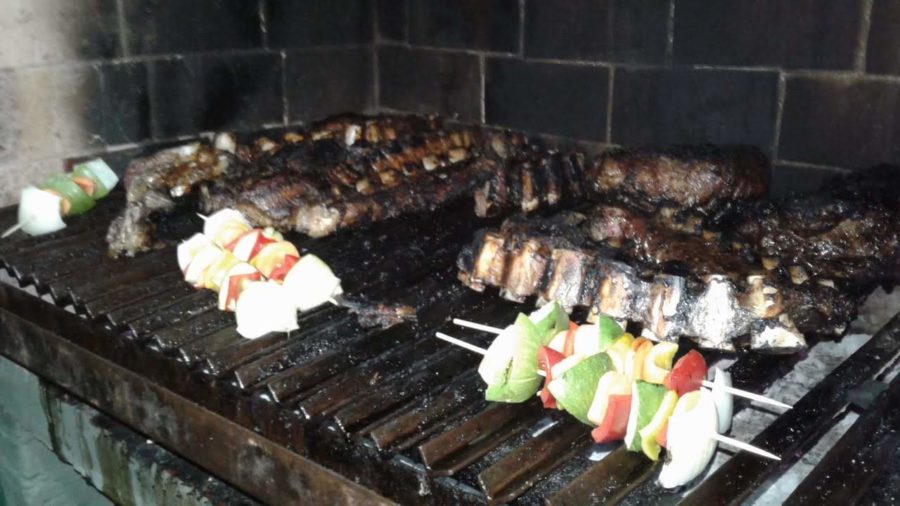
After the game, we rented a grill at the stadium and had a traditional style parrilla — similar to a barbeque-style grilled meal. I had eaten parrilla multiple times already during my time here, but this time was different because I was eating it with Argentinians. For them, it was just a typical part of life. During the meal, we were all able to relax and share stories about our various soccer experiences from the past and I learned that some of my new friends played at a semi-professional level!

This night was one of the times throughout the semester that I felt the most a part of Argentine culture. For the other students, a soccer game and parrilla is a normal Saturday night and I was so grateful that they invited me to be a part of it!

--
Political science major Megan Rodgers spent the fall 2018 semester studying abroad with AIFS in Buenos Aires, Argentina.

"My name is Megan Rodgers and I am a sophomore Political Science, International Studies and Spanish major at the University of Arkansas. I believe that experiential learning is one of the most important parts of a well rounded education and within my field of study, study abroad is the perfect opportunity to fulfill that goal. I chose to study abroad in Buenos Aires because it is the perfect place to study a wide variety of political and cultural topics while increasing my Spanish proficiency and enjoying life in one of the biggest South American cities!"

Don't miss your opportunity to study abroad! Start your search at http://studyabroad.uark.edu/search/

06 October 2020

Navigating Public Transportation in Buenos Aires #HogsAbroad in Argentina #TravelTuesday


Blog post courtesy of AIFS Study Abroad


As I prepared to study abroad, I was warned about the many difficult transitions that I might face. I knew to expect culture shock, homesickness and difficulties caused by the language barrier so I made efforts to prepare myself mentally to face these challenges. However, for me, one of the most difficult adjustments that I’ve had make living in Buenos Aires had nothing to do with culture or language or distance from loved ones. But rather, that for the first time in my life I am living in a large metropolitan city and therefore have to figure out the craziness of public transportation.

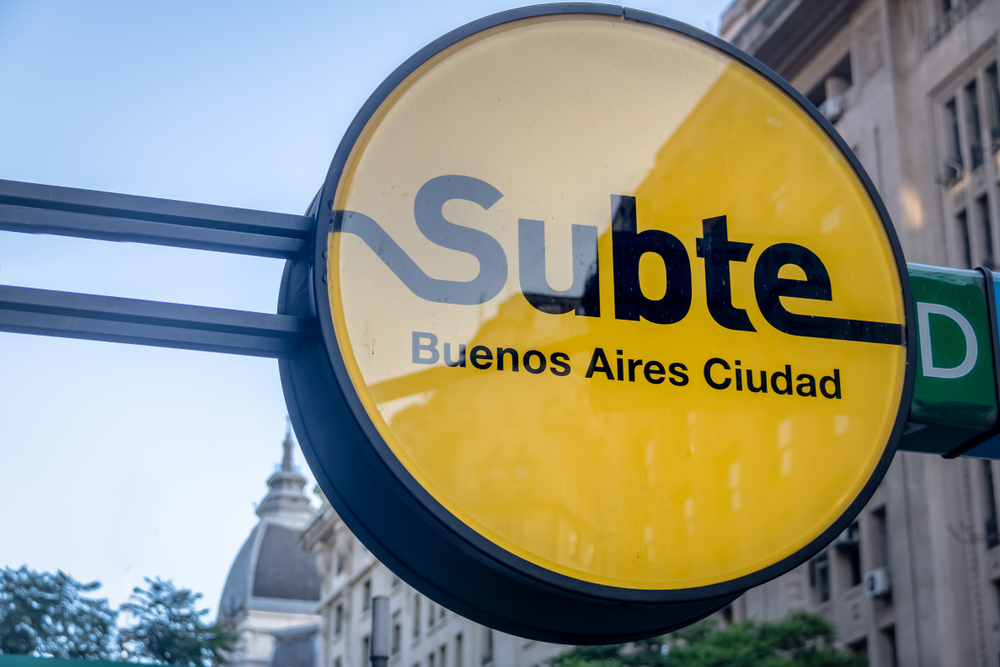
I have never lived in a city with a big enough population to support a substantial bus system, much less a metro. The subte (metro) here in Buenos Aires is fairly easy to navigate, but it was still extremely intimidating to me at first — especially during high traffic times when we manage to fit more people in one subte car than I would have ever imagined possible. However, due to its more simplistic layout, I quickly learned to embrace the chaos and it was a huge confidence-builder when I began to be able to navigate it easily and use it regularly without fear and with confidence that I knew exactly where I was going.

The buses, by comparison, can be extremely confusing, as there are over 200 different routes and you have to know the city well enough to know when you want to get off or the bus will just keep on going. For my first month of living here in Buenos Aires, I let my fear of the bus system prevent me from going to events or places that were not accessible by other means of transportation. But eventually I got tired of letting my fear make me miss out on amazing opportunities and took my first solo bus ride to an event on the other side of the city.

Buenos Aires is a huge city and it is impossible to know every route, so the city has an app called “Cómo Llego” that works similarly to a GPS to tell you what bus to take, where to find it, and where to get off. However, you still have to know when you want to get off and there is no system announcing where you are. Therefore, I learned that I could follow myself on my downloaded Google Maps and know exactly when I need to get off. The bus system is still intimidating for me, but I am slowing learning more and more routes and, after getting over my initial fear, I have found that it is much easier than I originally thought.

The train is the last mode of public transportation that I have yet to completely figure out, but I took my first train ride last week. Now that I understand the system I look forward to the new places I can reach by taking the train!

The city is also filled with taxis, which are always my fall back if I’m not sure how to get some place and don’t have the time to figure out the public transportation — or if I don’t feel safe taking public transportation for some reason. But as taxis are significantly more expensive it has forced me to step outside of my comfort zone and fully embrace city life with all of the glories of public transportation.

Despite all of these amazing options for public transportation, I have found that one of my favorite things about living in Buenos Aires is its walkability! Now that spring is coming here (Pro tip: the seasons are the opposite of the United States) and it’s getting warmer, I have found myself skipping on public transportation when I’m going to relatively close locations and just walking instead. This has given me the opportunity to know the city better, window shop and discover lots of new restaurants and parks near my homestay.

After living here for almost 3 months now, I have come to view public transportation in Buenos Aires as a perk rather than a drawback. There are routes all over the city, it has forced me to step outside of my comfort zone, embrace the Buenos Aires lifestyle, and get to know this beautiful city even more!

--
Political science major Megan Rodgers spent the fall 2018 semester studying abroad with AIFS in Buenos Aires, Argentina.

"My name is Megan Rodgers and I am a sophomore Political Science, International Studies and Spanish major at the University of Arkansas. I believe that experiential learning is one of the most important parts of a well rounded education and within my field of study, study abroad is the perfect opportunity to fulfill that goal. I chose to study abroad in Buenos Aires because it is the perfect place to study a wide variety of political and cultural topics while increasing my Spanish proficiency and enjoying life in one of the biggest South American cities!"


Don't miss your opportunity to study abroad! Start your search at http://studyabroad.uark.edu/search/

01 October 2020

Exploring South America: 5 Weekend Trips from Buenos Aires #HogsAbroad in Argentina #ThrowbackThursday


Blog post courtesy of AIFS Study Abroad


As amazing and exciting as the city of Buenos Aires is, one of my favorite parts about studying abroad here has been the opportunity to travel around the Southern Cone and get to know the rest of Argentina outside of the city. I just now got back from my last of five weekend trips from Buenos Aires during my time here and I would love to share with you a bit about each of them!

Here are five weekend trips from Buenos Aires, Argentina that you can’t miss.

1. La Colonia del Sacramento, Uruguay


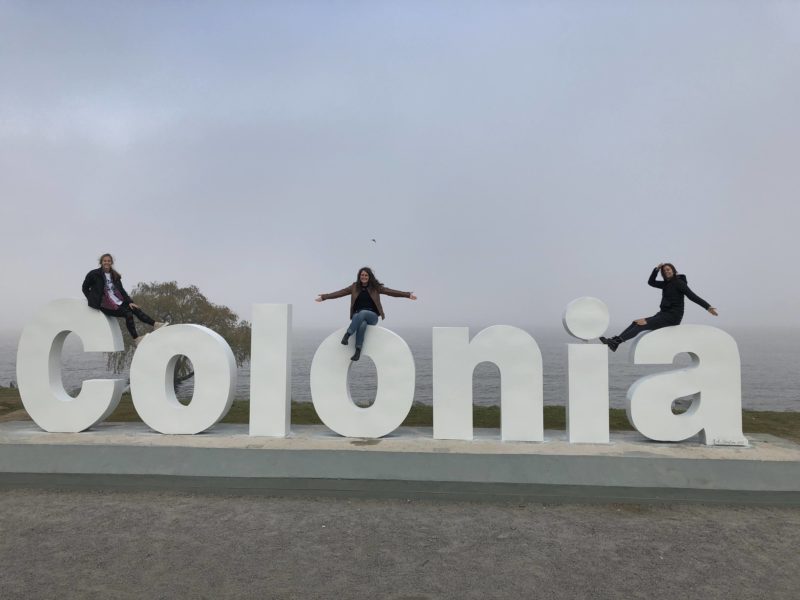
This trip was actually only for one day and it was organized by AIFS which made it super convenient and fun because I didn’t have to plan anything. La Colonia is just across the river in Uruguay, so we woke up early to take the ferry and spend the whole day there.

We spent our morning on a bus tour and then a walking tour, and then had the rest of the day to explore the town on our own. I really enjoyed my time in La Colonia because it allowed me a glimpse into the Uruguayan culture. The town has lots of really interesting history and architecture due to the fact that it changed hands between the Portuguese and Spanish seven times during colonization. Colonia is also a common weekend vacation spot for people from Buenos Aires, as it has a small beach on the river and is really quiet and calm.

2. Mendoza, Argentina

Of all my weekend trips from Buenos Aires, Mendoza was my first independently planned one. I was a little nervous but it ended up being lots of fun. My friends and I took an overnight bus from Buenos Aires to Mendoza that was surprising comfortable and rented an Airbnb for our time there.

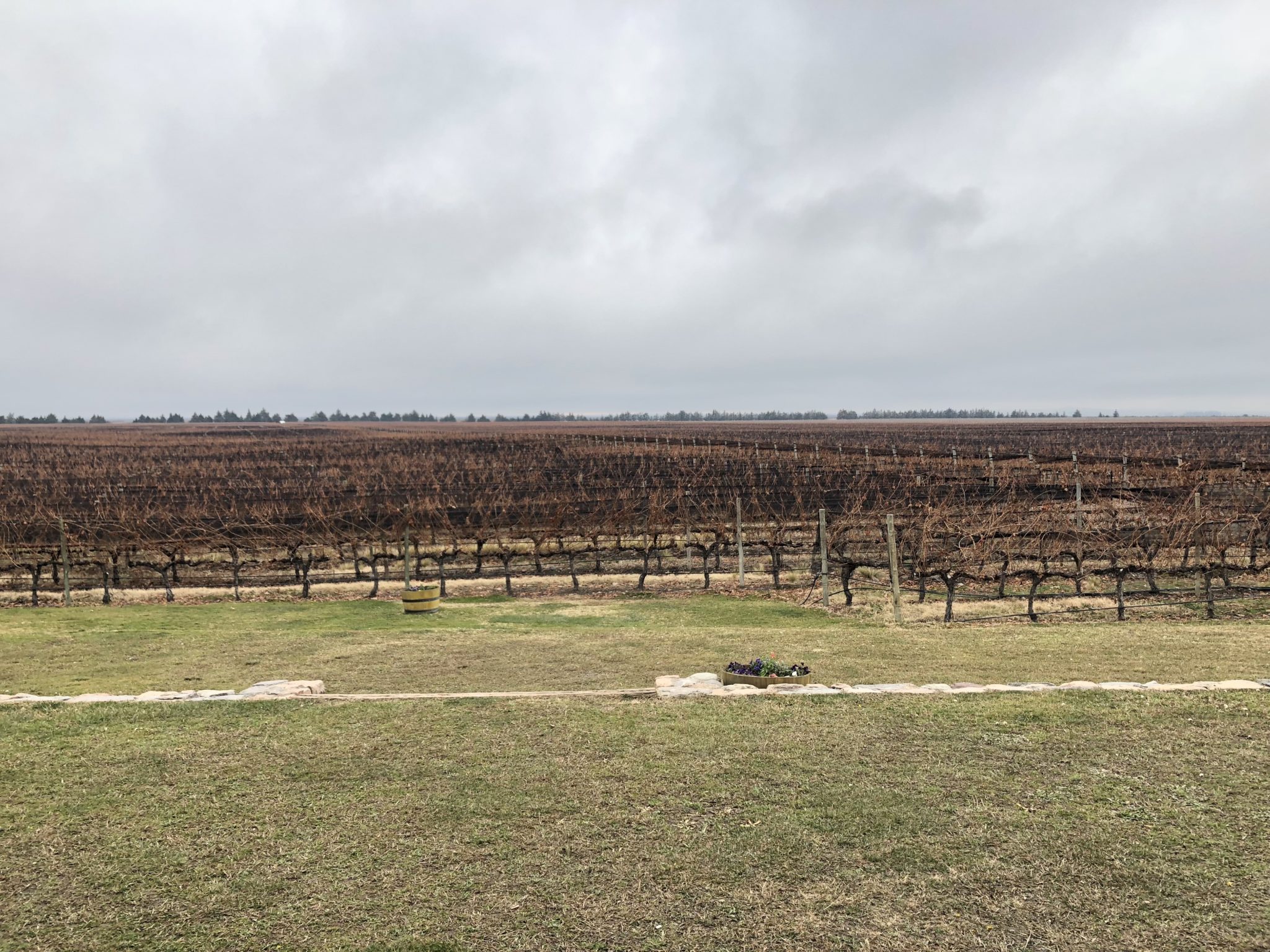
We were only there for a long weekend, so we spent one day exploring the city itself, one day on a tour of the Andes that stopped at Mount Aconcagua (the tallest mountain in the Americas), Puente de las Incas (a small Incan settlement) and the border between Argentina and Chile, and for our last day we took and all day wine tour.

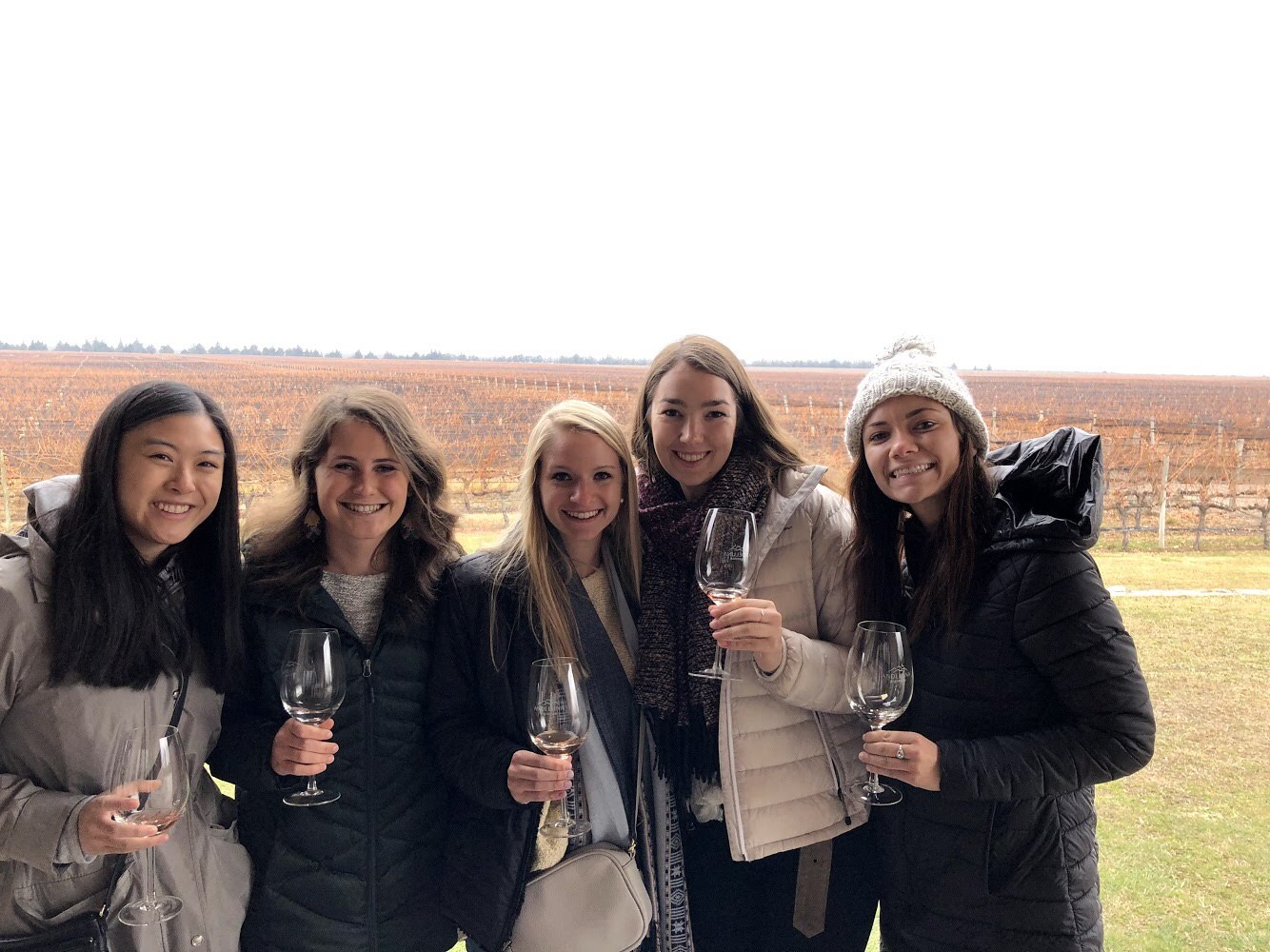
Mendoza is known for being the wine country of Argentina, so we enjoyed the traditional Argentinian Malbec, but there is so much more to do in Mendoza than just wine tastings. My favorite day was our day in the mountains! There are horseback tours, a natural hot spring, bicycle routes and hiking. If you are in the mood for a relaxing weekend outside of the city, I definitely would recommend Mendoza!

3. Santiago and Valparaíso, Chile

The third trip weekend trip that I took was to Santiago and Valparaíso, Chile. This was my first time staying in a hostel and it was so fun getting to know our companions, most of whom were from Brazil. We spent two days exploring Santiago and then took a bus to the costal town of Valparaíso for the day.

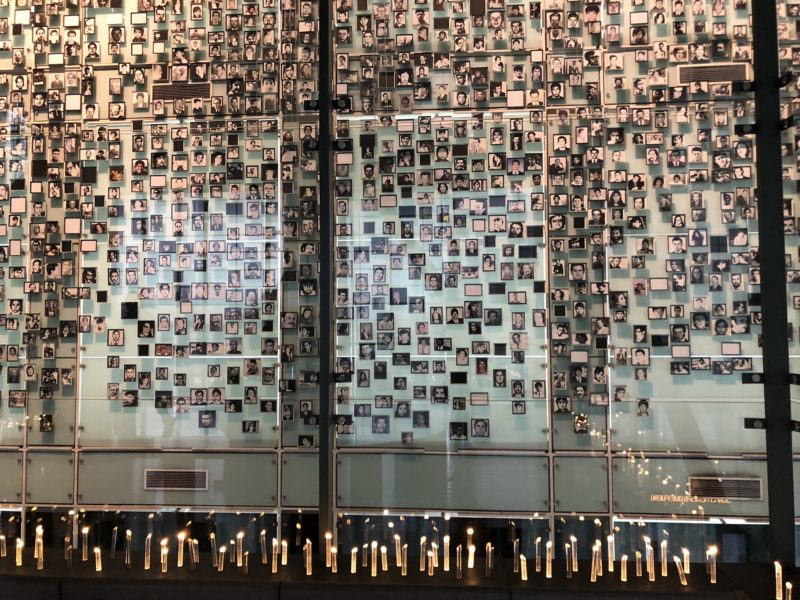
Santiago is known for its “cerros,” which are big hills throughout the city. My friends and I spent a lot of time hiking to the top of these cerros to enjoy the amazing views of the city and the Andes mountains in the background. Additionally, one of my favorite parts of Santiago was the human rights museum that was built to commemorate victims of the Pinochet dictatorship from the 70s.


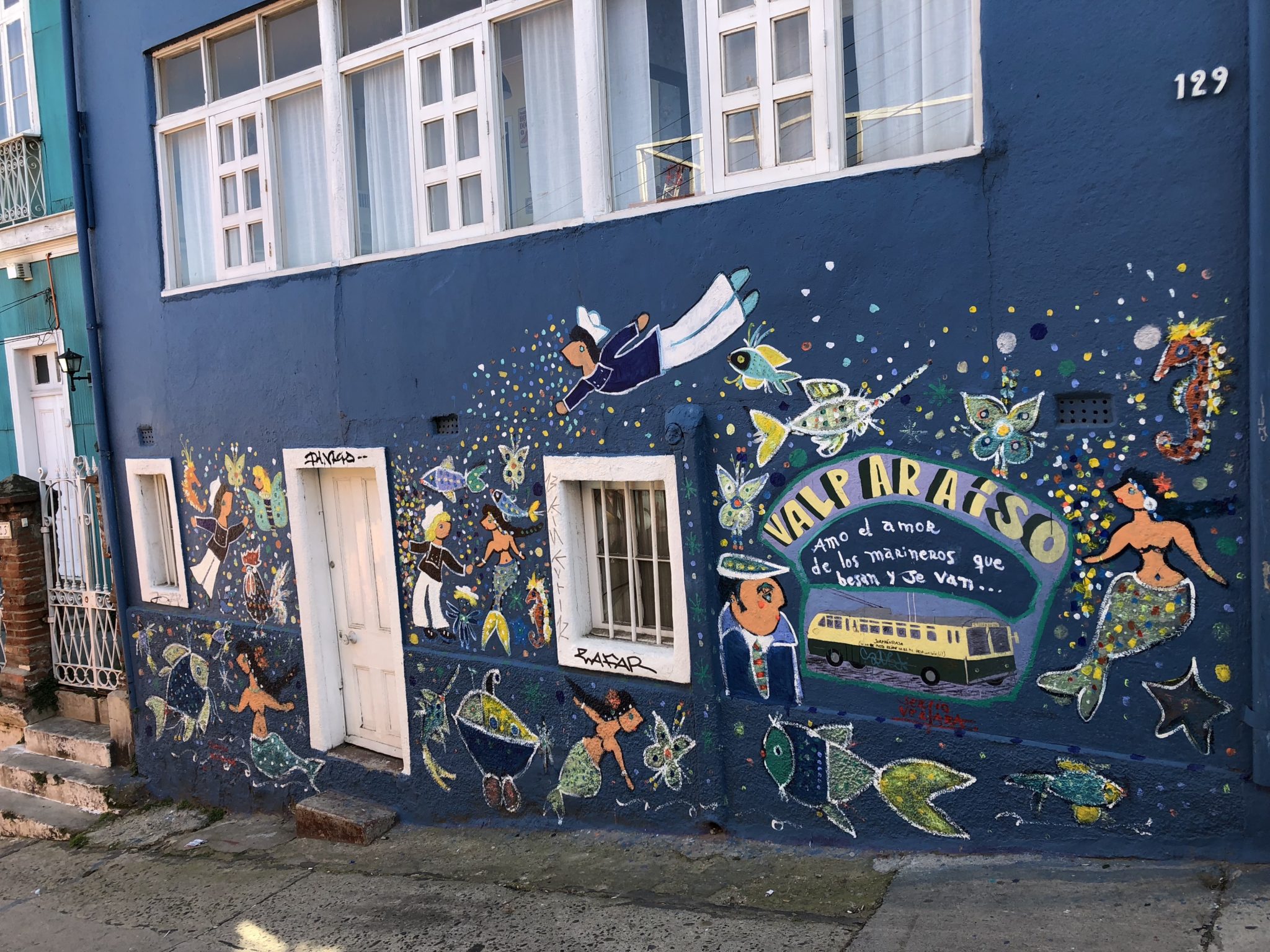
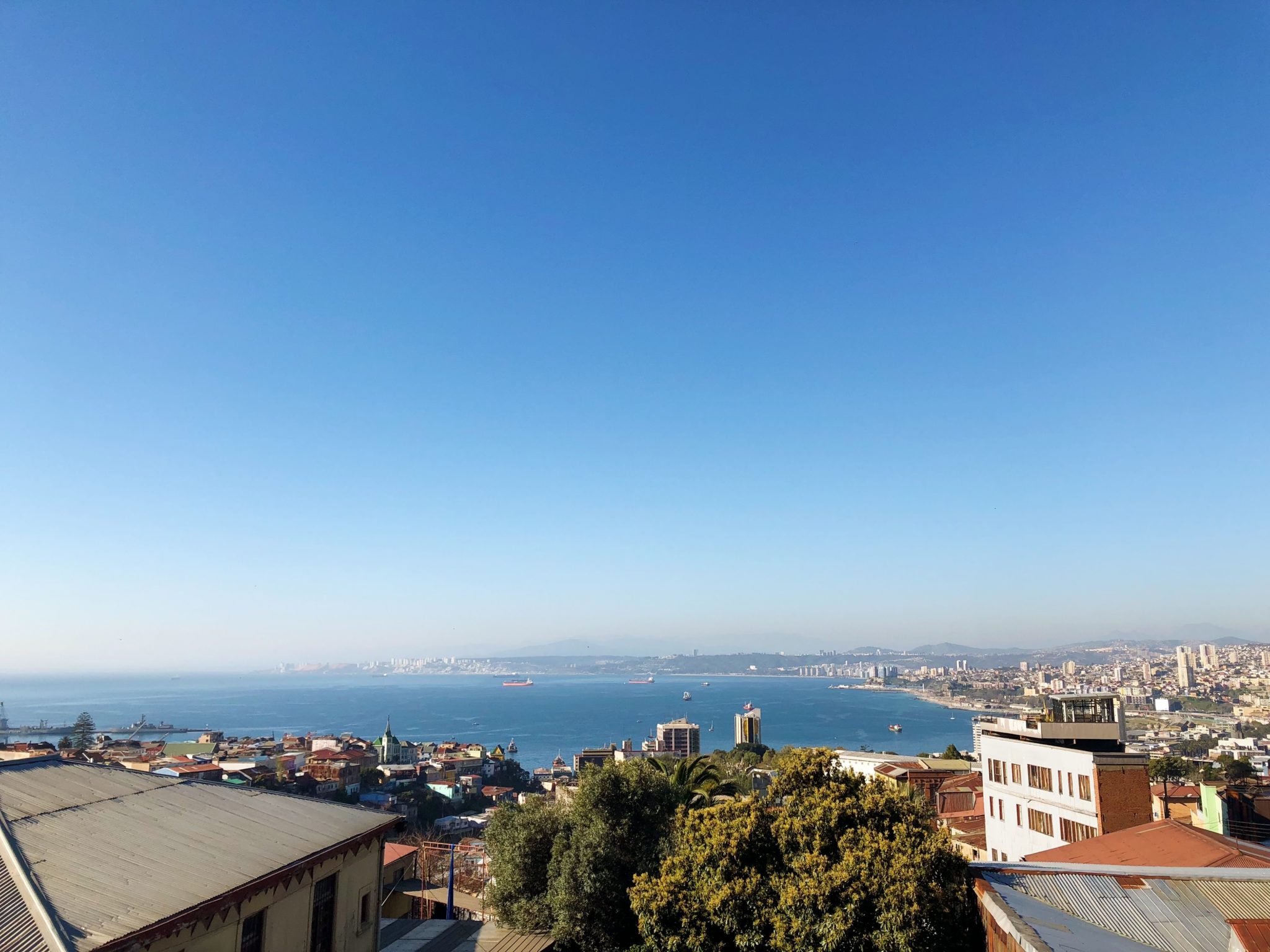
Our day in Valparaíso was my highlight of the trip. The coastal town is picturesque, with brightly colored buildings built into the side of a steep hill, artisan markets, a beautiful harbor and delicious seafood. I would definitely recommend this trip — it allowed me to see a bit of the Chilean culture and enjoy some great views!


4. Iguazú Falls, Argentina

My fourth trip this semester was to Iguazú Falls in the northeast corner of Argentina. This was one of the optional trips from Buenos Aires through AIFS and it was really nice to have someone else in charge of the logistics for the weekend, and to have our amazing Resident Director, Eva, with us!

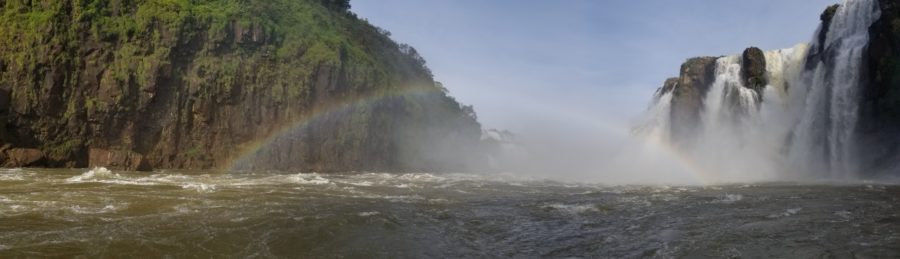
It was a quick trip, so we spent one day exploring the town of Iguazú and visiting the “punto de las tres fronteras” where the borders of Argentina, Brazil and Paraguay meet. We then spent the entire next day in the Iguazú Falls National Park. This may have been my favorite trip because the views were absolutely spectacular and, after being in the city all semester, it was really nice to enjoy nature for a bit.


There truly is no way to explain how amazing these falls are without being there in person to hear the rumble and feel the spray, so I’ll just say that if you study abroad in Buenos Aires this is an absolute can’t-miss opportunity.

5. Chaltén and Calafate, Argentina

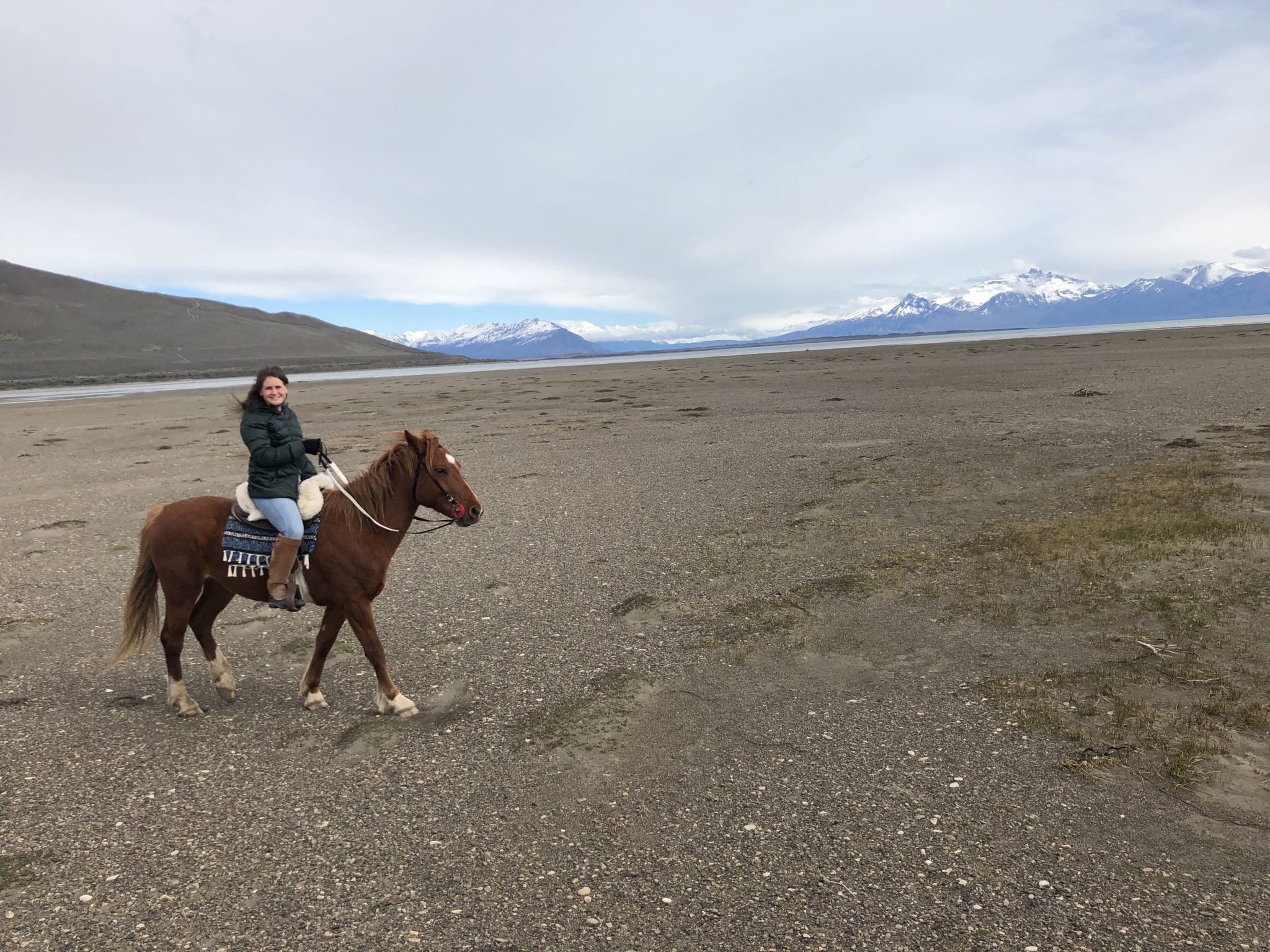
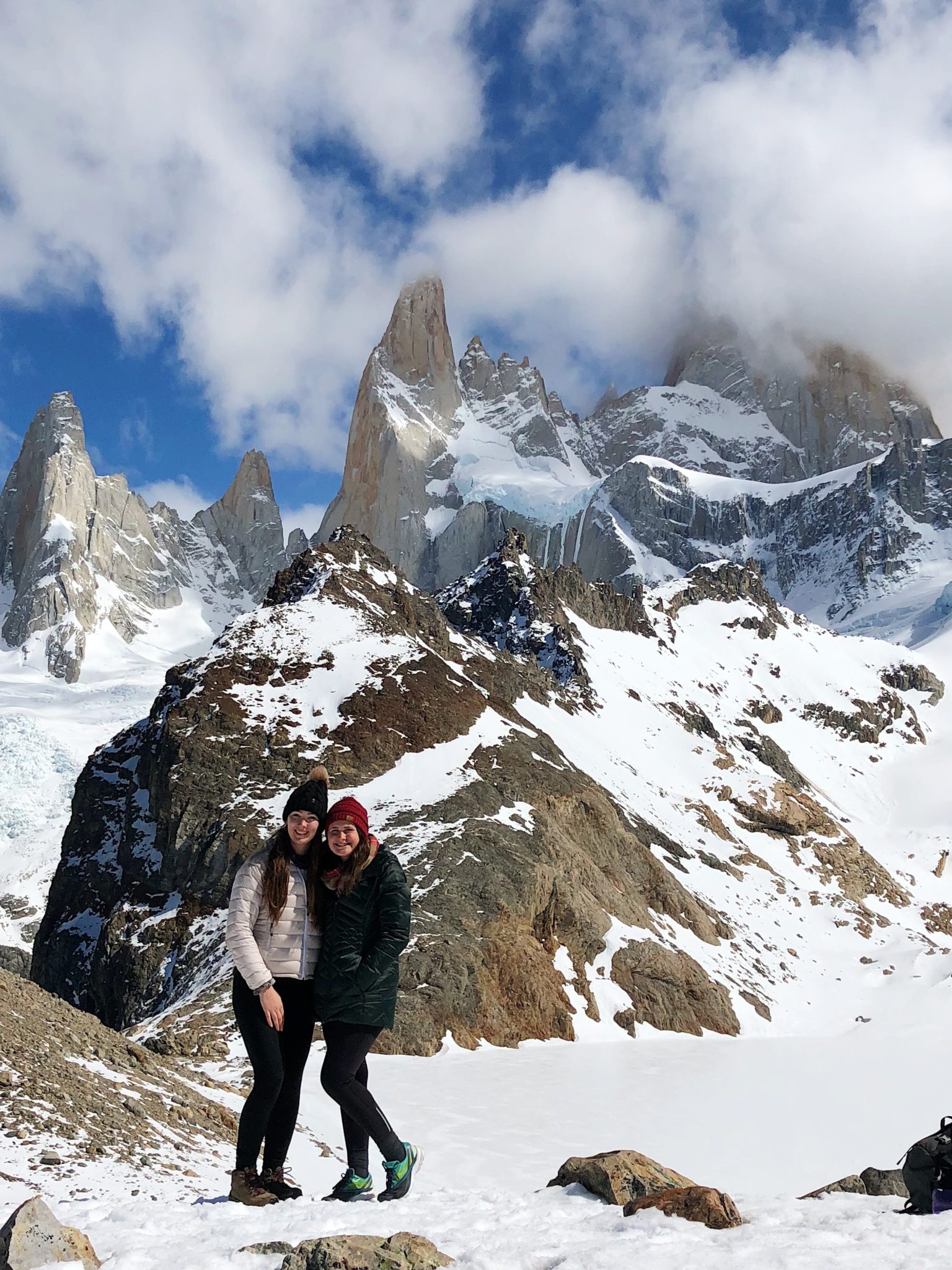
No semester in Buenos Aires is complete without a trip to Patagonia. Patagonia is a huge expanse of land that covers southern Chile and Argentina, so there are lots of places to choose from within the region, but I chose to visit Chaltén and Calafate because they are home to the famous Mount Fitz Roy mountain range and the Perito Moreno Glacier.

We spent our first four days hiking in Chaltén, which is known as the trekking capital of the world. My highlight from this time would definitely be hiking the Mount Fitz Roy trail. It was definitely not an easy hike, but the views were incredible.

After Chaltén, we spent two days in Calafate which is the closest town to the Perito Moreno Glacier. We took a full day tour of the glacier, seeing it from different angles from the boardwalk and on a boat, and finishing the day with a mini trek on the glacier itself. Trekking on the glacier was a surreal experience and may be the highlight of my entire semester! It may just be because it was my most recent trip, but visiting Patagonia was hand down my favorite.

There are so many other places throughout Argentina and the rest of the Southern Cone that I would love to explore, but unfortunately I am almost done with my semester — so naturally I am already planning my return trip. Argentina is such a beautiful country and I would 10/10 recommend spending your semester here so you can enjoy all that it has to offer!

--
Political science major Megan Rodgers spent the fall 2018 semester studying abroad with AIFS in Buenos Aires, Argentina.

"My name is Megan Rodgers and I am a sophomore Political Science, International Studies and Spanish major at the University of Arkansas. I believe that experiential learning is one of the most important parts of a well rounded education and within my field of study, study abroad is the perfect opportunity to fulfill that goal. I chose to study abroad in Buenos Aires because it is the perfect place to study a wide variety of political and cultural topics while increasing my Spanish proficiency and enjoying life in one of the biggest South American cities!"

Don't miss your opportunity to study abroad! Start your search at http://studyabroad.uark.edu/search/

25 September 2020

Food Allergies Abroad: Living a Gluten-Free Life in Buenos Aires #HogsAbroad in Argentina #FoodieFriday


Blog post courtesy of AIFS Study Abroad

For most students, one of the things that they look forward to the most about study abroad is trying new foods and experiencing the culture of another country through its cuisine. Unfortunately, for me this was actually one of my biggest concerns. When I was 11 years old I found out I had celiac disease, meaning that I am allergic to gluten. At home I have been able to adjust my lifestyle so that my allergy does not influence me at all, however it can be difficult for me to find gluten-free options while traveling. But I was not about to let that stop me from studying abroad and having the greatest experience.

Thankfully, AIFS was able to work with me to find a homestay that would accommodate my gluten allergy. My host mom, Marta, is the sweetest lady and she has gone out of her way to provide me with gluten-free options. Instead of the usual toast or pastries for breakfast, she bought me rice cakes and gluten-free cereal. She has even started making homemade gluten-free bread so that I can have toast when I want it!

Dinner might possibly be my favorite part of the day, as Marta constantly goes out of her way to provide me with gluten-free versions of all of the traditional Argentine meals. From tartas to millonasa to empanadas, I have been able to experience all of Argentina’s favorite foods despite the fact that they are traditionally full of gluten. Additionally, Marta always double-checks with me about things that she is unsure about, giving me the chance to practice my Spanish vocabulary that relates to food and cooking, and giving Marta and I a unique way to bond as we work together to find gluten-free alternatives.


Eating out is also far easier than I had imagined it would be. The Argentine government started an initiative a few years ago requiring restaurants to provide gluten-free menus to their guests and waiters here often understand my requests for food “libre de gluten,” “sin TACC,” or “para celiacos” better than waiters in the United States do.

Additionally, due to the fact that Buenos Aires is such a big city, there are many restaurants that cater especially to celiacs. There is a bakery a few blocks from my apartment where I go every week to get empanadas, pastas and sweets for the week. The lady who owns the cafe is so sweet and every time I stop by she asks me about my classes, helps me with my Spanish and asks about my experience finding gluten-free options. There is also a restaurant in a nearby neighborhood with a full gluten-free menu and one of the best gluten-free pastas I have ever tasted.


The normal diet in Buenos Aires in full of bread, pastry and pasta due to their Italian roots. However, the people here are so accommodating and there are so many different options that I have never struggled to find something that I can eat. I also have several friends here who are vegetarians or vegans and were afraid that there would be a lack of options due to the traditional gaucho dependence on meat. Just like me, they have been surprised by the vast array of vegetarian options and the extent to which their host families and the people in Buenos Aires will go to in order to accommodate them and make them feel at home. I am so glad that I did not let my food allergy prevent my decision to study abroad and am so grateful for the ways in which people here have gone out of their way to provide me with food that is delicious and gluten-free. My allergies have not hindered my study abroad experience at all. In fact, if anything they have made the situation better as they have revealed to me just how amazing and welcoming the people of Buenos Aires are.

--
Political science major Megan Rodgers spent the fall 2018 semester studying abroad with AIFS in Buenos Aires, Argentina.

"My name is Megan Rodgers and I am a sophomore Political Science, International Studies and Spanish major at the University of Arkansas. I believe that experiential learning is one of the most important parts of a well rounded education and within my field of study, study abroad is the perfect opportunity to fulfill that goal. I chose to study abroad in Buenos Aires because it is the perfect place to study a wide variety of political and cultural topics while increasing my Spanish proficiency and enjoying life in one of the biggest South American cities!"

Don't miss your opportunity to study abroad! Start your search at http://studyabroad.uark.edu/search/

02 July 2020

Conquering My First Trip Out of the Country #HogsAbroad in Spain #ThrowbackThursday #GilmanScholarship

I am Dayli Satterfield, a junior Communication Sciences and Disorders major with a minor in Spanish. This past summer, I decided to study abroad in Spain to work on my Spanish language comprehension and to dive into the culture. I had always planned to study abroad and thankfully got the opportunity to do so for 6 weeks in Granada, Spain. Since I had never been out of the United States, I had no idea what to expect. I knew language would be a great barrier to overcome during my stay, but there were also many other obstacles on the horizon.

1. Traveling 10 Hours On My Own

I had never flown by myself or had to navigate an airport alone. Once my parents walked me in, helped me check into my flight and receive my tickets, I had to say goodbye. Security wasn’t so bad, but waiting almost two more hours until my departure was a very difficult time. It reminded me of being a little girl at the doctor’s office, knowing I had to get a shot, and having to wait for it anyway. I was fighting back tears of already feeling homesick, and I kept blowing up my friends’ and families’ phones, needing reassurance because I wasn’t sure I could do it. I tried reading a book at one point, which didn’t even help to calm my nerves. The time had finally come to board my flight, and that was when the true anxiety set in. I had always wanted to travel the world, and I was getting my chance, but I felt like I needed a familiar face to travel with me. It’s one thing to dream about something for years, and quite another to actually experience it. 

For good luck or superstition, I always touch the outside of the plane before entering and getting seated. I made sure I touched this one, especially since I was going to be on an eleven-hour flight by myself to a strange, new country! I placed my carry-on on the shelf above me, plugged my headphones in, and started watching any movie that caught my attention to ward off bad thoughts and nervous feelings. After the longest flight I’ve ever experienced, with no sleep, I finally landed in London.

2. Meeting Complete Strangers and Becoming Friends

Once the plane landed, I was directed to find my luggage and look for a tall man holding a sign with my program’s name on it. I was nervous, had just regained Wi-Fi, and was searching for a needle in a haystack. Luckily, I found the man and joined a circle of strangers meeting for the first time. We exchanged names, where we were from, and shared our nerves and feeling so out of place. After waiting for a few more people to land, we headed to the bus that would take us to a hotel about an hour away.

Looking out the window, I felt like I was in a dream. “Am I really in London?” It was a place I had only seen on TV and in pictures, and now I was sitting on a bus with strangers, ready to experience it! With two days to spend in London, our tour guide took us on a bus tour of the city to see Big Ben, St. Paul’s Cathedral, Buckingham Palace, Kensington Gardens, and the London Bridge. I had made some friends and was starting to feel more comfortable navigating this foreign area, and then it was time to leave. At least there was no huge language barrier in London; a fact I realized later that I had taken for granted.  
(A picture I took of a telephone booth near my hotel in London)
3. Traveling to a New Country All Over Again 

The London tour came to an end, and it was time for the reality to set in that I was going to be spending 5 weeks in Spain. The flight wouldn’t be so long this time, but the culture and language were about to change completely. I slept on the three-hour plane ride and was able to navigate the airport and find the meeting place for my program. At least this time I had a few familiar faces—the ones that I had met in London who were in the same program. We all met the woman that would be guiding us for the next few weeks and followed her around like lost ducklings. She guided us to our bus and filled us with information on the hour-long ride to Granada.

Once in Granada, some of us were separated based on homestay, apartment, or dorm living. My roommates and I followed another program leader to our apartment, and he showed us around the 5 bedrooms, living room, and kitchen that we would be sharing for the next 6 weeks. While there was no air conditioning, I did have the bedroom with a balcony, and there was Wi-Fi so I could call my parents to let them know I had made it. I felt stressed and quite scared. I had gone through so much in just a few hours and had already started to feel homesick, but I knew I had to power through.

4. Getting Adjusted to the Culture and Language

Before arriving in Spain, I had taken some Spanish courses in high school and three semesters throughout college. Even though I had some knowledge about the language, I was close to an intermediate level when it came to conversation. I thought it would be a breeze, but becoming fully submerged in the Spanish language in Spain was very intimidating. I had to ask my friends constantly how to order my food, find directions, and simply what to say to others to sound polite. My lack of Spanish and strong Southern accent made my friends and me seem out of place, but as the days went by, things progressively got easier. Besides the language barrier, the culture was like nothing I had ever experienced. There was a 7-hour difference in time zones and I quickly learned that Spaniards enjoy late nights and early mornings. Breakfast consisted of coffee and a croissant. They don’t eat an actual meal for lunch, it’s’ more like snacking on bread or toast and coffee in the early evening. Dinner doesn’t begin until around 9 p.m., and that was when all the night-life emerged. Bars, restaurants, and clubs opened and were ready for business. I feel like I never fully adjusted to the eating and napping or siesta times, but they were easy to adapt to for a short time

Culture shock is a real thing that many people think will never happen to them. I was one of those people in the beginning. London’s culture was different from the United States’, but it was easy to adjust to since I was only there for 3 days and felt comfortable because English was the main language. Spain, however, was completely different. A language I had only been somewhat familiar with was now required, and a culture that I had no idea even existed was where I was living. It made me feel discouraged when I could barely order my food at a restaurant or when locals came up to talk to me, and I had to reply, “No hablo bien Español.” I learned what I knew about the Spanish language in the United States from the Mexico point of view, but the Spanish spoken in Spain has many differences. They used a few different words for different items and used phrases differently than everything I had always learned. In the 6 weeks of being in Granada, I was able to learn the cultural differences and became aware of them. The culture and language is what I fell in love with.
(Me, standing at the top of a tower at the Alhambra in Granada) 
5. Feeling Like a Second Home

The homesick feeling came often, and I counted the days until my flight home, but the people I was surrounded with everyday made Granada feel like my second home. The more I walked around the city and went on group excursions with my program, I started to understand the history of Granada and my love for it grew. I made a wonderful group of friends that I spent almost every day with. We supported each other when we needed it. We formed an unbreakable bond that began with this shared experience, and we still talk in a group chat today.

I had class 5 days a week for hours on end, and that’s plenty of time to become good friends with classmates. My class contained 9 people, including myself, and we were all from the United States. When you’re out of the country for a while, sometimes that’s all you need to feel close to someone. For my main language class, we had two different teachers for the different sessions, with a 20-minute break in between. My classmates and I would always joke with our teachers and felt so comfortable with them that we were able to build a strong bond. Our teachers would introduce us to cultural norms in Spain, and in return, we talked to them about norms in the United States. Hearing Spanish throughout all times of the day and being forced to speak it helped alleviate some fears of not fitting in and helped me create a special spot in my heart for the city of Granada. The people I met there and locals I got to know shaped my perspective of Spain and sparked my love for the culture and language.
(My friends and I after dining at a famous Flamenco Show restaurant)
6. Time to Pack Up
I was afraid the 6 weeks would drag on, but they ended up going by too fast. Before I knew it, it was my last week in Granada, and I had to start packing my suitcases. I thought it would be impossible to pack up 6 weeks of belongings plus 6 weeks of souvenirs into one, big suitcase and a carry-on, but I somehow managed.

Deciding to study abroad was one of the best decisions of my life. I learned more things about myself than I could ever even imagine. I learned how to overcome my fears, be more outgoing in quiet situations, and to be myself in all situations. Becoming friends with complete strangers and being in a foreign country can add a lot of anxiety to the mix, but I learned to make the best of it. Spain helped me grow as a person, mentally and emotionally. The experience isn’t something I take lightly, because I am aware that not everyone is able to get the opportunity to study abroad. I was lucky to have that chance, and I made the complete best of it. Although it seems scary, it is a chance worth taking. I missed home, but I also didn’t want to leave Spain. It was not easy to feel at home in a foreign place filled with such new experiences, but making new friends made it so much easier. Spain has a piece of my heart. I learned about the country’s language and culture through being immersed completely in it, and the experience positively impacted the way I view my own culture. I am forever a Granadina.
(This was painting on a stair step in the city. “Granada, te amo.” ) 
--
Communication Disorders major & Spanish minor Dayli Satterfield spent the Summer 2019 term in Granada, Spain with AIFS, with the help of our Office of Study Abroad Scholarship and the Gilman Scholarship.

Don't miss your opportunity to study or intern abroad! Start your search at http://studyabroad.uark.edu/search/

--
About the Benjamin A. Gilman International Scholarship Program
The Benjamin A. Gilman International Scholarship Program (http://www.iie.org/Programs/Gilman-Scholarship-Program) offers grants for U.S. citizen undergraduate students of limited financial means to pursue academic studies abroad. Such international study is intended to better prepare U.S. students to assume significant roles in an increasingly global economy and interdependent world.

05 December 2019

2019 #HogsAbroad Photo Contest Winners

The winners of the 2019 Study Abroad Photo Contest were announced and displayed during the opening session & International Bazaar during International Education Week.

During the previous school year, over 1,100 students studied abroad in 50 different countries.

These students submitted images capturing the places they visited, the people the met, and the wide range of "classrooms" they worked in -- including community clinics, cathedrals and temples, coral reefs, archeological sites and even a jungle or two.

This year’s photo contest was the largest ever, with over 400 photos submitted in 8 categories. The winners are displayed here and will be archived in the University Library’s ScholarWorks collection. The photos will also be displayed in Mullins Library throughout the winter.

Congratulations to all of the winners!

Selfie 
Agrodome Alpacas
Myles Joyce
U of A Faculty-Led: Human & Animal Interaction in New Zealand, January Intersession 2019
"The Agrodome, a massive farm in Rotorua, was home to the most photogenic alpacas known to man."

Trevi Fountain Wish 
Kalyn Jackson
U of A Rome Center: Summer Campus, Summer 2019
"This is a selfie of me throwing my coin in the fountain the wrong way at the Trevi Fountain. Even though my wish will not come true I still enjoyed my experience and loved the outcome of this photo!"

Selfie with the Pyramids
Timothy Burnett
U of A Exchange: Politecnico di Torino, College of Engineering, Spring 2019; Torino, Italy
"I traveled to Egypt for my spring break. This is my selfie from the pyramids in Giza, Egypt."

A Day In The Life 

A Day in Uyuni
Alex Duckworth
U of A Faculty-Led: International Photojournalism in Bolivia, Summer 2019; Uyuni, Bolivia
"The class spent three days traveling around the Uyuni salt flats."

Ciutadella Park
Hannah Taylor
AIFS Barcelona, Spain: Spanish Language and Culture, Summer 2019
"This park was a part of my friend group's daily lives in Barcelona. Whether we went for a picnic, to read a book, to take a walk, or to do a project, we definitely spent our time there."

Gelato Experiment
Austin Lawrence
U of A Exchange: Politecnico di Torino, College of Engineering, Spring 2019; Torino, Italy
"This was a class on gelato making using liquid hydrogen."

Events

The Dance
Crystal Smith
U of A Faculty-Led: Spanish Immersion & Service Learning in Puebla, Mexico, Summer 2019; Peubla, Mexico
"This photo was taken at a hotel in which we stayed in Cuetzalan and these young performers treated us to this display of traditional song and dance."

Battle of the Oranges
Kelsea Crabb
U of A Exchange: Politecnico di Torino, College of Engineering. Spring 2019; Torino, Italy
"Every year the city of Ivrea in Northern Italy hosts one of the oldest and strangest festivals in the country. Teams battle in the city piazza's throwing more than 500 tons of oranges at each other over the span of three days giving it the title of the largest food fight around."

A Holy Day
Margaret Woodruff
U of A Faculty-Led: Tibetans in Exile Today (TEXT), Summer 2019; Dharamsala, India
"We were fortunate enough to be in Dharamsala, where the Dalai Lama's private residence is located, during the holiday honoring the Buddha's birthday and the day of his enlightenment. Celebrations included large numbers of people circumambulating the Dalai Lama's temple, the hanging of prayer flags, and a free meal provided to everyone in attendance. In this photograph, two monks sit, praying for compassion for all sentient beings."
Global Classroom 

Sharing Their Stories
Margaret Woodruff
U of A Faculty-Led: Tibetans in Exile Today (TEXT), Summer 2019; Delhi, India
"The purpose of the TEXT trip to India is to work with the Tibetans in exile to share the stories of their lives. We conducted a series of oral interviews with Tibetans that had fled to India from their home country in hope of a better life, free from persecution. This photo was taken before we started recording our first interview of the trip, with TEXT student Andrew Kutchka conducting the interview and our friend Gesge Yeshi Choedup as translator. The woman that we spoke with ended the interview by saying how she hoped that one day she would be able to return to Tibet and that we would join her. At that point, it was clear to all of us how important it was to give these individuals a platform where they could share their amazing stories of resilience and compassion."

Ancient Classroom
Davis Campbell
U of A Faculty-Led: Honors Passport to Sicily- A Mediterranean Mosaic, January Intersession 2019; Sicily, Italy
"This photo is of us learning from a lecturer while sitting on ancient ruins on Mozia Island"

Sustainable Thinking Clothing Exhibit
Dominique Savage
U of A Rome Center: Summer Campus, Summer 2019
"With our weekend trip to Florence, our Economics class explored the wonderful exhibit called Sustainable Thinking in the Ferragamo Museum. The Ferragamo shoe company illustrated that some of their products and materials are sustainable conscious. This photo was taken in the "Transformation" room exhibiting "transformed fibers made from secondary raw materials."

Hogs Abroad

Hogs on Top of the World
Caleigh Cristensen
U of A Faculty-Led: Coastal Caribbean Biology, May Intersession 2019; San Ignacio, Belize
"Standing on top of a Mayan Ruin in Belize just after we called the hogs."

Hog on an Alp
Esther Heckmann
U of A Exchange: Regensburg Universitaet, Regensburg, Academic Year 2018-2019; Regensburg, Germany
"Reppin' UARK at the summit of one of the Alps in Southern Germany"

Woo Pig Sooie!
Lily Ledyard
Semester at Sea - Spring Voyage, Spring 2019
"Calling the hogs on the back of our floating campus!"
Miscellaneous 

Desert Sunset
Adrian Bradley
USAC Spain: Spanish Language, Culture, and STEM in Valencia, Fall 2018; Valencia, Spain
"This photo was taken during the sunset in the Sahara desert located in Morroco."

Young Chimp
Gopi Lukhi
U of A Faculty-Led: Tanzania - Ecology, Evolution, and Peoples of East Africa, Summer 2019; Gombe Nation, Tanzania
"Portrait of a young chimpanzee at Gombe National Park."

A Dinosaur Fight
Emily Wilson
U of A Faculty-Led: International Photojournalism in Bolivia, Summer 2019; Uyuni, Bolivia
"Because the Uyuni salt flats are so vast we were able to take all kinds of bizarre photos. This photo engages perception play while we fight and run away from a toy dinosaur."

People

Mäori Waka
Myles Joyce
U of A Faculty-Led: Human and Animal Interaction in New Zealand, January Intersession 2019; Auckland, New Zealand
"At the Mitai Mäori Village, the locals displayed their culture through various forms - one of them being a ride in a waka (Mäori for canoe). The warriors dressed in traditional attire as they chanted war songs accompanied by a drum. Meeting the Mäori people was the highlight of my time in Rotorua."

Doña Rosa
Crystal Smith
U of A Faculty-Led: Spanish Immersion and Service Learning in Puebla, Mexico, Summer 2019; Peubla, Mexico
"This photo was taken at a black clay workshop and Doña Rosa showed us how she worked the clay into a beautiful pot before asking for volunteers to learn a few of the techniques. Doña Rosa uses a special technique that is only found in her city of Oaxaca, Mexico to make the black clay shine.

Topkapi Palace - Istanbul
Dayton Thurn
U of A Rome Center: Architecture & Design, Spring 2019
"Topkapi Palace - Istanbul"

Places 

Beautiful Arch
Adrian Bradley
USAC Spain: Spanish Language, Culture, and STEM in Valencia, Fall 2018
"This photo was taken in a chapel in Austria. It was the middle of winter and we had walked in just to get out of the snow for a moment."

The Tower That Views the River
Demi Spencer
Intensive Mandarin Chinese and Chinese Culture, Summer 2019; Nanjing, China
"Yuejiang, or The Tower that Views the River, allows visitors a glimpse into the modern city of Nanjing, while preserving history and Chinese traditions."

Perspective Change
McLain Stalker
U of A Rome Center: Marketing in Rome, Summer 2019
"This photo was taken walking through a cave on our hike down the Dolomites. It was a trial for most and very lengthy. Seeing the light at the end of the tunnel, or challenging oneself to have a more positive outlook during trial is a game changer."

--
Don't miss your opportunity to study or intern abroad! Start your search at http://studyabroad.uark.edu/search/