Search This Blog

Showing posts with label Political Science. Show all posts

30 July 2021

Community and Connections #HogsAbroad in Spain

Hi everyone! My name is Allison Primm and I am a rising Junior. I am studying International Business Marketing and Political Science. This summer I am studying abroad in Madrid, Spain! I am studying through an external program called CEA at La Universidad Antonio de Nebrija. At Nebrija I am taking classes in both Spanish and English. During the June term I took both Panorama of Spanish Literature and International Management. This month in the July term I am taking Advanced Spanish and International Marketing. My experience at Nebrija has been amazing and I absolutely love my classes and my teachers. One thing that has been particularly encouraging to me has been the understanding attitudes of my teachers. Though I have only been here a relatively short time, I have been able to develop close personal relationships with each of my instructors. All of them have shown me immense kindness and genuinely want me to succeed. They focus on creating positive learning environments in the classroom and they encourage participation and campus community through their teaching styles. This approach has helped me become more confident in not only my Spanish abilities, but also my interpersonal skills among my peers.
Before I arrived in Spain, I took a 2-part placement exam to help me enroll in the right courses at Nebrija. I would say that this exam was one of the biggest stress factors for me leading up to my arrival, however looking back, it shouldn’t have been. The teachers and advisors at Nebrija are all so helpful and kind. I was nervous for my speaking interview, but I relaxed so much once it began, and I realized that there was no judgement, and they were only there to help me. One of the biggest things I would recommend doing to prepare for a language placement exam is to practice speaking the language with a friend beforehand to get more comfortable with responding to questions on the spot. I would also recommend listening to Spanish music or podcasts or watching Spanish movies and TV shows so that you can get used to hearing the language. When I got here, one big adjustment that I had not anticipated was just the extra effort my brain was using towards listening to and translating the conversations I heard on the street or the announcements on the metro. Giving yourself time to practice listening to Spanish in your daily life will definitely help your transition.
Life in Madrid is different from life in Fayetteville of course, but the adjustment to a more urban setting was very easy for me. One huge help is the metro system in Madrid. The metro runs all around the city and can take you anywhere you need to go. It is very simple, clean, and safe. Within the first two days of living in Spain, I was navigating the metro and the city like a local! I was shocked by how easily I settled in to daily life once I got here. This is in huge part to the incredible kindness of the Spanish people. An integral part of Spanish culture is the focus on friendship and community. There were times where I was lost or confused and a total stranger came up to me and offered their help. This was surprising to me, as in many cultures, people tend to keep to themselves, but in Spain, it has been the people that I know the least who have helped me through some confusing times.
Another thing that helped ease my adjustment period was that I was connected with people in my program from the beginning, and I have roommates in the apartment I live in. This was crucial to navigating the first few weeks as I had people who could easily relate to me and go with me through the uncertainties. If you are interested in participating in a study abroad experience, I would encourage you to try and meet as many new people as you can. It may surprise you how much you have in common with people you never knew before. I am very thankful for this time I have spent abroad, and I look forward to keeping in touch with my new friends when we all return home!

--
International Business Marketing & Political Science major Allison Primm spent the Summer 2021 term at in Madrid, Spain with CEA with the help of the Honors College Study Abroad Grant & our Office of Study Abroad Scholarship.

You can start planning your adventure abroad today! Dive in to our Explore page at https://studyabroad.uark.edu/explore/index.php, and start your program search at http://studyabroad.uark.edu/search/

21 October 2020

That One Time I Got to Play Fútbol with Locals #HogsAbroad in Argentina


Blog post courtesy of AIFS Study Abroad


It is no secret that fútbol (soccer) is extremely important throughout all of Latin America, but I have found this to be especially true here in Argentina.

Argentina has a long history of success with the sport on both international and local levels, and rivalries are strong on both levels as well. Coming to Argentina, I was really excited to embrace this emphasis on soccer, as I played the sport throughout my childhood and high school and was excited to be in a culture that placed it front and center — unlike that of the United States. I was even more excited when one of our program leaders organized a night for us to play fútbol in Argentina with the locals.

We held the game at one of the many indoor stadiums here in Buenos Aires and it was fun to watch some of the more competitive groups play while we waited for the field that we had reserved to be free. Our game was very casual and we split up into three teams so everyone would have a chance to take a break while other teams were playing. Honestly, I was a little nervous that my skills would be embarrassing compared to those of the locals, but they were all so kind and welcoming. Thankfully, my high school soccer days are not too far behind me, so I felt like I fit right in!

While playing a sport that I loved was super fun, my highlight of the night was getting to know the other university students who lived in Buenos Aires. It turns out that a lot of them were from other places throughout Latin America or Europe, so I had the chance to not only learn about Argentine culture, but also that of many other countries. It was so cool to connect with people from all around the world through something like soccer.


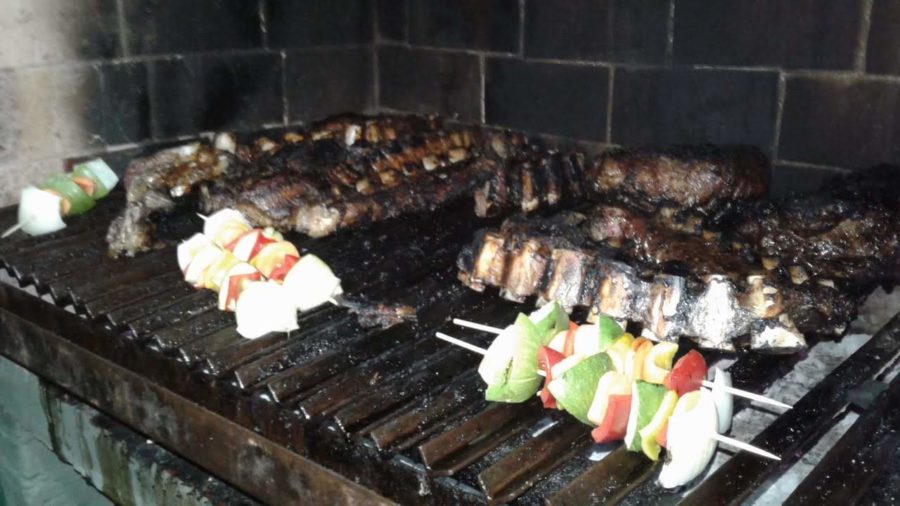
After the game, we rented a grill at the stadium and had a traditional style parrilla — similar to a barbeque-style grilled meal. I had eaten parrilla multiple times already during my time here, but this time was different because I was eating it with Argentinians. For them, it was just a typical part of life. During the meal, we were all able to relax and share stories about our various soccer experiences from the past and I learned that some of my new friends played at a semi-professional level!

This night was one of the times throughout the semester that I felt the most a part of Argentine culture. For the other students, a soccer game and parrilla is a normal Saturday night and I was so grateful that they invited me to be a part of it!

--
Political science major Megan Rodgers spent the fall 2018 semester studying abroad with AIFS in Buenos Aires, Argentina.

"My name is Megan Rodgers and I am a sophomore Political Science, International Studies and Spanish major at the University of Arkansas. I believe that experiential learning is one of the most important parts of a well rounded education and within my field of study, study abroad is the perfect opportunity to fulfill that goal. I chose to study abroad in Buenos Aires because it is the perfect place to study a wide variety of political and cultural topics while increasing my Spanish proficiency and enjoying life in one of the biggest South American cities!"

Don't miss your opportunity to study abroad! Start your search at http://studyabroad.uark.edu/search/

06 October 2020

Navigating Public Transportation in Buenos Aires #HogsAbroad in Argentina #TravelTuesday


Blog post courtesy of AIFS Study Abroad


As I prepared to study abroad, I was warned about the many difficult transitions that I might face. I knew to expect culture shock, homesickness and difficulties caused by the language barrier so I made efforts to prepare myself mentally to face these challenges. However, for me, one of the most difficult adjustments that I’ve had make living in Buenos Aires had nothing to do with culture or language or distance from loved ones. But rather, that for the first time in my life I am living in a large metropolitan city and therefore have to figure out the craziness of public transportation.

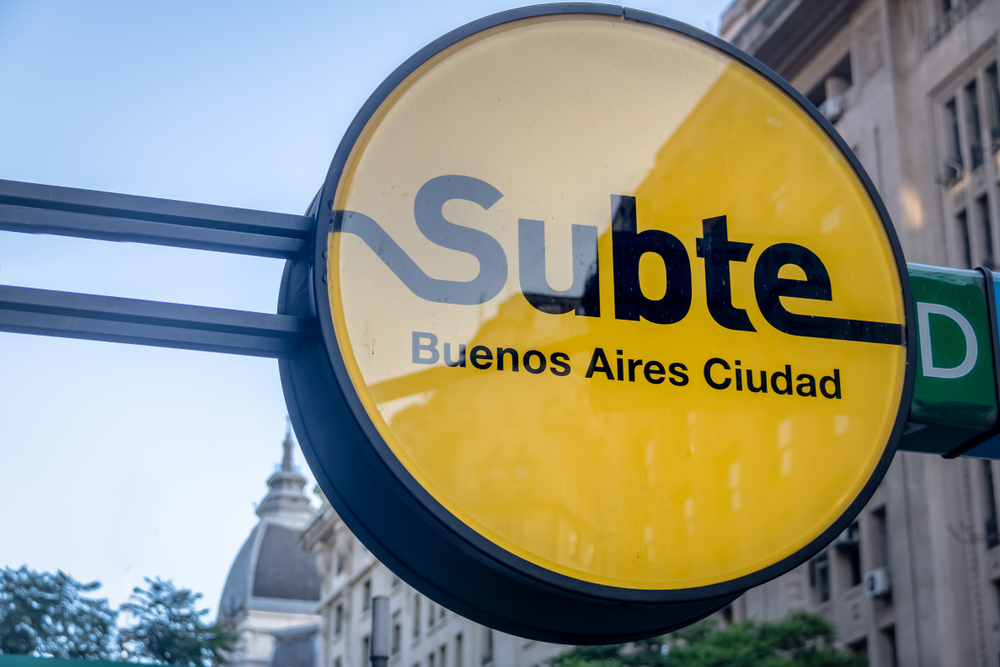
I have never lived in a city with a big enough population to support a substantial bus system, much less a metro. The subte (metro) here in Buenos Aires is fairly easy to navigate, but it was still extremely intimidating to me at first — especially during high traffic times when we manage to fit more people in one subte car than I would have ever imagined possible. However, due to its more simplistic layout, I quickly learned to embrace the chaos and it was a huge confidence-builder when I began to be able to navigate it easily and use it regularly without fear and with confidence that I knew exactly where I was going.

The buses, by comparison, can be extremely confusing, as there are over 200 different routes and you have to know the city well enough to know when you want to get off or the bus will just keep on going. For my first month of living here in Buenos Aires, I let my fear of the bus system prevent me from going to events or places that were not accessible by other means of transportation. But eventually I got tired of letting my fear make me miss out on amazing opportunities and took my first solo bus ride to an event on the other side of the city.

Buenos Aires is a huge city and it is impossible to know every route, so the city has an app called “Cómo Llego” that works similarly to a GPS to tell you what bus to take, where to find it, and where to get off. However, you still have to know when you want to get off and there is no system announcing where you are. Therefore, I learned that I could follow myself on my downloaded Google Maps and know exactly when I need to get off. The bus system is still intimidating for me, but I am slowing learning more and more routes and, after getting over my initial fear, I have found that it is much easier than I originally thought.

The train is the last mode of public transportation that I have yet to completely figure out, but I took my first train ride last week. Now that I understand the system I look forward to the new places I can reach by taking the train!

The city is also filled with taxis, which are always my fall back if I’m not sure how to get some place and don’t have the time to figure out the public transportation — or if I don’t feel safe taking public transportation for some reason. But as taxis are significantly more expensive it has forced me to step outside of my comfort zone and fully embrace city life with all of the glories of public transportation.

Despite all of these amazing options for public transportation, I have found that one of my favorite things about living in Buenos Aires is its walkability! Now that spring is coming here (Pro tip: the seasons are the opposite of the United States) and it’s getting warmer, I have found myself skipping on public transportation when I’m going to relatively close locations and just walking instead. This has given me the opportunity to know the city better, window shop and discover lots of new restaurants and parks near my homestay.

After living here for almost 3 months now, I have come to view public transportation in Buenos Aires as a perk rather than a drawback. There are routes all over the city, it has forced me to step outside of my comfort zone, embrace the Buenos Aires lifestyle, and get to know this beautiful city even more!

--
Political science major Megan Rodgers spent the fall 2018 semester studying abroad with AIFS in Buenos Aires, Argentina.

"My name is Megan Rodgers and I am a sophomore Political Science, International Studies and Spanish major at the University of Arkansas. I believe that experiential learning is one of the most important parts of a well rounded education and within my field of study, study abroad is the perfect opportunity to fulfill that goal. I chose to study abroad in Buenos Aires because it is the perfect place to study a wide variety of political and cultural topics while increasing my Spanish proficiency and enjoying life in one of the biggest South American cities!"


Don't miss your opportunity to study abroad! Start your search at http://studyabroad.uark.edu/search/

01 October 2020

Exploring South America: 5 Weekend Trips from Buenos Aires #HogsAbroad in Argentina #ThrowbackThursday


Blog post courtesy of AIFS Study Abroad


As amazing and exciting as the city of Buenos Aires is, one of my favorite parts about studying abroad here has been the opportunity to travel around the Southern Cone and get to know the rest of Argentina outside of the city. I just now got back from my last of five weekend trips from Buenos Aires during my time here and I would love to share with you a bit about each of them!

Here are five weekend trips from Buenos Aires, Argentina that you can’t miss.

1. La Colonia del Sacramento, Uruguay


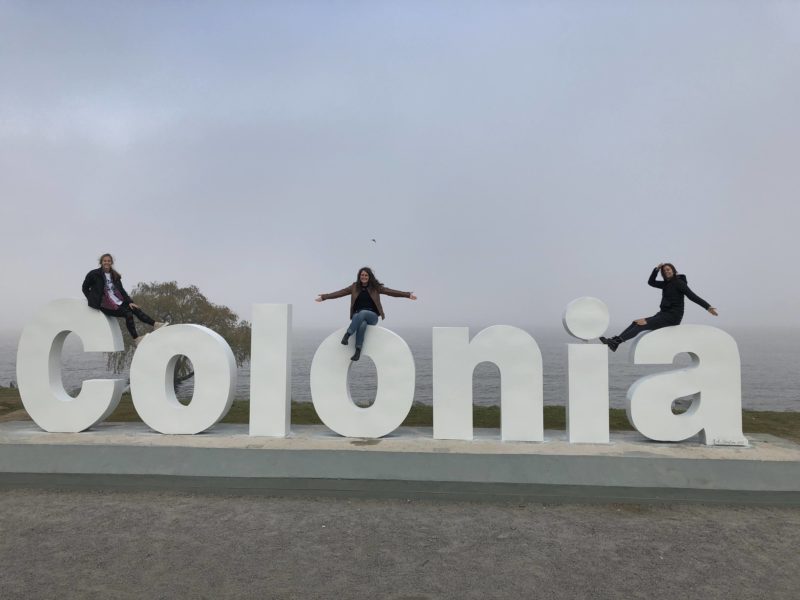
This trip was actually only for one day and it was organized by AIFS which made it super convenient and fun because I didn’t have to plan anything. La Colonia is just across the river in Uruguay, so we woke up early to take the ferry and spend the whole day there.

We spent our morning on a bus tour and then a walking tour, and then had the rest of the day to explore the town on our own. I really enjoyed my time in La Colonia because it allowed me a glimpse into the Uruguayan culture. The town has lots of really interesting history and architecture due to the fact that it changed hands between the Portuguese and Spanish seven times during colonization. Colonia is also a common weekend vacation spot for people from Buenos Aires, as it has a small beach on the river and is really quiet and calm.

2. Mendoza, Argentina

Of all my weekend trips from Buenos Aires, Mendoza was my first independently planned one. I was a little nervous but it ended up being lots of fun. My friends and I took an overnight bus from Buenos Aires to Mendoza that was surprising comfortable and rented an Airbnb for our time there.

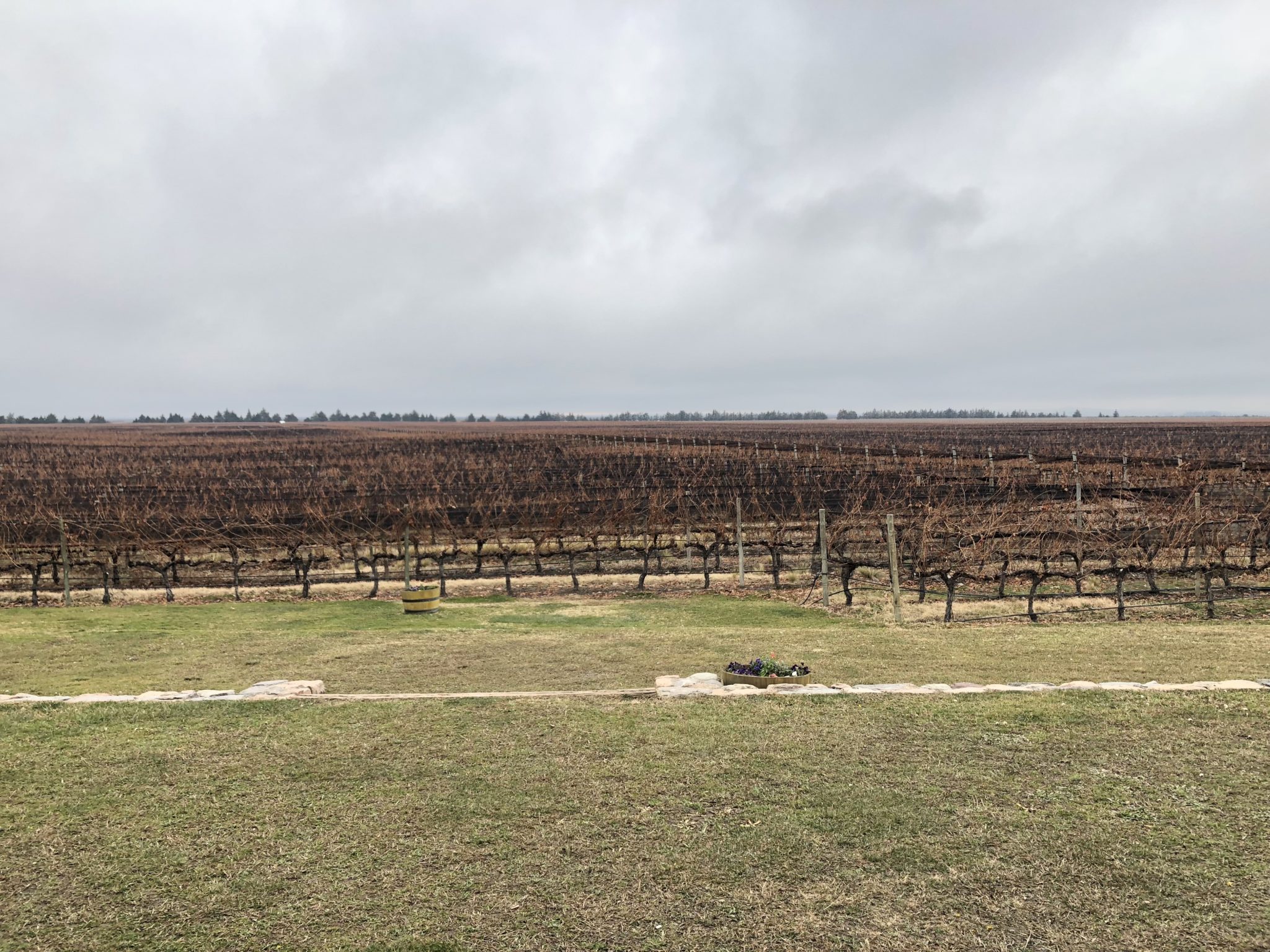
We were only there for a long weekend, so we spent one day exploring the city itself, one day on a tour of the Andes that stopped at Mount Aconcagua (the tallest mountain in the Americas), Puente de las Incas (a small Incan settlement) and the border between Argentina and Chile, and for our last day we took and all day wine tour.

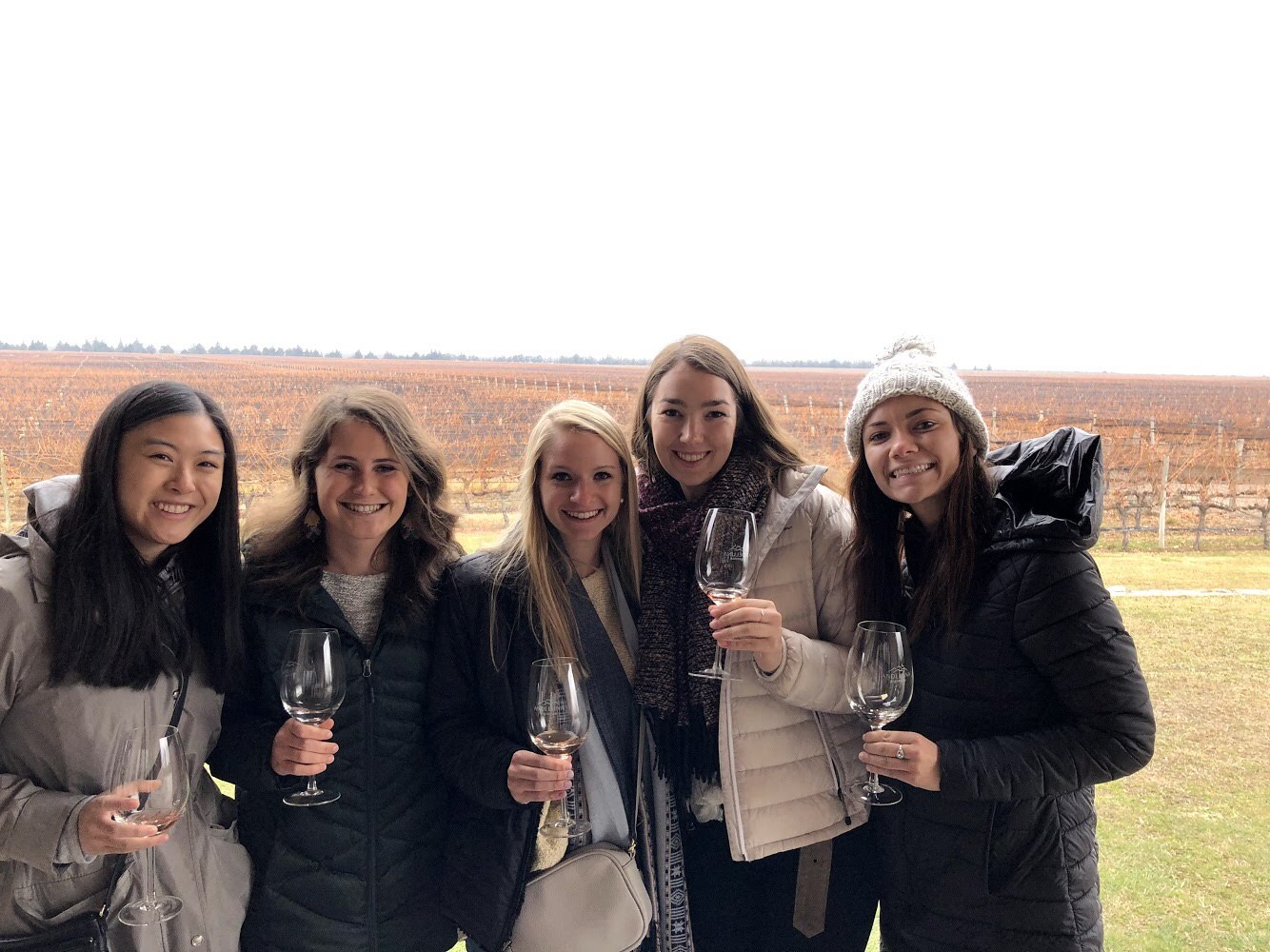
Mendoza is known for being the wine country of Argentina, so we enjoyed the traditional Argentinian Malbec, but there is so much more to do in Mendoza than just wine tastings. My favorite day was our day in the mountains! There are horseback tours, a natural hot spring, bicycle routes and hiking. If you are in the mood for a relaxing weekend outside of the city, I definitely would recommend Mendoza!

3. Santiago and Valparaíso, Chile

The third trip weekend trip that I took was to Santiago and Valparaíso, Chile. This was my first time staying in a hostel and it was so fun getting to know our companions, most of whom were from Brazil. We spent two days exploring Santiago and then took a bus to the costal town of Valparaíso for the day.

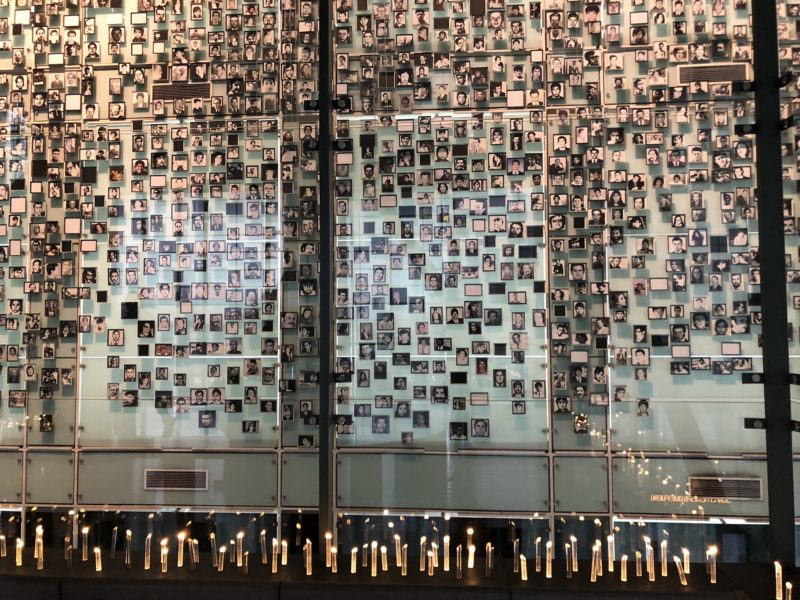
Santiago is known for its “cerros,” which are big hills throughout the city. My friends and I spent a lot of time hiking to the top of these cerros to enjoy the amazing views of the city and the Andes mountains in the background. Additionally, one of my favorite parts of Santiago was the human rights museum that was built to commemorate victims of the Pinochet dictatorship from the 70s.


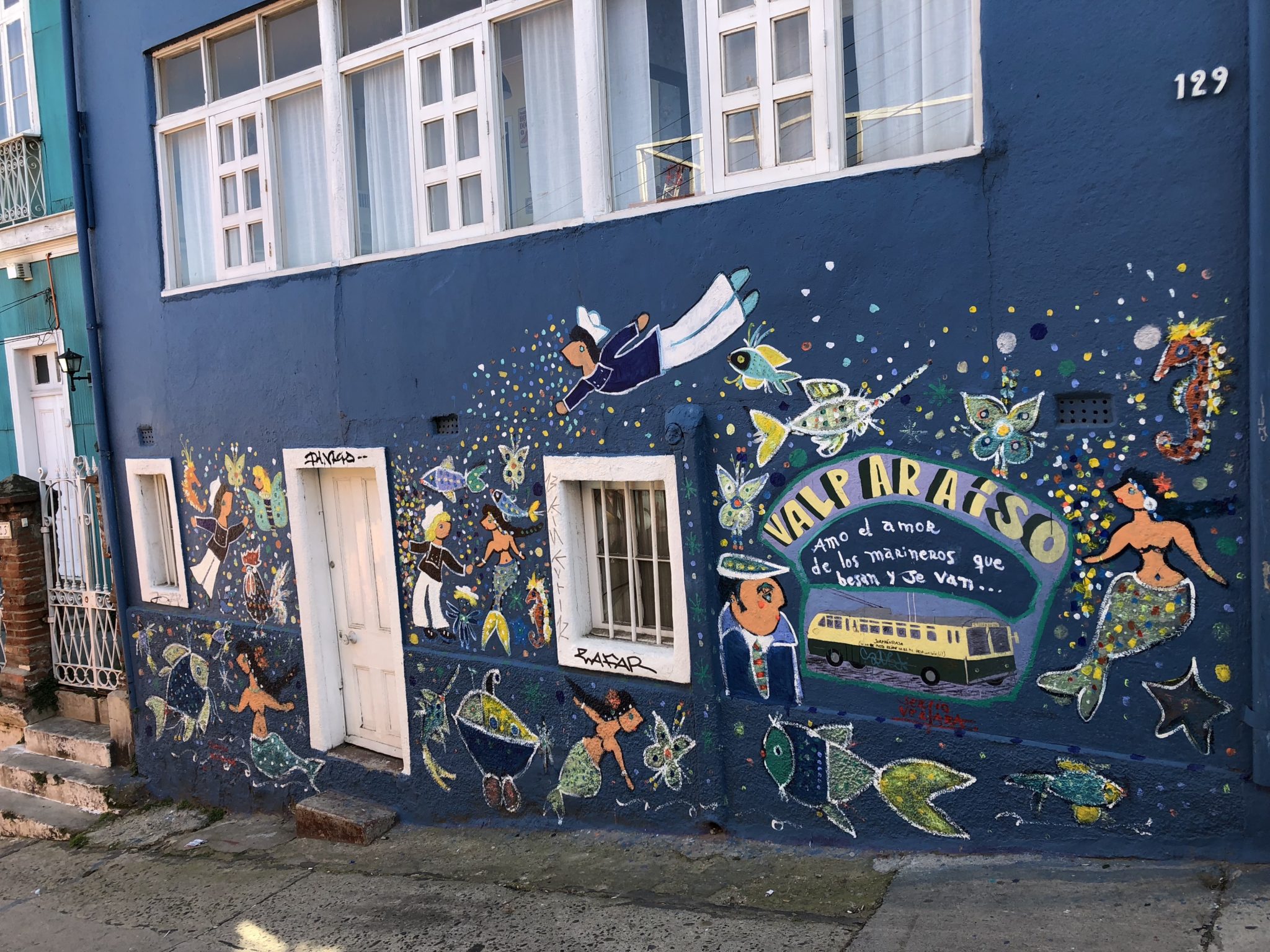
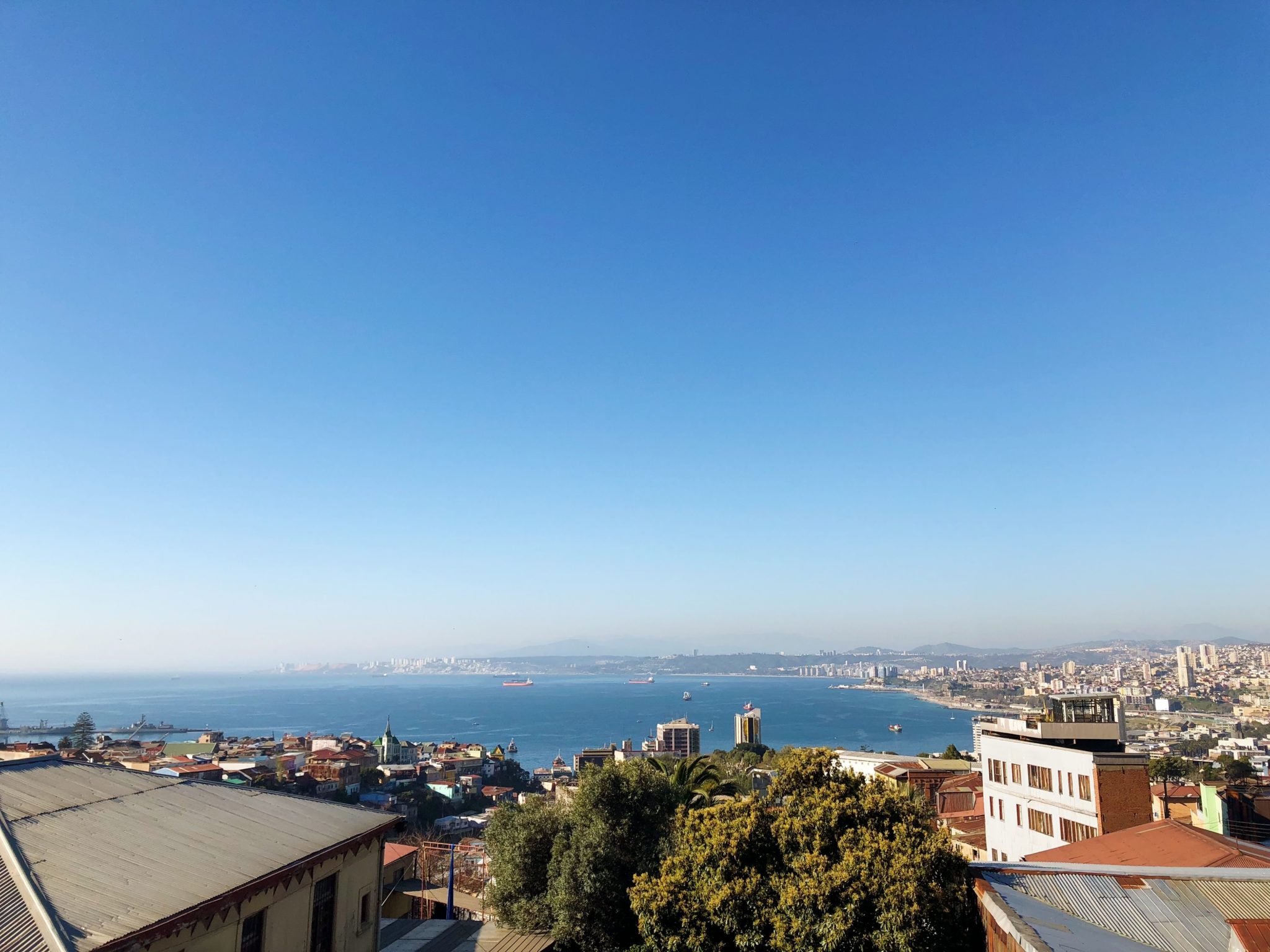
Our day in Valparaíso was my highlight of the trip. The coastal town is picturesque, with brightly colored buildings built into the side of a steep hill, artisan markets, a beautiful harbor and delicious seafood. I would definitely recommend this trip — it allowed me to see a bit of the Chilean culture and enjoy some great views!


4. Iguazú Falls, Argentina

My fourth trip this semester was to Iguazú Falls in the northeast corner of Argentina. This was one of the optional trips from Buenos Aires through AIFS and it was really nice to have someone else in charge of the logistics for the weekend, and to have our amazing Resident Director, Eva, with us!

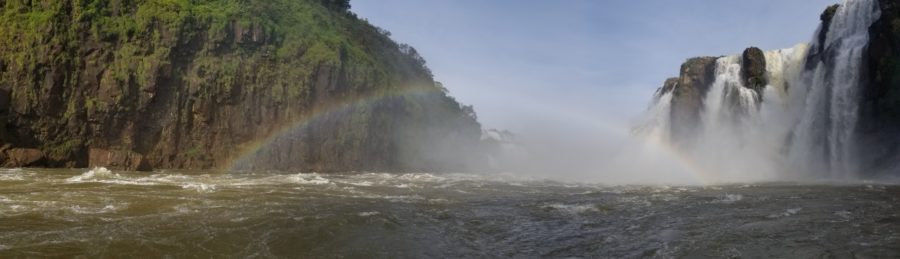
It was a quick trip, so we spent one day exploring the town of Iguazú and visiting the “punto de las tres fronteras” where the borders of Argentina, Brazil and Paraguay meet. We then spent the entire next day in the Iguazú Falls National Park. This may have been my favorite trip because the views were absolutely spectacular and, after being in the city all semester, it was really nice to enjoy nature for a bit.


There truly is no way to explain how amazing these falls are without being there in person to hear the rumble and feel the spray, so I’ll just say that if you study abroad in Buenos Aires this is an absolute can’t-miss opportunity.

5. Chaltén and Calafate, Argentina

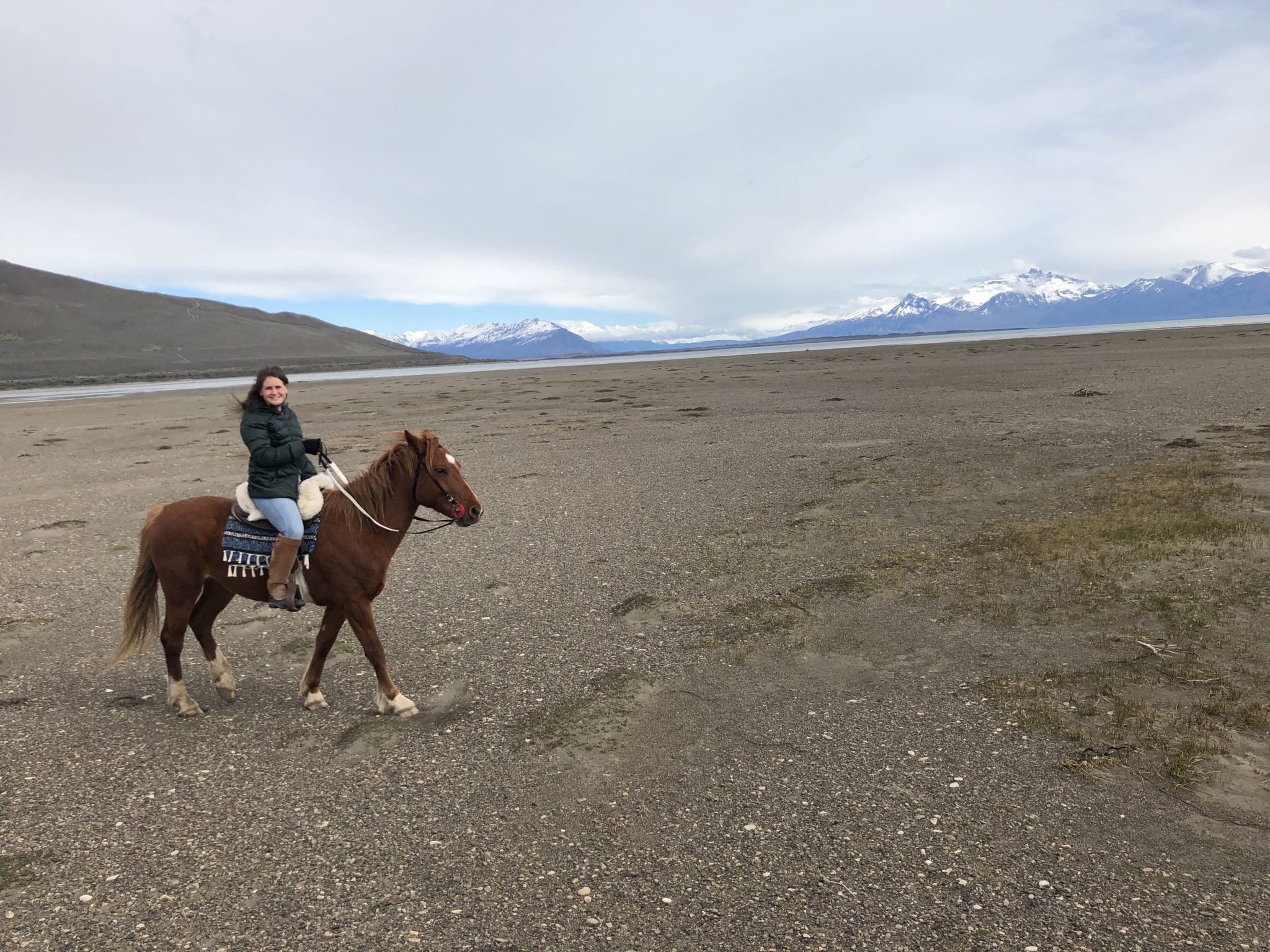
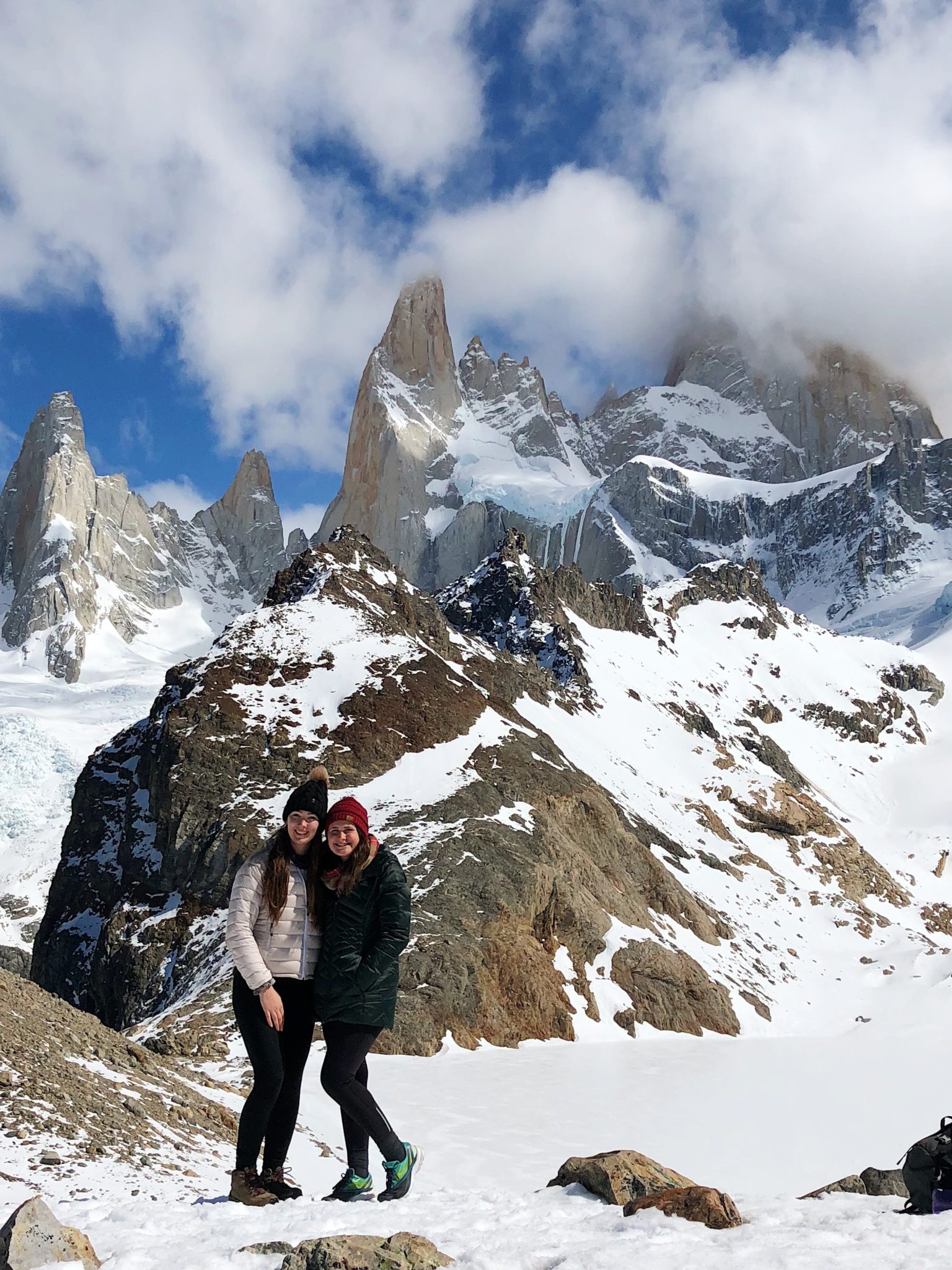
No semester in Buenos Aires is complete without a trip to Patagonia. Patagonia is a huge expanse of land that covers southern Chile and Argentina, so there are lots of places to choose from within the region, but I chose to visit Chaltén and Calafate because they are home to the famous Mount Fitz Roy mountain range and the Perito Moreno Glacier.

We spent our first four days hiking in Chaltén, which is known as the trekking capital of the world. My highlight from this time would definitely be hiking the Mount Fitz Roy trail. It was definitely not an easy hike, but the views were incredible.

After Chaltén, we spent two days in Calafate which is the closest town to the Perito Moreno Glacier. We took a full day tour of the glacier, seeing it from different angles from the boardwalk and on a boat, and finishing the day with a mini trek on the glacier itself. Trekking on the glacier was a surreal experience and may be the highlight of my entire semester! It may just be because it was my most recent trip, but visiting Patagonia was hand down my favorite.

There are so many other places throughout Argentina and the rest of the Southern Cone that I would love to explore, but unfortunately I am almost done with my semester — so naturally I am already planning my return trip. Argentina is such a beautiful country and I would 10/10 recommend spending your semester here so you can enjoy all that it has to offer!

--
Political science major Megan Rodgers spent the fall 2018 semester studying abroad with AIFS in Buenos Aires, Argentina.

"My name is Megan Rodgers and I am a sophomore Political Science, International Studies and Spanish major at the University of Arkansas. I believe that experiential learning is one of the most important parts of a well rounded education and within my field of study, study abroad is the perfect opportunity to fulfill that goal. I chose to study abroad in Buenos Aires because it is the perfect place to study a wide variety of political and cultural topics while increasing my Spanish proficiency and enjoying life in one of the biggest South American cities!"

Don't miss your opportunity to study abroad! Start your search at http://studyabroad.uark.edu/search/

25 September 2020

Food Allergies Abroad: Living a Gluten-Free Life in Buenos Aires #HogsAbroad in Argentina #FoodieFriday


Blog post courtesy of AIFS Study Abroad

For most students, one of the things that they look forward to the most about study abroad is trying new foods and experiencing the culture of another country through its cuisine. Unfortunately, for me this was actually one of my biggest concerns. When I was 11 years old I found out I had celiac disease, meaning that I am allergic to gluten. At home I have been able to adjust my lifestyle so that my allergy does not influence me at all, however it can be difficult for me to find gluten-free options while traveling. But I was not about to let that stop me from studying abroad and having the greatest experience.

Thankfully, AIFS was able to work with me to find a homestay that would accommodate my gluten allergy. My host mom, Marta, is the sweetest lady and she has gone out of her way to provide me with gluten-free options. Instead of the usual toast or pastries for breakfast, she bought me rice cakes and gluten-free cereal. She has even started making homemade gluten-free bread so that I can have toast when I want it!

Dinner might possibly be my favorite part of the day, as Marta constantly goes out of her way to provide me with gluten-free versions of all of the traditional Argentine meals. From tartas to millonasa to empanadas, I have been able to experience all of Argentina’s favorite foods despite the fact that they are traditionally full of gluten. Additionally, Marta always double-checks with me about things that she is unsure about, giving me the chance to practice my Spanish vocabulary that relates to food and cooking, and giving Marta and I a unique way to bond as we work together to find gluten-free alternatives.


Eating out is also far easier than I had imagined it would be. The Argentine government started an initiative a few years ago requiring restaurants to provide gluten-free menus to their guests and waiters here often understand my requests for food “libre de gluten,” “sin TACC,” or “para celiacos” better than waiters in the United States do.

Additionally, due to the fact that Buenos Aires is such a big city, there are many restaurants that cater especially to celiacs. There is a bakery a few blocks from my apartment where I go every week to get empanadas, pastas and sweets for the week. The lady who owns the cafe is so sweet and every time I stop by she asks me about my classes, helps me with my Spanish and asks about my experience finding gluten-free options. There is also a restaurant in a nearby neighborhood with a full gluten-free menu and one of the best gluten-free pastas I have ever tasted.


The normal diet in Buenos Aires in full of bread, pastry and pasta due to their Italian roots. However, the people here are so accommodating and there are so many different options that I have never struggled to find something that I can eat. I also have several friends here who are vegetarians or vegans and were afraid that there would be a lack of options due to the traditional gaucho dependence on meat. Just like me, they have been surprised by the vast array of vegetarian options and the extent to which their host families and the people in Buenos Aires will go to in order to accommodate them and make them feel at home. I am so glad that I did not let my food allergy prevent my decision to study abroad and am so grateful for the ways in which people here have gone out of their way to provide me with food that is delicious and gluten-free. My allergies have not hindered my study abroad experience at all. In fact, if anything they have made the situation better as they have revealed to me just how amazing and welcoming the people of Buenos Aires are.

--
Political science major Megan Rodgers spent the fall 2018 semester studying abroad with AIFS in Buenos Aires, Argentina.

"My name is Megan Rodgers and I am a sophomore Political Science, International Studies and Spanish major at the University of Arkansas. I believe that experiential learning is one of the most important parts of a well rounded education and within my field of study, study abroad is the perfect opportunity to fulfill that goal. I chose to study abroad in Buenos Aires because it is the perfect place to study a wide variety of political and cultural topics while increasing my Spanish proficiency and enjoying life in one of the biggest South American cities!"

Don't miss your opportunity to study abroad! Start your search at http://studyabroad.uark.edu/search/

04 September 2020

Life, Liberty, and the Pursuit of Mollusks #HogsAbroad in Italy #FoodieFriday


This was a reflection on my time spend abroad in Rome, Italy. It was submitted to the U of A Honors College in acceptance for a study abroad grant I was fortunate enough to receive.

​As our redeye flight descended into Rome, I peeked out the window to see the coastline creep into view as the land met the sea. I didn’t know this at the time, but memories made on the coast would be some of my most cherished memories from Rome.

Let’s backtrack a little bit. I dreamed of studying abroad since I was in high school. Once I learned about the Global Studies program at the University of Arkansas Rome Center, I knew I had found what I had been dreaming of. It provided me everything I had wanted: courses on culture, art, and history, all in an environment that was authentic and personal. The Rome campus exposed me to a completely different experience, with classrooms adorned with jewel-toned painted ceilings and creaky windows showering rooms in light within the 14th century palazzo. Walking to campus took me past small storefronts and a massive castle that boasted people young and old from around the world. My instructors were seasoned and sought to introduce students to what Rome had to offer—weekly expeditions to nearby places of significance, visits to worldwide organizations based in Rome, and in-depth knowledge about anything a student could ask about. I was able to stand in the home that Johann Wolfgang von Goethe spend years writing “Italian Journey,” which mirrored the exact experiences I was having nearly 250 years later. I cooked alongside Syrian refugees, learning the tradition and meaning that goes into making traditional dishes as part of my Contemporary Human Rights course. I was able to gaze up to see the frescos of the Sistine Chapel, reveling in its splendor.
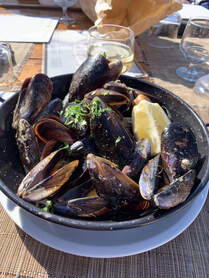
Dar Zagaia, the oceanfront restaurant of our dreams.

​About a month and a half in, a friend approached me with the news of “Mollusk Weekend.” This weekend was supposedly celebrated every 621 years and served as a celebration of life. I was quickly persuaded to believe this weekend to be true with confident tales of tradition. Little did I know, the ulterior motive here was to visit a coastal seafood restaurant with the “best mollusks in the world," according to my friend Morgan’s Italian professor. My roommate Ellie and I overslept the day of and had to take an expensive taxi to meet our cohort of friends already frolicking in the ocean. At this point, I fully believed in the mystic Mollusk Weekend and the tradition I couldn’t find any backing for during my online research. I had promoted it to friends, encouraging them to join in the festivities. They knew better. I wasn’t confronted with the truth until I commented to Ellie in the taxi about how my friends were non-believers—Ellie had a good laugh at my expense. But that couldn’t dim the weekend of celebration.

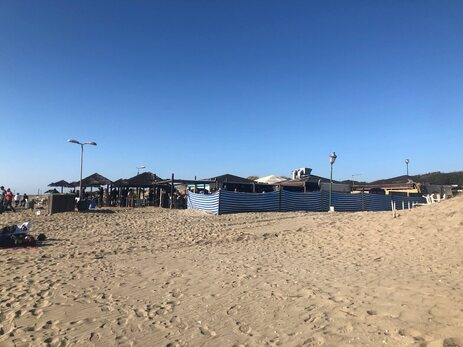
Once we arrived, the group trekked through the sand to the fully packed restaurant. The restaurant sat right off the ocean. We wasted no time ordering buckets of buttery mussels, which came and went from our table in rapid succession. We relied on our friend Morgan, who was the only one in an Italian class, to communicate with our non-English speaking waiter about what we craved. Rounds of seafood dishes arrived full of shrimp, tiny squids, and even octopus, and departed our table empty. Morgan’s Italian professor was correct; this was the best seafood any of us had ever eaten. Between bites, we celebrated these friendships, these opportunities, and the life we are all blessed to have. That was the true mission of Mollusk Weekend—to celebrate our lives and Rome bringing us together. After four hours spent dining, we walked directly onto the beach and dipped our toes in the freezing ocean. Italian families lounged in the sand, including one naked toddler who didn’t have a care in the world. We listened to classic songs, let our feet sink into the sand while playing football, and basked in the reality we were blessed to be living. After a while, the sun began to set, and we made our way back home with three bus rides, one train, one metro, and a swift walk home.
Ellie took this photo of one of our many rounds of mollusks.

​This weekend was coincidentally the last weekend before we needed to return home because of coronavirus fears in Italy. It reflects the best parts of Italy to me—a laidback lifestyle of slow dining, celebrating life and togetherness, and savoring moments because they could end at any time. Studying abroad was not what I expected, in the best and unanticipated ways. One can prepare for studying abroad, but the real beauty of studying abroad lies in the unknown and unexpected. Our pursuit of mollusks signifies my newfound love for Italy and the adventures it gave me, and I know in my heart that we’ll venture back to that beachside restaurant again someday.

--
Before the suspension of Spring 2020 study abroad programs, one of our social media interns, Journalism & Political Science major Hanna Ellington spent the Spring 2020 term at the University of Arkansas Rome Center with the help of the Honors College and the Fulbright Honors Sturgis Study Abroad Grant. 

Read more from Hanna at https://hannaellington.weebly.com/blog/life-liberty-and-the-pursuit-of-mollusks

Don't miss your opportunity to study or intern abroad! Start your search at http://studyabroad.uark.edu/search

23 January 2020

What's In an Umbrella? #HogsAbroad in Peru


Article from the Honors College blog

Beck Williams, an honors political science major who participated in the January 2020 Honors Passport study abroad intersession course to Peru, found himself in an unexpected dilemma when the class took him to the top of a hill on the island of Taquile in Lake Titicaca: to trade his umbrella for a hat in the middle of Peru’s rainy season, or to hold onto the item, which had been a gift from his sister. This trade, and his decision, revealed much about indigenous trade culture, and Beck learned a lot about his own cultural lens from the incident. What follows is an excerpt — to read Beck’s post in its entirety, visit the class’ own blog, Indigenous Ways in Peru: Postcards from Students. On their blog, you can also read posts written by the other students in the class, on topics from the making of Machu Picchu to the ancient cultural practice of skull deformation.

I need to begin by saying: I do not like rain. I never have. The horrid slosh of wet shoes and socks, the heaviness of soaked clothing, the blurred vision from fogged-up glasses, and of course the irksome thought of how long it will take to completely dry off—rain is truly not for me. This is why, whenever there is any chance of rain whatsoever, my umbrella is always with me. It may seem dramatic, but an umbrella—specifically, my umbrella—is one of my most important possessions. My umbrella is the perfect size. It compresses down to fit into the outside pocket of my backpack, and it conveniently unfolds into a large enough area to keep me completely dry. On top of this, ever since I received it from my sister on Christmas Day a couple of years ago, it has not shown any signs of damage or wear. It is, without exaggeration, the perfect umbrella.

What I did not realize was that this umbrella would actually lead me to my favorite experience of my entire time in Peru, and would teach me what was possibly the single greatest lesson I learned over the two-week program.

Our program was largely focused on understanding the relationship between the indigenous culture of the Andean people and the modern Peruvian culture. It involved visits to important cultural, historical and religious sites across the Andes, which typically inspired thoughts and discussions comparing aspects of Andean cultures with those of our own. My only previous experiences abroad had been in Europe, where the languages may have been foreign to me, but the major aspects of culture still remained the same. I had never experienced anything quite like arriving on one of the Uros Floating Islands in Lake Titicaca, where around 25 people lived on one self-made island that was approximately 150 square feet in area. I needed to be aware that my own cultural lens could impair my observation of Peruvian Indigenous culture, and that to get the most out of these experiences, I needed to shed any cultural judgements in exchange for an eagerness to embrace the culture.

This all became immensely important during our journeys in Lake Titicaca. Led by our local guide Lut, a man who identified as and fluently spoke Quechua, we encountered experiences that opened our eyes to the local culture in fascinating ways. One of the most unique cultural aspects of not only the islands of Lake Titicaca but also of all of the Andes is the way trade traditionally functions. Even dating back to before the Inca, trade in the Andes was never the same “value for value” trade we so commonly focus on in current United States culture. Instead, it was based on the formation of trade relationships between communities. Since certain altitudes and geographic zones of the mountains were better suited for producing certain crops and materials, Andean communities of different geographic zones would form trade relationships where they supplied each other with the crops and materials from their own zones. The value of the trade existed not within the tangible items being exchanged but instead in the connection being forged. This aspect of trade was so important that it even extends to Peruvian culture today. Monetary, value-based trade of course exists in big cities and tourist areas such as Lima and Cusco, but the trade-relationship style still exists in regions and areas with significant indigenous lineage. In fact, I was able to encounter it on the island of Taquile.

A landscape view from the island of Taquile…after the rain.

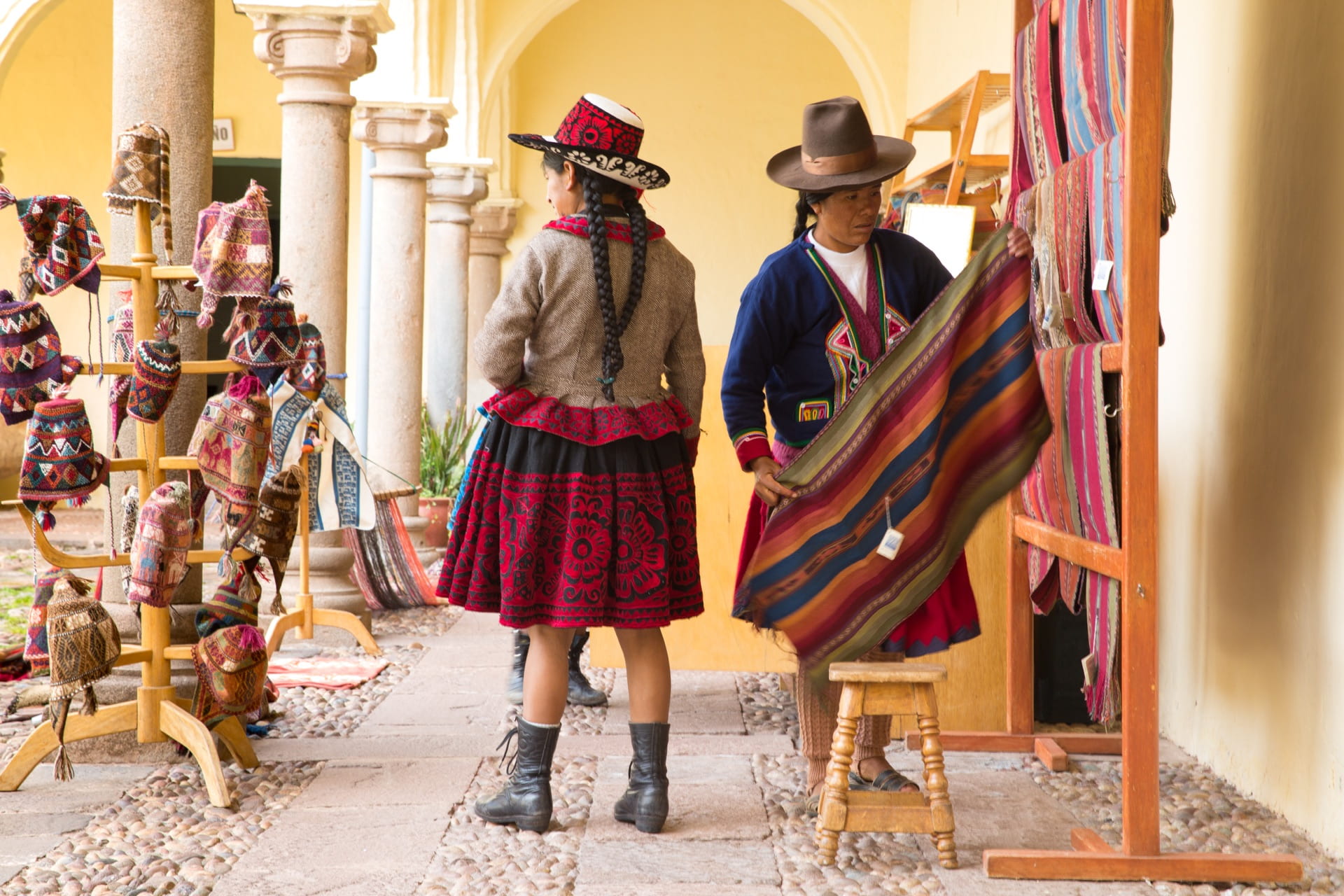
When we arrived at the island, it was pouring rain. We were set to meet a family who lived at the top of the mountain, and to get there, we would have to hike through the rain. I immediately had my umbrella open and ready to go. When we finally reached the top, it was no longer pouring. There was one island resident sitting alone in the courtyard. He looked to be quite old, but still got around well and was peacefully enjoying the morning in the courtyard. On his head he wore a chullo, a typical Andean hat similar to a beanie with ear flaps. He stood up to welcome us, talking to Lut in Quechua. He turned to us, looked us over, then immediately turned back to Lut and began excitedly talking while pointing at me. Lut, also very excited, told me that the man wanted to trade for my umbrella. I asked Lut exactly what the man wanted to trade in return, and the man reached into the bag he was carrying and pulled out a blue and yellow alpaca-wool chullo. He said he had made it himself.

I was taken aback. This was not a trade I wanted to make. But by measuring only the tangible value of the proposed items for trade, I was ignoring an opportunity to embrace Andean culture. I began to understand that there was more value in this trade than just the items’ tangible value. In my quick assessment, I was acknowledging the trade as a value-based exchange. But by trading the man my umbrella for his hand-made chullo, we would be engaging in a special kind of trade relation. This is what made a simple trade by my standards into a special and genuine opportunity which I would be naïve to pass up.

I quickly hiked over to the man’s house, where he was still outside in his garden. We exchanged no words, but instead I just pointed at my umbrella and made various motions with my hands to convey a trade. His face lit up, and he warmly grabbed my hand and led me back to the courtyard, where he pulled out the same yellow and blue chullo. It, of course, fit perfectly. When I had Lut ask the man for a photo, he gladly accepted, I presume because he knew that it would help me to preserve and remember the trade relationship we formed. Despite a language barrier and our difference in culture, the two of us were able to form a genuine connection, and it truly gave me a glimpse into the beauty of Andean trading culture and the community of Taquile Island.

Traditional chullo caps are sold to tourists throughout Peru. Photo: Russell Cothren. 

That trade, simple as it may have been, was my favorite moment of the trip. Now that I have returned to the States, it is constantly on my mind. Just a couple of days ago, I was walking home from class on what I had assumed would be a clear day, when a sudden and heavy downpour struck. Out of habit, I reached for an umbrella in my backpack which was no longer there. Instead, I had to finish my walk home without it. As I continued walking through the pouring rain with wet socks, mud around the bottom of my jeans and soaked clothes stuck to my skin, I could not help but smile and think about my trading partner on Taquile Island with his new umbrella.

--

09 September 2019

Meet One of Our Study Abroad Peer Advisors: Mia Dalton

Me in Mykonos, an island of Greece.
Hey y’all!! My name is Mia and I am a junior studying political science with a minor in Spanish. I spent the last two summers studying abroad with International Studies Abroad (ISA) in Málaga, Spain and Athens, Greece. 
Me and my friend Sarah at the Parthenon on the Acropolis in Greece.
This is my second year as a peer advisor and I love being able to help other students discover how incredible the world is through study abroad. In fact, I sent four of my closest friends abroad last summer and loved hearing all about their adventures. My biggest advice for students is to take advantage of the study abroad opportunities at the University of Arkansas. Many students don’t believe they are able to study abroad for reasons ranging from majors to financials, but trust me we can get you there! 
The city of Toledo in Spain.
I personally spent the last two summers away on honors college scholarships and could not be more grateful. In Spain I was enrolled in an intensive Spanish language course and stayed in a homestay with a local family where I enjoyed home cooked Spanish meals. We were in the city of
Málaga on the Mediterranean Sea and took trips to many other Spanish towns and even one to Morocco. In Greece, I lived in student apartments in a suburb outside of Athens. Living with other students and attending an American college was a very different experience from my previous summer in Spain. We took classes in English with Greek students and were responsible for our own meals. Not knowing the language was also an interesting experience, but luckily most Greeks know English. I spent my weekends traveling to Greek islands and exploring the different cultural norms in each of the isolated towns. I loved my teachers in Athens (and the gyros)! 

Both of these experiences have taught me so much about inter-cultural connections and interactions, as well as increasing my self-awareness of my strengths and weaknesses.

--
Learn more about International Studies Abroad (ISA) programs in Málaga, Spain and Athens, Greece.

Come meet Mia and the other peer advisors for a HogsAbroad 101 drop-in session at the Study Abroad House! Come to the office weekdays from 3-5 pm to get all the study abroad basics. Peer advisors are available to help you review your options for study abroad and start searching for a program.

19 December 2018

When Buenos Aires Became Home #HogsAbroad in Argentina #AIFSAbroad

Article courtesy of AIFS Study Abroad

The most amazing thing happened today. I was walking home from having coffee at a friend’s house and then it hit me: I was walking home.

I have lived here in Buenos Aires for 10 weeks now and it has been the most exhilarating adventure of my life. I am learning so much each and every day, making new friends and trying new things. But it has not been all rainbows and roses. I have been stretched and pushed out of my comfort zone countless times. I have had several breakdowns over seemingly little things as the stress of living abroad has accumulated. As the excitement of living abroad has slowly worn away, I have wondered if it would be worth it. The same doubts have played through my mind more than once: maybe I should have just come for the summer; maybe I should have gone somewhere else; I’m probably never going to be able to speak Spanish fluently. My friends were going back to school for the fall without me and I was running out of new touristy things to do in this new city of mine.

But tonight, as I walked home on streets that I now know by heart from the home of a local friend after a night of great conversation and true friendship, I realize that I wouldn’t change this experience for the world.

I had had a long, full day and was ready to go home and relax. But when I imagined home, I no longer craved familiar house in the United States, but rather my fourth floor apartment with my host mom and her amazing lentil stew. Buenos Aires truly has become my home. I can no longer imagine a life without dulce de leche, a fascinating and extremely active political culture, and ten o’clock dinners. I have a favorite café, a host mom who I adore, and amazing friends from the United States, Argentina, and all over the world. As I walked home tonight, instead of wondering if I should have only stayed for the summer, my thoughts transferred to whether I should have stayed for a year. I only have 10 more weeks left in this beautiful new home of mine and somehow that doesn’t seem to be nearly enough.

There is something inexplicably wonderful and extraordinary about feeling at home in a new country with a completely different culture and I know that this is an experience that I could never have achieved in a short vacation or 4 week program. There are frustrations and disappointments that come with living abroad. To quote one of my frustrated rants from a few weeks ago, “everything is just so much harder when you’re abroad.” But the much more important truth is that everything is so much more rewarding. I can’t wait to see what I have in store for the rest of my time here in Buenos Aires and I am already making plans to return to this home of mine as soon as possible.
--
Junior political science major Megan Rodgers spent the fall 2018 semester studying abroad with AIFS in Buenos Aires, Argentina.

Don't miss your opportunity to study abroad! Start your search at http://studyabroad.uark.edu/search/

06 November 2018

Puebla #HogsAbroad in Mexico

Hi! My name is Mariana Pacheco. I am a Fulbright College Student majoring in Spanish, Political Science, and Latin American and Latino Studies with a concentration in legal studies. For the summer of 2018, I studied abroad in Puebla, Mexico. 

When I arrived, I met my amazing host family that welcomed me with open arms. The first week in Puebla, we toured the city, the university, and we had different professors talk to us about volunteering and service programs in Mexico. Our first weekend in Mexico, we visited Cholula, the city neighboring Puebla City. It was breathtaking. There was a beautiful castle above a pyramid. We were able to walk all the way to the top where the view of the city was incredible.
From the second week to our last week in Mexico, our schedule was mainly the same. We volunteered at an orphanage called Casa Del Sol in the mornings. I had the opportunity to help take care of the babies and toddlers. It was such a great feeling although it was also sad to see all those kids without a family. In the afternoons, we had our classes. Because there were only 3 students including myself in class, we were able to travel around the city and learn a lot about the culture of Puebla.

Our second weekend there, we traveled to Cuetzalan and Yohualichan. Those towns were beautiful! Cuetzalan had a big market where many traditional items like clothes, head wear, key chains, and mugs were being sold by the local people. Yohualichan was very different from any town I had seen. It was small but had a large area with pyramids.

Our third weekend in Mexico, we traveled to Mexico City. This to me was a dream come true as I have always wished to go there. We got to see the National Palace, the National Museum of Anthropology, the Basilica of Our Lady of Guadalupe, Frida Kahlo’s home and the pyramids of Teotihuacan. We were also able to experience the exciting atmosphere in Mexico during Mexico’s national team’s soccer game against Germany in the World Cup. We saw how the whole country came to a stop while the game was on. Everyone was watching it and when the Mexican team won, everyone was cheering unlike anything I had ever seen.

Our last weekend in Mexico, we traveled to Oaxaca, Mexico. This was also an amazing experience. We saw how black pottery and mezcal were made. We also were able to see more pyramids and the Arbol del Tule, the tree with the stoutest trunk in the world. We also saw indigenous groups selling their beautiful traditional style clothing. However, we also witnessed a lot of protesting. There were flyers and banners all over the center of the city as a form of protest.

Overall, my experience studying abroad in Puebla, Mexico was amazing to say the least. I tried a lot of new food that I never thought I would try. I met amazing local people that I still have contact with even till this day. I also made awesome friends with other students from the University of Arkansas that were studying abroad. I highly recommend everyone to study abroad in Puebla!


--
Spanish & Political Science major Mariana Pacheco spent the summer 2018 term in Mexico with our U of A Faculty-Led: Spanish Immersion & Service Learning program in Puebla, Mexico with the help of our Office of Study Abroad Scholarship.

Don't miss your opportunity to study or intern abroad! Start your search at http://studyabroad.uark.edu/search/

11 September 2018

Meet One of Our Study Abroad Peer Advisors: Micaela Chamon

Hola a todos! Salut tout le monde! Hey everyone! My name is Micaela Chamon and I am a senior here at the University of Arkansas. I’m an international student from Bolivia, majoring in International/Global Studies, Political Science, and French, with a minor in Latin American Studies. Travelling has always been my favorite thing to do, so going to a college in a different country was always the plan and studying abroad for a semester was a no-brainer. I spent this past Spring in Lyon, France, with University Studies Abroad Consortium (USAC).

When people say studying abroad changes you, they aren’t kidding. I did a cultural exchange in high school in France, studied abroad in France, and interned abroad in Hungary. Every single one of those experiences were unparalleled. I learned so much about the local cultures and customs, but the most shocking thing is how much I ended up learning about myself.
Usually the first thing that comes to mind when anyone talks about France is Paris and the Eiffel Tower. Not to say that Paris isn’t great (I went like 7 times during my 5 months in France), but Lyon is a hidden gem. Lyon is the gastronomy capital of France, so yes, the food at the local restaurants called “Bouchon Lyonnais” was AMAZING, and there is nothing like stopping by the bakery on your way to class for a pain au chocolat or a croissant.
Paris shows up in countless films, but what’s really cool is that Lyon practically invented movies. Auguste and Louis Lumière, both born in Lyon, are credited with creating the first film camera (the cinematograph) in 1892. So, there is a museum/cinema dedicated to them, and their work, in Lyon, where you can spend hours exploring and learning more about the evolution of the film camera. 

My two favorite parts of Lyon where the rivers and the parks. The Rhone and the Saone both pass through Lyon and actually meet up in the district of Confluence. As it started getting warmer, we started to realize that people gathered on the banks of the rivers to picnic for hours with some cheese and wine every afternoon, and it was definitely what all of the students looked forward to after class. As for the parks, the Parc de la Tête d'or, which literally translates to the Park of the Golden Head, was the prettiest place to spend time outside. It has a little zoo on one side, a pond on the other, a running/bike trail, and endless amounts of trees.
Although Lyon was amazing, I took advantage of every weekend I could and tried to visit other cities in France, as well as other countries in the region. I was able to hit 16 countries and 31 cities. Studying abroad can be very scary, travelling alone can be terrifying, but if there is something I learned while being in Europe it is to take every day at a time because nothing is as bad or as scary as it may sound. Visiting other countries opens up your knowledge of the world in innumerable ways, the people you meet will definitely be unforgettable, and the memories you make will stay with you forever.
--
Come meet Micaela and the other peer advisors for a HogsAbroad 101 drop-in session at the Study Abroad House! Come to the office weekdays from 3-5 pm to get all the study abroad basics. Peer advisors are available to help you review your options for study abroad and start searching for a program.