Learn more about the Benjamin A. Gilman International Scholarship Program. Check out our Gilman Resources Page for more information and resources to apply for this scholarship!
Search This Blog
16 January 2024
The Gilman Scholarship and The Global Classroom in England
Learn more about the Benjamin A. Gilman International Scholarship Program. Check out our Gilman Resources Page for more information and resources to apply for this scholarship!
14 September 2023
Learning to Live in London
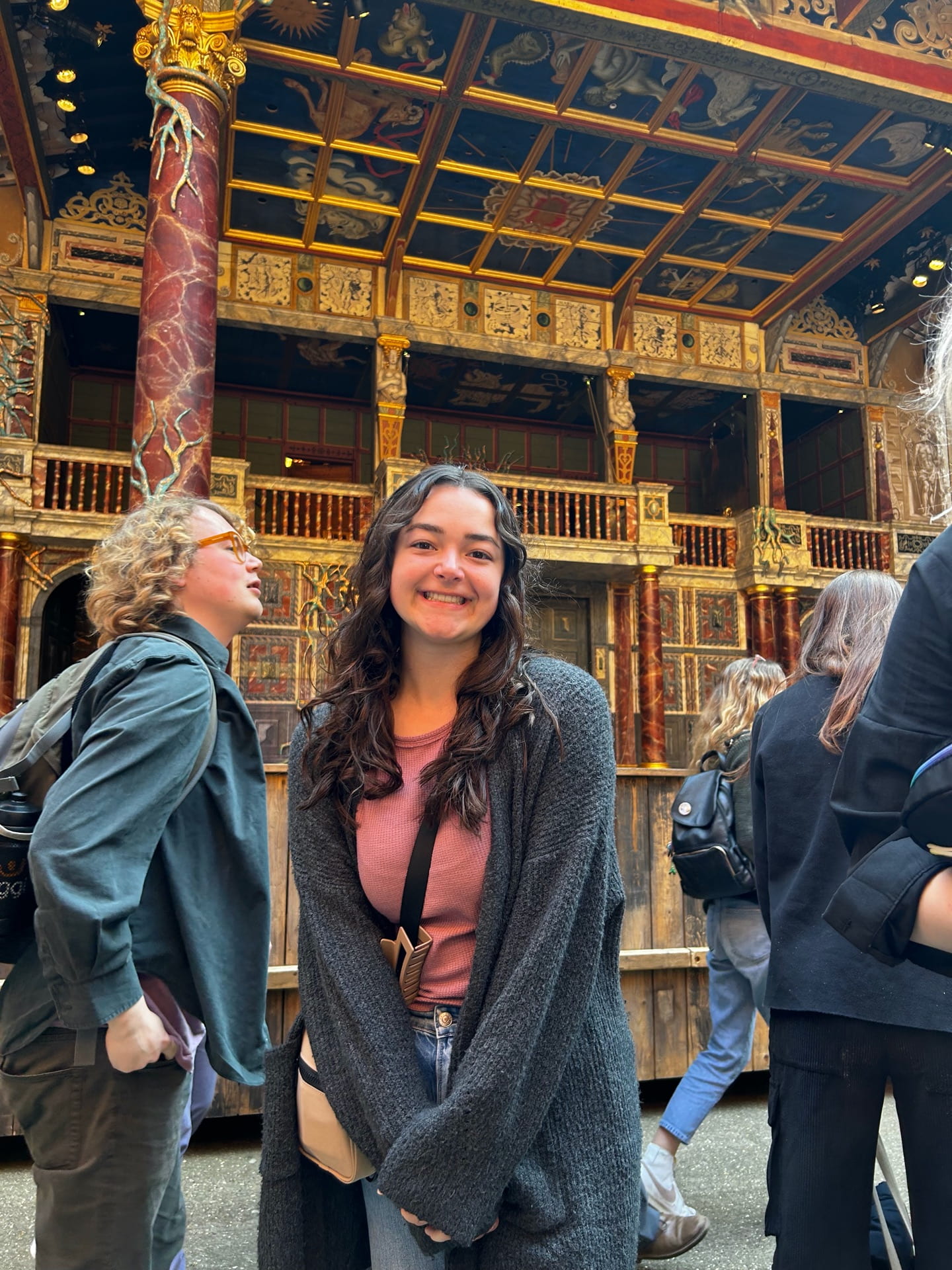
Amelia Hirsch is an honors English education major and theatre minor from Kansas City, Missouri who studied in London, England, this summer through the Theatre in London program at the University of Arkansas. While abroad, Amelia discovered a wider range of what education can be outside of the traditional classroom setting.
I’m minoring in theatre, so naturally, I was very interested in the program as theatre is in the title. But I was also excited to have the opportunity to see London, which is an experience that doesn’t come by very often. I have grown up surrounded by art and theatre, but due to cost, going to see shows or attend concerts is a very rare opportunity. At the very least, there were multiple productions and experiences that were included in the study abroad program cost. But the cost of tickets for nearly everything in London was significantly more affordable and allowed me the opportunity to see a wide variety of shows, including a spontaneous ticket to see Harry Styles at Wembley Stadium.
Shawn Irish, Head of Design & Technology and Lighting Design in the Department of Theatre, and Susan Marren, an associate professor of English, were amazing program leaders. They were so insightful and thoughtful about our lessons and teachings. In our class discussions the week before flying to London, Susan was incredibly well-versed in everything Shakespeare, which made analyzing the texts more manageable. Shakespeare is an incredible poet, but his writings are sometimes difficult to understand. Susan’s explanations and our classes’ open discussions about the text created a positive environment to understand Shakespeare without judgment. Then, when we were in London, after watching the shows at the Shakespeare Globe Theatre, hearing Susan and Shawn talk about the shows so passionately made me smile. Because of our class discussions over the text, when we finally saw the show, we were able to get into the story more as we knew what was going on.
Our classes abroad were very well structured and allowed us prior knowledge to build upon while we gained experience outside the classroom. I loved how our class was structured so I could go off independently and learn about things that interested me. As a student with ADHD, I like to explore independently as I find it difficult to focus on long lessons in a group setting. This structure really helped keep me engaged. This is a very different environment than any class at the U of A, as I had the opportunity to move around and look at things that may interest me more. Although a majority of our activities were self-guided, our blog posts gave us a goal to reach without being too demanding. I could still explore on my own without feeling that I wasn’t meeting the assignment requirements. We had a blog post that we completed prompts based on the class discussions and our activities. But, we were able to talk about anything that fits into the prompt instead of there being only one right answer.
![]() |
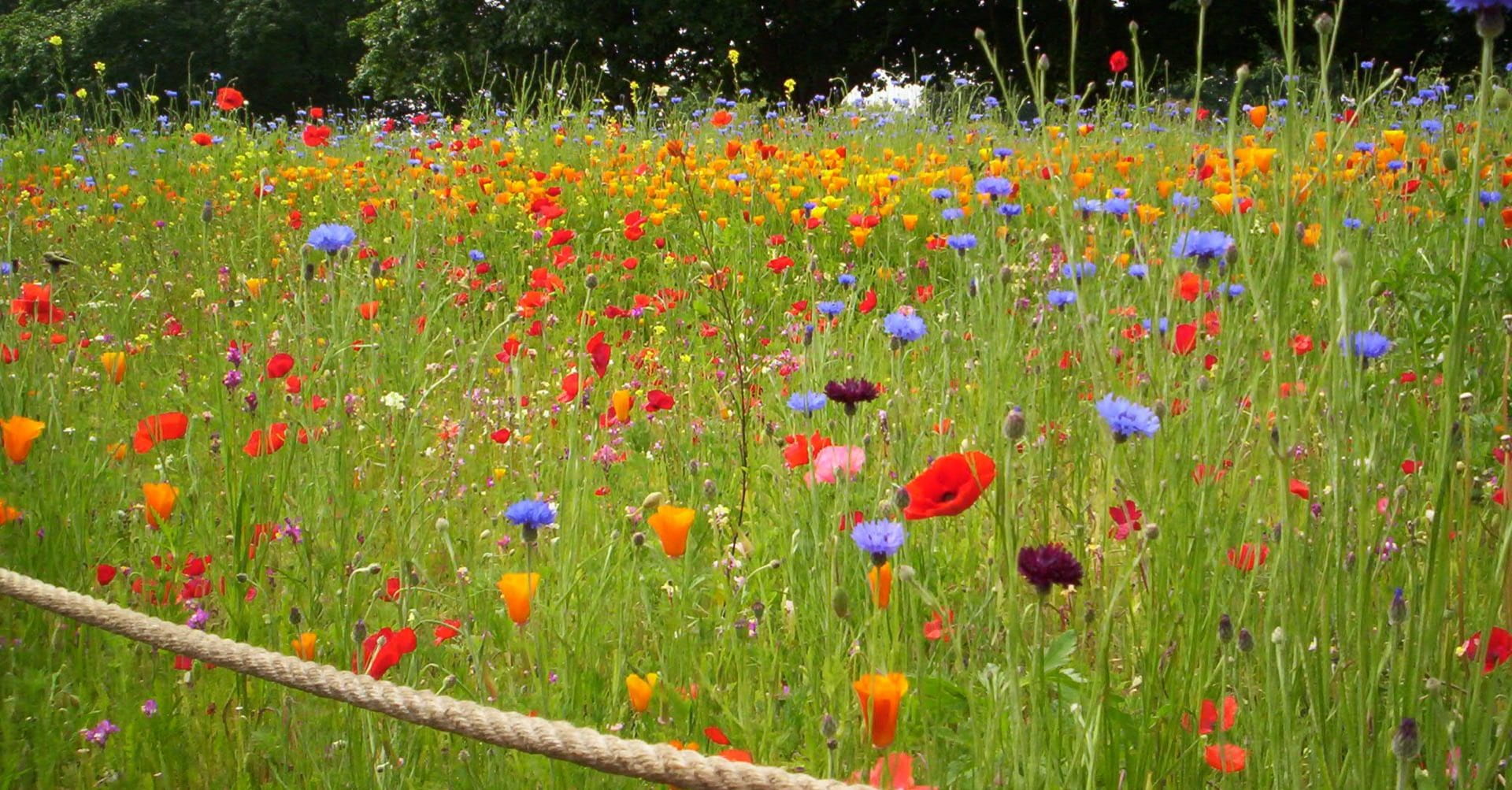
| A wild bloom! |
This trip helped me understand a wider range of what education can be. I don’t have to be a teacher in a “traditional” classroom where my students listen to me lecture and they regurgitate information back to me for a pass-or-fail test. Instead, I can use their curiosity and create lessons that interest them. I want to create that variety so no student feels forced to fit into a box. Based on our class discussions, I want my students to explore their interests and relate what they’ve discovered to them. Those connections strengthen the pathways of learning and create deeper and stronger connections that promote their learning. I think it was an amazing format for instruction and inspired me in ways I can’t describe.
![]() |
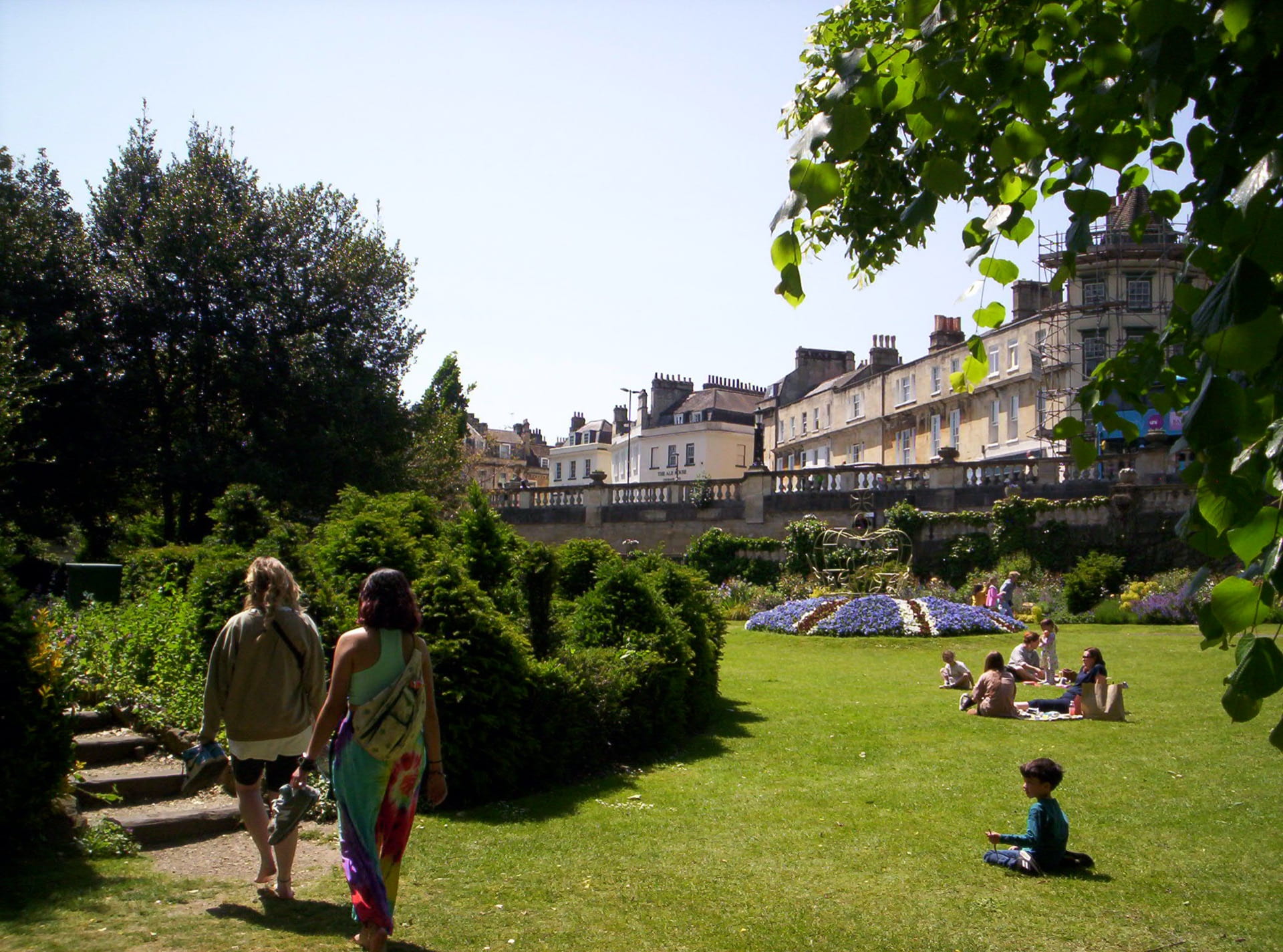
| Bath time! |
I have made so many memories on this trip. The blog helped me stay organized and created documentation of my memories. I was worried that after this trip, I wouldn’t be able to remember all the little details. So, I bought a journal to write down each day’s progress to ensure I didn’t forget anything. Naturally, with my ADHD, I forgot about the journal completely and didn’t write any entries. But, when I look back, I could tell you about every activity we did each day. Instead of being in a classroom where all the lectures seem to bleed together, I was out doing something different every single day. Each day had new foods and places to experience. Memories create such a strong emotional connection and make learning enjoyable and last. I only hope to create that environment in my classroom.
Outside of our meetings, I tried new foods I would have never had the guts to try. I also took a trip to Warner Brother Studios and Chessington World of Adventures. At both locations, I made so many amazing memories with a few people from our group I had only met a few weeks before. My bonds with these people grew to enormous lengths throughout the trip. We would take walks through London after dinner in a pub. A group of us went to Amsterdam for our free weekend, where we had a picnic in a park and explored yet another new city. In every city we explored, witnessing the locals be themselves was such a beautiful experience. I felt so lucky to witness a little boy get so excited over a plane landing with his father. I watched an older woman imitate a statue in the Victoria and Albert Museum. I overheard a grandfather explaining to his granddaughter how bees pollinate.
![]() |
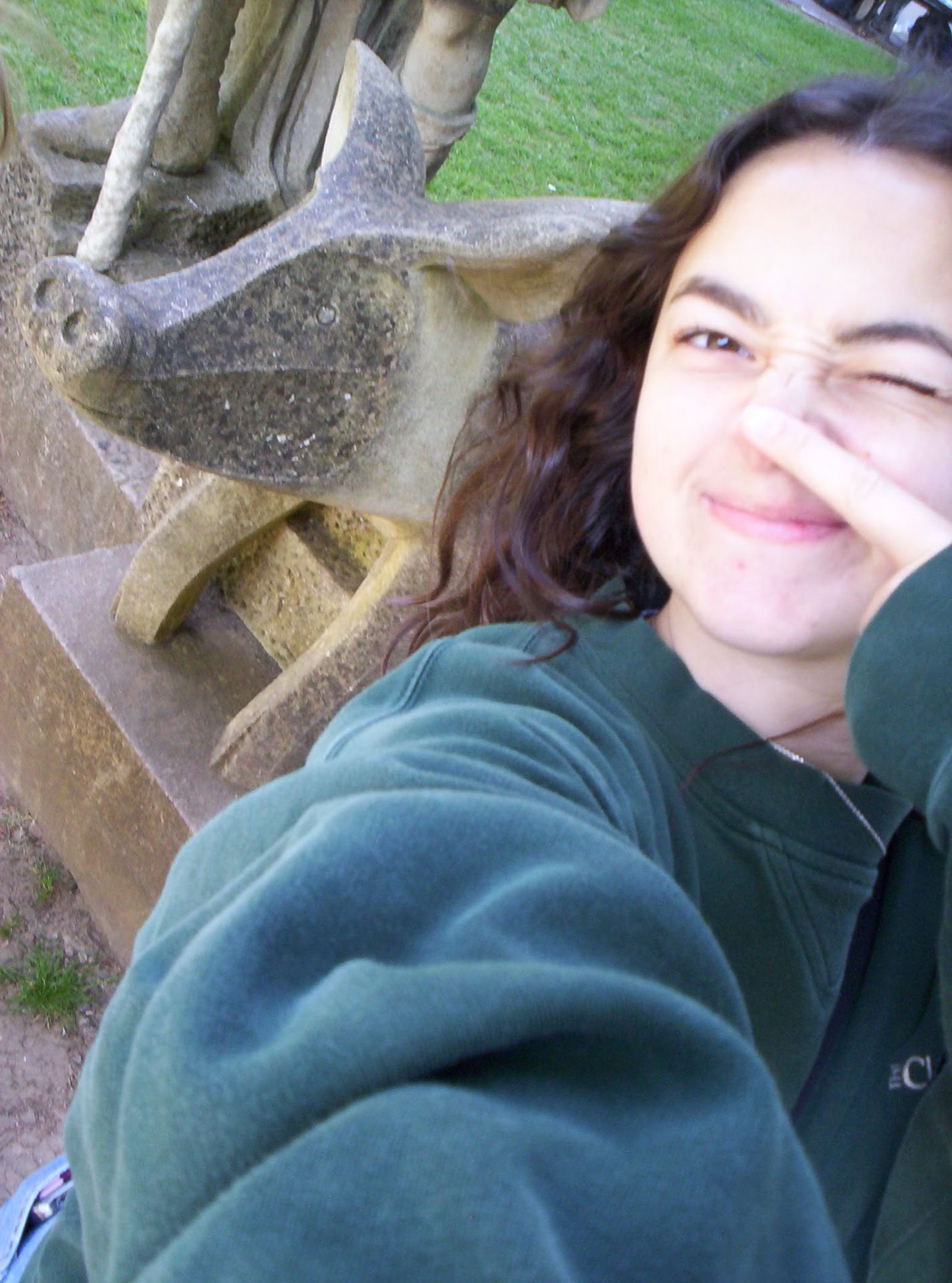
| Woo pig! |
After the flight back to the States, I first went home to my air-conditioned apartment, which was such a luxury. I have looked through all the videos and pictures I have gathered throughout my trip, and I will hopefully start and finish my journal soon. To be honest, this whole month has felt like a dream. I have always wanted to live in a big city, and London was an actual dream that became a reality. I would 100% recommend this trip to other students. I’m not a theatre major, and there were people who were on the trip with me who weren’t theatre majors either; we still had an absolute blast. Theatre aside, the experience of seeing so much history and learning about such a different lifestyle was so unique. Being there for a month allowed me to fully immerse myself into their lives in a way that other study abroad or rare vacations fail. This trip allowed me to learn about others, learn about myself, and learn to live.
03 July 2023
Uncharted Opportunities in Antarctica
![]() |
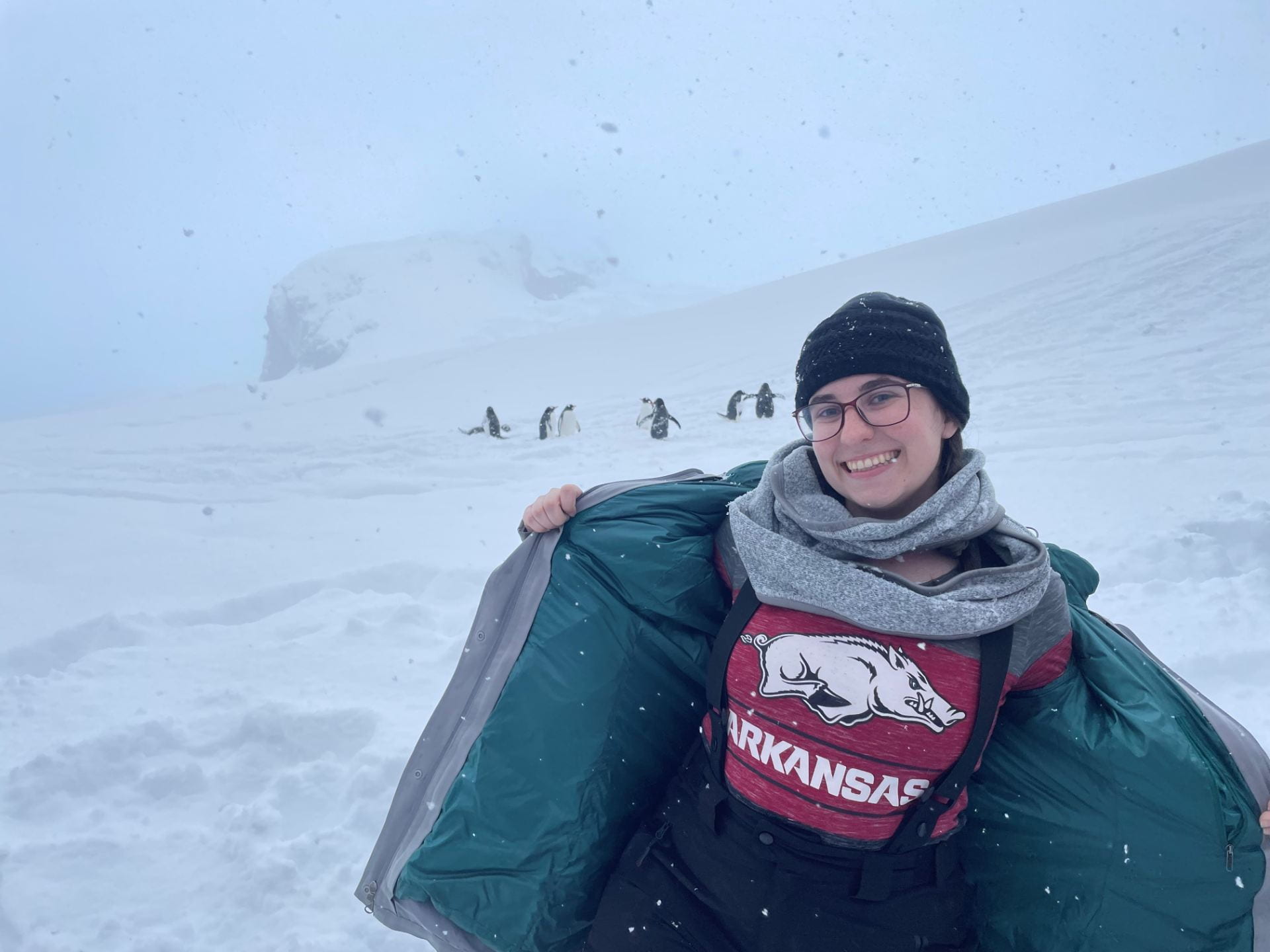
During my freshman orientation, I learned that students from the University of Arkansas had studied abroad in every continent except for Antarctica. That was the day that I knew I had to find a way to study abroad in Antarctica. The next three years were full of searching, applications, and cancellations, but in 2022, I finally traveled to Argentina to begin the most challenging and rewarding semester of my college career.
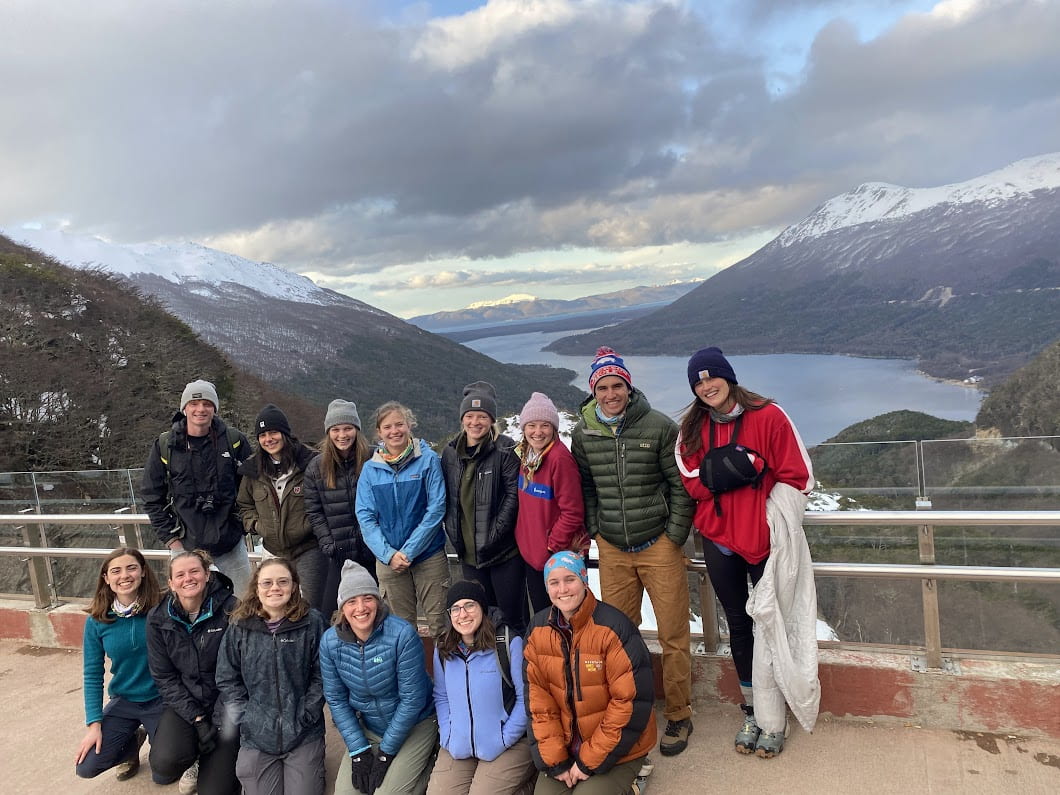
![]() |
| Zoe studied and researched alongside 14 other students. |
Ushuaia, Tierra del Fuego, Argentina is the southernmost city in the world and a gateway to Antarctica. I spent a semester living and studying in Ushuaia with the School for International Training study abroad program People, Environment, and Climate Change in Patagonia and Antarctica.
When I arrived in Ushuaia, I was immediately immersed in Spanish. My host family did not speak English, and all of my classes were in Spanish. At first, it was overwhelming, and I worried I would never fully understand. After about a month, I realized that I could speak complete sentences and understand most of what people were saying. By the end of the program, I was engaging in full conversations and even translating between my host family and my family, who came to visit me for a few weeks after the program ended.
The program included a full 16-hour schedule of classes on climate change, ecology, research methods, local history and Spanish for the natural sciences. The material in the classes was generally easy, but everything was taught in Spanish, so the semester ended up being harder than any other semester at the U of A. The program directors taught most of our classes, bringing in guest lecturers weekly to cover a wider range of material. There were only 14 students in the program, so the smaller class size made it easier to ask questions and interact with the lecturers. The last part of the semester was an independent study project where each student had the opportunity to work with a local scientist on a unique research project. I studied the impact of precipitation changes due to climate change in Ushuaia, and I learned a lot about how to conduct research. The classes and independent study were really beneficial to me because I would like to go into climate research as my career.
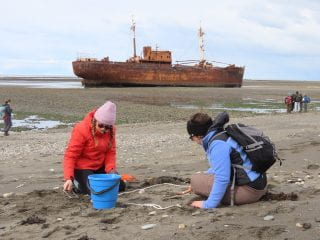
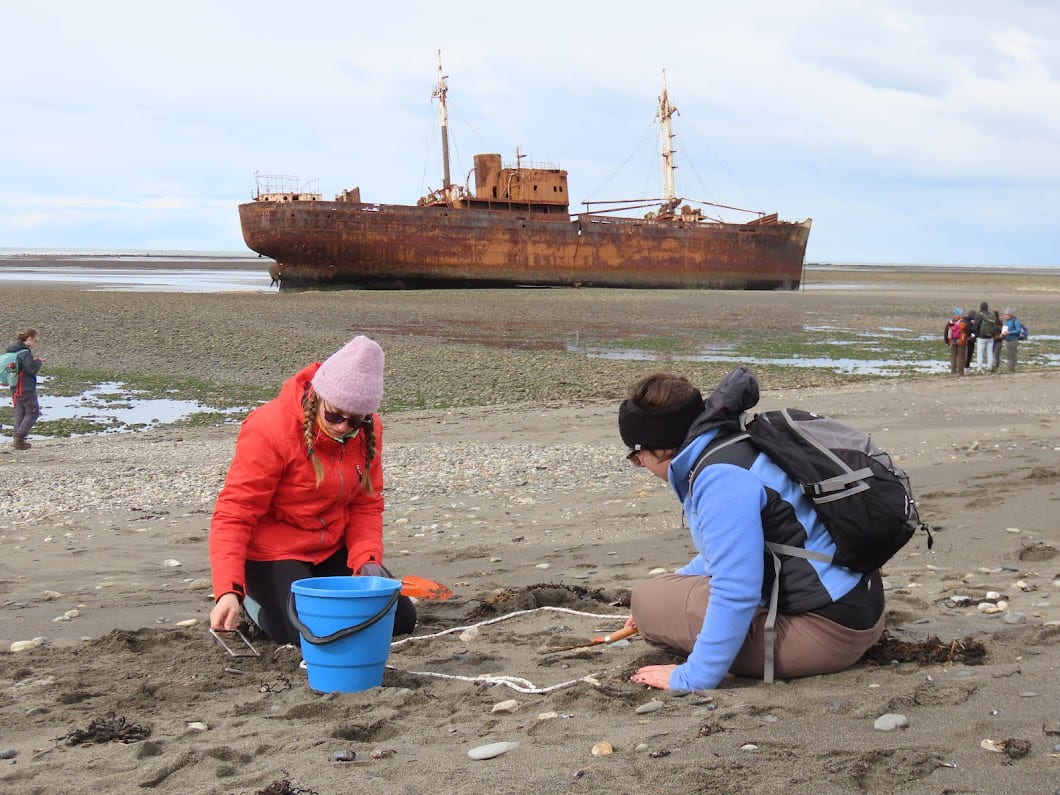
![]() |
| Students visit a local scout group in Tierra del Fuego to participate in a research project on microplastics. |
Ushuaia is a beautiful city surrounded by mountains on one side and the ocean on the other. I went on a lot of hikes with my classmates and saw some amazing views. It was incredible to see the differences and similarities in the environment surrounding Ushuaia from the environment that I was familiar with. The locals in Ushuaia are very friendly and love to hike, so we got to meet many great people on our hikes, and they were always willing to help us practice our Spanish or teach us something about the area.
During the program, we got to go on three excursions as a group. The first excursion was Rio Grande, another city in Tierra del Fuego where we visited a local scout group and did a research project on microplastics. The second excursion was to Estancia Harberton, the oldest European settlement in Tierra del Fuego. The final excursion and the reason that I chose this program was to Antarctica. On November 3rd, we boarded the MV Ushuaia, a former research ship that had been converted into a small Antarctic cruise ship. We began our two-day journey across the Drake Passage, known as the roughest waters in the world. On November 5th, my birthday, we were set to arrive in Antarctica in the afternoon. Around noon, the crew gathered all the passengers in the ship’s bar to announce that a passenger had been injured, and we had to turn around. The runway in Antarctica was too icy for planes and the weather was too bad for helicopters, so the only way to evacuate the passenger would be to return to Ushuaia. We would not be going to Antarctica. I was devastated. I had been trying to get to Antarctica for three years, and I was so close to making it. I understood that it was necessary to evacuate the passenger and that it was the only option, but it was still a hard day. We turned around without ever having reached land and spent another two days on the Drake.
About a week after we arrived back in Ushuaia, our director contacted us with amazing news. The School for International Training had approved their request to let us get on the next trip to Antarctica. On November 21st, we left to cross the Drake Passage a third time. This time we actually made it to Antarctica. We saw breathtaking landscapes and some of the most amazing wildlife I have ever seen. We visited the Almarante Brown Antarctic base on our last day, an actual continental landing where I got to step foot on Antarctica.
I absolutely recommend this program to other students who are interested in climate change or environmental science. I would advise other students not to give up on going on their dream study abroad program because it’s worth it in the end. This program was indeed one of the best experiences of my life, and I will remember it forever.
01 March 2023
The Importance of Feeling Present while Abroad
Hey all! I’m Isaac Prud'homme and I’m a Fulbright College Honors Student studying Geophysics and Earth Science. Over winter break I participated in CIEE’s Kyoto program, and after having a few weeks back at home I believe that I’ve finally consolidated my thoughts and feelings about my experience.
Flying to Japan was my first time ever leaving the US, and going through customs was much smoother than I imagined it would be. After arriving in Kyoto, I was immediately impressed with its size, as I haven’t been to a place like New York or Seattle; Kyoto’s scale took some getting used to.
There were 150 students taking part in the program, and after the first week I was becoming rather exhausted from all the large group excursions. I was worried that if I didn’t completely pack each day with activities that I would feel like I missed something when I returned to the US. The best way to cope with these feelings for me was to stick with smaller group for outings, usually 5 or 6, and if someone had a place they really wanted to see, just tag along. This immediately took the stress of planning off my shoulders and allowed me to relax while in a new environment.
Japan is full of beautiful museums, shrines, mountains, and country sides. All these places were perfect for taking a moment to breathe and feel present. These small moments of relaxation and meditation made the homesickness and stress wash away. One morning I was able to attend a Buddhist service at a nearby temple which helped me center myself and gave me the energy to kick off my day.
The most important thing that has stayed with me from my time abroad is the ability to feel a place’s importance. Whether you’re standing beneath a statue that’s hundreds of years old, or at a shrine at the top of a mountain, the silence feels heavy. The place’s importance to the people living there can be incredibly moving. It's important to give yourself time to rest, experience the history, and breathe.