Search This Blog

Showing posts with label SIT. Show all posts

03 July 2023

Uncharted Opportunities in Antarctica

Blog post courtesy of the Honors College.

Once Zoe Pitman (B.A. earth science, cum laude, ’23) discovered that students had not yet studied abroad in Antarctica, she knew she wanted to try. After years of research and applications, Pitman moved for a semester to Argentina (the gateway to the Drake Passage) to fulfill her dream and learn about climate change. In Argentina, Pitman was immersed in a new language, and the semester proved to be her most challenging. Her perseverance paid off – a week after her birthday, she was aboard an excursion to uncharted academic opportunities in the polar desert.

During my freshman orientation, I learned that students from the University of Arkansas had studied abroad in every continent except for Antarctica. That was the day that I knew I had to find a way to study abroad in Antarctica. The next three years were full of searching, applications, and cancellations, but in 2022, I finally traveled to Argentina to begin the most challenging and rewarding semester of my college career.
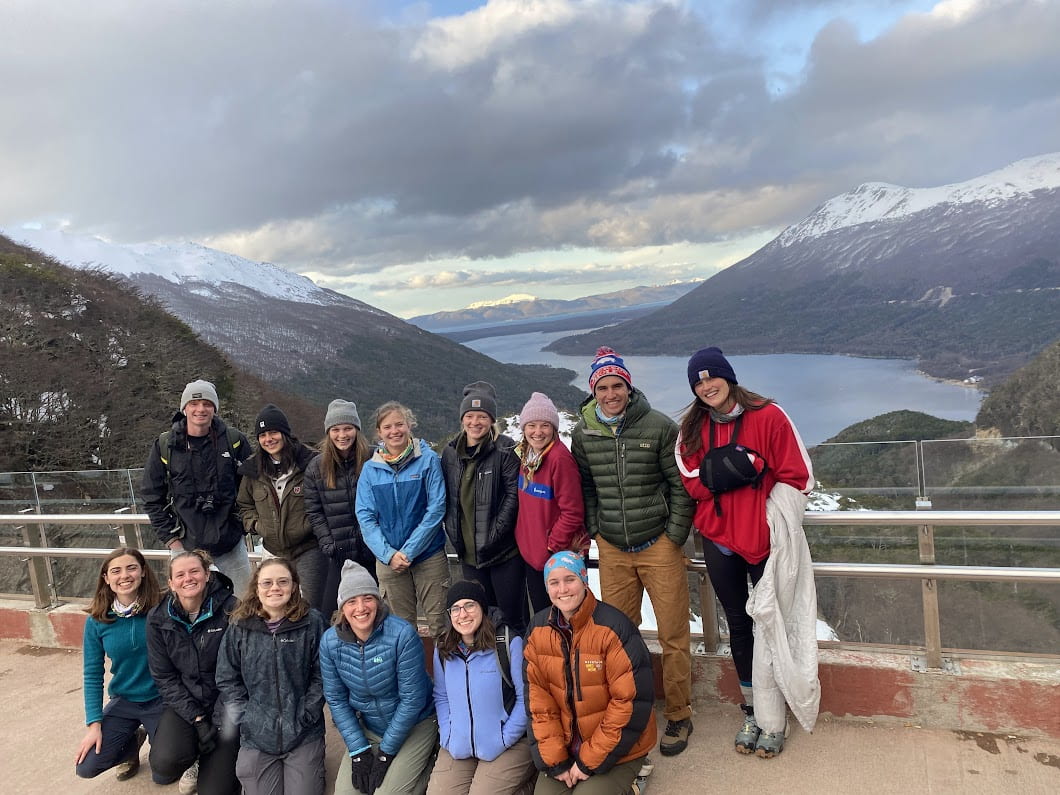
Zoe studied and researched alongside 14 other students.

Ushuaia, Tierra del Fuego, Argentina is the southernmost city in the world and a gateway to Antarctica. I spent a semester living and studying in Ushuaia with the School for International Training study abroad program People, Environment, and Climate Change in Patagonia and Antarctica.

When I arrived in Ushuaia, I was immediately immersed in Spanish. My host family did not speak English, and all of my classes were in Spanish. At first, it was overwhelming, and I worried I would never fully understand. After about a month, I realized that I could speak complete sentences and understand most of what people were saying. By the end of the program, I was engaging in full conversations and even translating between my host family and my family, who came to visit me for a few weeks after the program ended.

The program included a full 16-hour schedule of classes on climate change, ecology, research methods, local history and Spanish for the natural sciences. The material in the classes was generally easy, but everything was taught in Spanish, so the semester ended up being harder than any other semester at the U of A. The program directors taught most of our classes, bringing in guest lecturers weekly to cover a wider range of material. There were only 14 students in the program, so the smaller class size made it easier to ask questions and interact with the lecturers. The last part of the semester was an independent study project where each student had the opportunity to work with a local scientist on a unique research project. I studied the impact of precipitation changes due to climate change in Ushuaia, and I learned a lot about how to conduct research. The classes and independent study were really beneficial to me because I would like to go into climate research as my career.
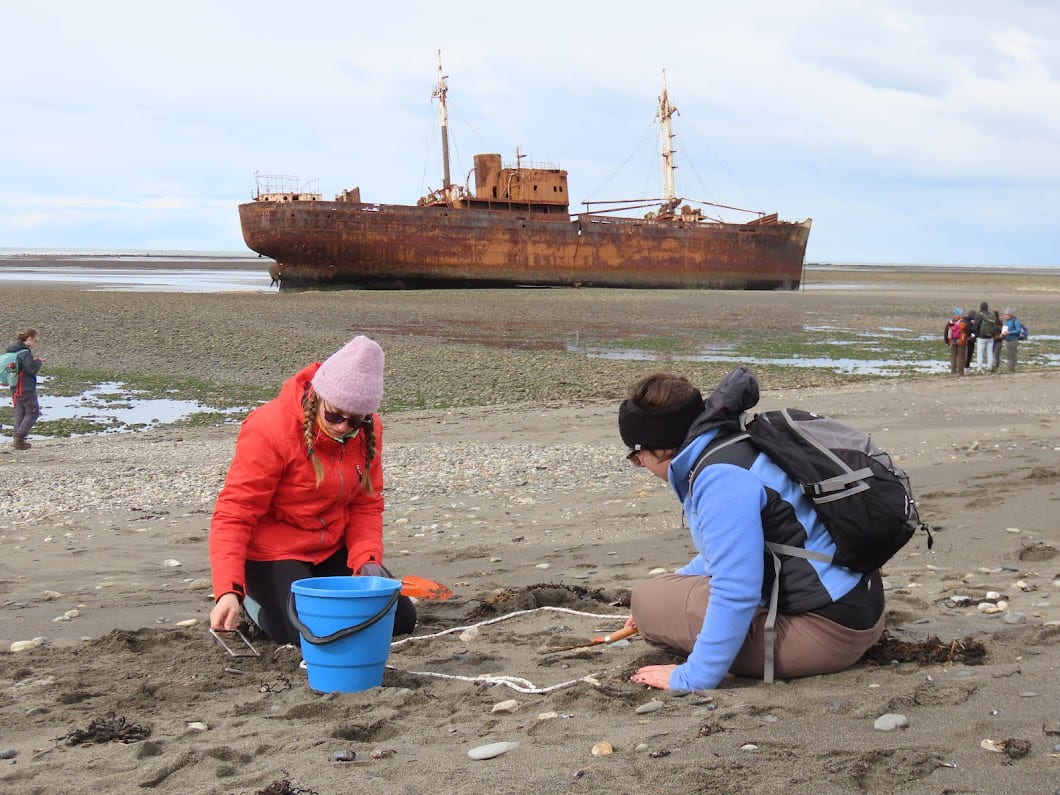
Students visit a local scout group in Tierra del Fuego to participate in a research project on microplastics.

Ushuaia is a beautiful city surrounded by mountains on one side and the ocean on the other. I went on a lot of hikes with my classmates and saw some amazing views. It was incredible to see the differences and similarities in the environment surrounding Ushuaia from the environment that I was familiar with. The locals in Ushuaia are very friendly and love to hike, so we got to meet many great people on our hikes, and they were always willing to help us practice our Spanish or teach us something about the area.

During the program, we got to go on three excursions as a group. The first excursion was Rio Grande, another city in Tierra del Fuego where we visited a local scout group and did a research project on microplastics. The second excursion was to Estancia Harberton, the oldest European settlement in Tierra del Fuego. The final excursion and the reason that I chose this program was to Antarctica. On November 3rd, we boarded the MV Ushuaia, a former research ship that had been converted into a small Antarctic cruise ship. We began our two-day journey across the Drake Passage, known as the roughest waters in the world. On November 5th, my birthday, we were set to arrive in Antarctica in the afternoon. Around noon, the crew gathered all the passengers in the ship’s bar to announce that a passenger had been injured, and we had to turn around. The runway in Antarctica was too icy for planes and the weather was too bad for helicopters, so the only way to evacuate the passenger would be to return to Ushuaia. We would not be going to Antarctica. I was devastated. I had been trying to get to Antarctica for three years, and I was so close to making it. I understood that it was necessary to evacuate the passenger and that it was the only option, but it was still a hard day. We turned around without ever having reached land and spent another two days on the Drake.

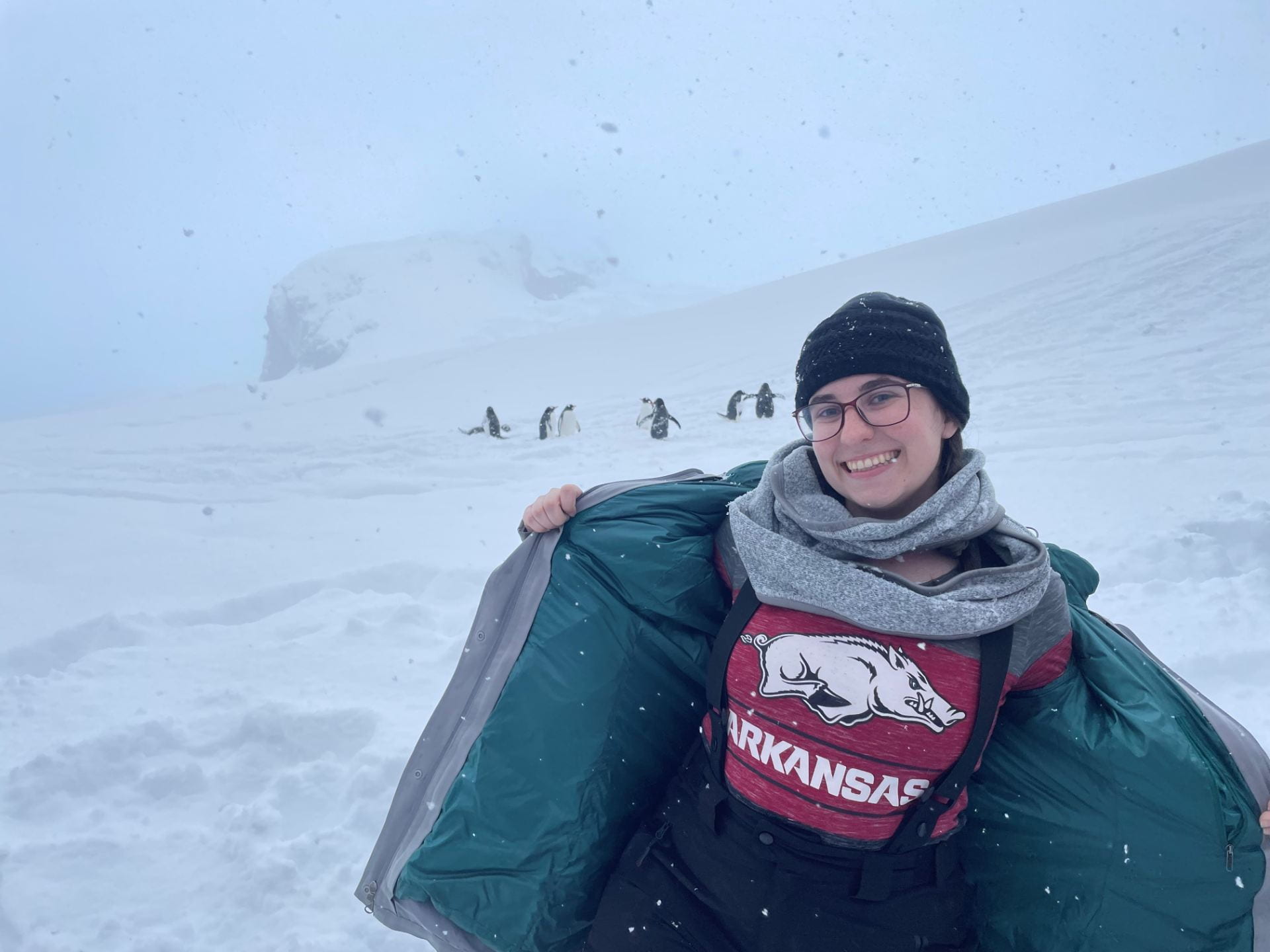
About a week after we arrived back in Ushuaia, our director contacted us with amazing news. The School for International Training had approved their request to let us get on the next trip to Antarctica. On November 21st, we left to cross the Drake Passage a third time. This time we actually made it to Antarctica. We saw breathtaking landscapes and some of the most amazing wildlife I have ever seen. We visited the Almarante Brown Antarctic base on our last day, an actual continental landing where I got to step foot on Antarctica.

I absolutely recommend this program to other students who are interested in climate change or environmental science. I would advise other students not to give up on going on their dream study abroad program because it’s worth it in the end. This program was indeed one of the best experiences of my life, and I will remember it forever.

21 December 2020

International Diplomacy in Virtual South Africa

It was official. My St. Petersburg, Russia study abroad plans to polish my language studies and immerse myself into the culture for my career pursuits were officially canned. As the alarm bells chimed for the COVID-19 travel closings, I knew that my future aspirations to study abroad were as far from me as the shores of the Baltic Sea. But I was not deterred.

Equipped with the knowledge that I was only in my third year and that I could afford to bide my time until the storm had passed, I decided to take the initiative to venture out into the unknown. I figured that while everyone was adjusting their plans, that perhaps I could take the opportunity to try replacing my Russian travel arrangements with something just as beneficial to my international mediation pursuits. My eventual decision would take me sailing across some of the most frightening waters of my academic career into an unchartered territory that caused many a bold undergraduate to quake with fear: online internships.

Now where would one who is versed in Eastern European studies find a program suited for a career in international mediation? South Africa, of course! It was entirely unexpected. But as soon as the announcement fell into my inbox saying that positions for SIT’s brand-new virtual internship in diplomacy, conflict resolution, and international relations were open, I had to apply. But wait, this is in South Africa. Did I know anything about South Africa? …No. Did I find any other kinds of internships that fit so neatly into my academic and career plans as this one? …Also no. So I signed up, and I got in!

What settled some of my anxious nerves at the program’s outset was the knowledge that I, along with a small team of students, would be given a two-week orientation and a personalized crash-course of South African history. What I had not anticipated was the flexibility of the program and how spread out our entire team was. Not only were the program supervisors situated in their headquarters in Durban, South Africa, but many of my colleagues were located on opposite sides of the US and in other countries. Ooh, I’d have to get good at time zone math really quick! Our weekly synchronous sessions were all recorded and occurred at the convenience of both the supervisors and the students, so there was usually a lot of juggling on everyone’s part to make sure we could all be there and awake for the day’s lesson.

Despite our separation from one another over the virtual medium, the group’s dynamic was fantastic! We established an easy communications network via WhatsApp and email which allowed for us to help one another with our assignments and support each other during the rough seasons of the semester. The advisors always made themselves available for feedback and consultation, and the material we covered within a few weeks had given us the context needed to approach our semester-long task: the summary transcription of nearly 75 intergenerational dialogues across the world.

This semester as the world’s plans ground to a halt and nations had to prioritize the management of the pandemic, the non-government organization of ACCORD (the African Centre for the Constructive Resolution of Disputes) decided to momentarily turn its attention away from African politics and focus on helping its partners in the UN. We as interns for SIT, were assigned to aid ACCORD in their Global Peace project. This project would encompass a series of intergenerational discussions conducted by prominent leaders and representatives of the youth across the world to find practical solutions to global issues. Our group was tasked reviewing, analyzing, and transcribing summaries of the most salient points drawn from these dialogues for the UN Secretary General’s viewing.
This was some of the most intellectually stimulating and interesting work I had ever undertaken thus far. Listening in on these dialogue sessions and figuring out how to tailor their points for positive action became one of my new favorite academic challenges. I persevered through the program, encouraged in the knowledge that what I was doing had an impact on the processes of peace in the UN. I got to hear discussions from nations including Namibia, Honduras, and Iran, all focused on finding ways to make the future a better place. Despite the variety of participating nations, there was a unanimous call for action to establish youth representation in government, encourage entrepreneurial education, and to replace corrupt institutions.

This internship allowed me to interact with the international community in a way that greatly improved my communication and writing skills. Although the internship work was conducted completely virtually, it significantly broadened my horizons, contributed to my international experiences, and allowed me to perceive the world in a way that enabled me to work more effectively in the processes of conflict resolution, diplomacy, and mediation. I couldn’t recommend a better program to those considering work in international relations. The patience of the supervisors and their commitment to helping students learn how to conduct international operations of peace surpassed that of anything I had found in the states.
I would encourage all students to never give up on exploring the different paths to achieving their goals. Study abroad may have been halted by a pandemic, but the internship I had decided to take a chance on ended up showing me more avenues to the kind of work I wanted to go into than what I had expected. I implore the students who are facing obstacles to their aspirations to take the initiative to find the hidden paths that lead to their goals. If it’s worth a try, then it’s worth your all.

--
Amy McCampbell, a junior International & Global Studies major participated in SIT's virtual internship in South Africa: Diplomacy, Conflict Resolution & International Relations in Fall 2020. Learn more about SIT's virtual internships.

Interested in pursuing a virtual international internship? This innovative program allows students to put accessibility and mobility concerns aside to develop meaningful professional connections with international companies, NGOs, health and education organizations, and so on. Although it’s not a substitute for a traditional on-site experience, these programs provide a project-based pathway for students to connect with international organizations. Learn more about options to internationalize your degree plan by adding a virtual international internship to your semester.

12 August 2020

Virtual Internship in Public Health #HogsAbroad (Virtually) in Kenya

Chithirala-Photo-1.jpeg (1440×900)

Honors College Fellow Meghana Chithirala, a pre-med junior double majoring in chemistry/biochemistry and economics, planned to spend the summer polishing her French skills in Perpignan, France –– but the COVID-19 pandemic forced a change in plans. She was one of the first honors students to sign up for a virtual international internship. Rotations through the HIV Clinic and pediatrics, critical care and neonatal units at Jaramogi Oginga Odinga Teaching and Referral Hospital in Kisamu, Kenya, proved to be an eye-opening introduction to public health – and the benefits of online internships.

Article from the Honors College blog


For the past year or so, I had been preparing to study abroad in France this summer. I often imagined myself exploring the beaches of Perpignan, eating all the pasta my stomach could handle, and being fully immersed in the language and culture. Unfortunately, the global spread of the coronavirus quickly dissolved those plans, and I was applying to the SIT Kenya: Virtual Internship in Public Health in the Tropics program thanks to an email Chelsea Hodge sent out to honors students before I knew it. While I was ready for a summer revolving around my French minor, I was excited to make the most out of my summer by focusing on my goal to enter the medical field one day.
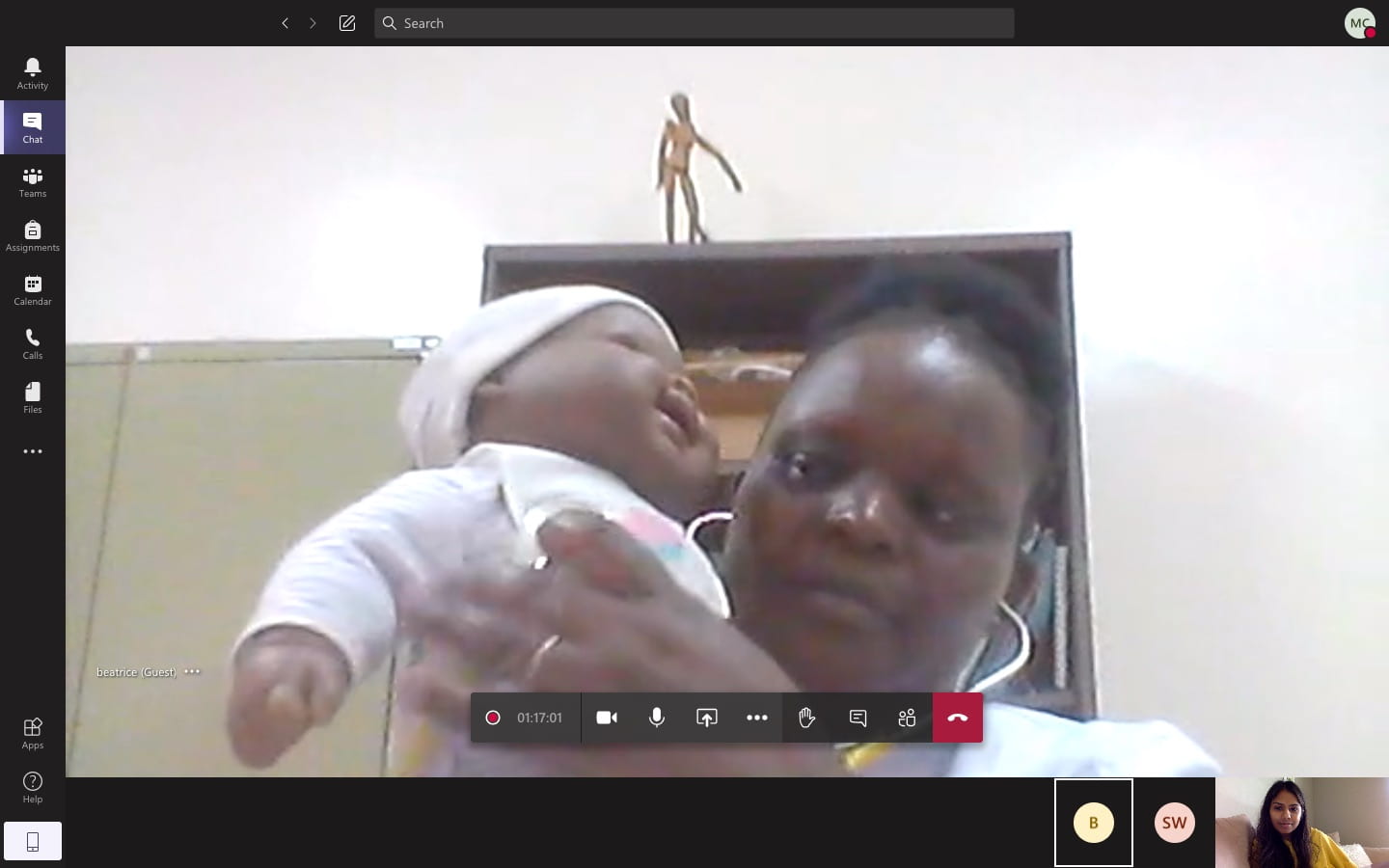
This woman used a baby doll to demonstrate how to perform a physical examination.

I had many questions going into the program, especially about how much I would be able to learn through a screen. Couldn’t possibly be that much, right? However, I was quickly proven wrong. I was exposed to a multitude of issues in the Kenyan health care system and how third-world countries are trying to utilize their limited resources efficiently in the first week alone. Over the course of the internship, I rotated between the pediatrics unit, critical care unit, HIV clinic, and neonatal unit at Jaramogi Oginga Odinga Teaching and Referral Hospital in Kisumu, Kenya. I have learned about the legal concerns and social issues when taking care of children in Kenya, how to collect a patient history and perform a physical examination for both children and adults, and gained insight on the diagnosis of prevalent illnesses in the tropics through symptoms and signs. Highlights include being able to examine case studies of a patient with sickle cell disease to obtain a real-life example of appropriately-filled-out hospital forms and nursing care plans, and a patient with HIV who was experiencing treatment failure for unknown reasons. These case studies made me feel like I was in the hospital in person, working in the different departments, instead of participating in the internship virtually.

Even though I was thousands of miles away, the expectations placed on me were not lowered by any means. I was often quizzed on previous topics, given readings to discuss, and assigned topics to research. The amount of work this internship required was definitely not expected, which was initially stressful as I was not sure I would be able to juggle it with my other responsibilities. However, an honest interest in what I had been learning kept me motivated to stay on top of everything, even if that meant I had to wake up at 6:00 a.m. every day due to the time difference.

Sure, there are challenges associated with virtual learning, such as technical glitches, but the Internet provided many advantages to amplify my overall experience. I was able to swiftly research topics as they were being talked about or record important sessions to rewatch them at a later time if necessary. I was not able to have an immersive cultural experience like I would have if I was physically in Kenya, but I was able to pick up on some Swahili and learn about the environment through the staff’s perspective and videos. This internship was honestly one of the greatest opportunities I had been given, and a part of me is kind of glad my France study abroad program was postponed until next summer.
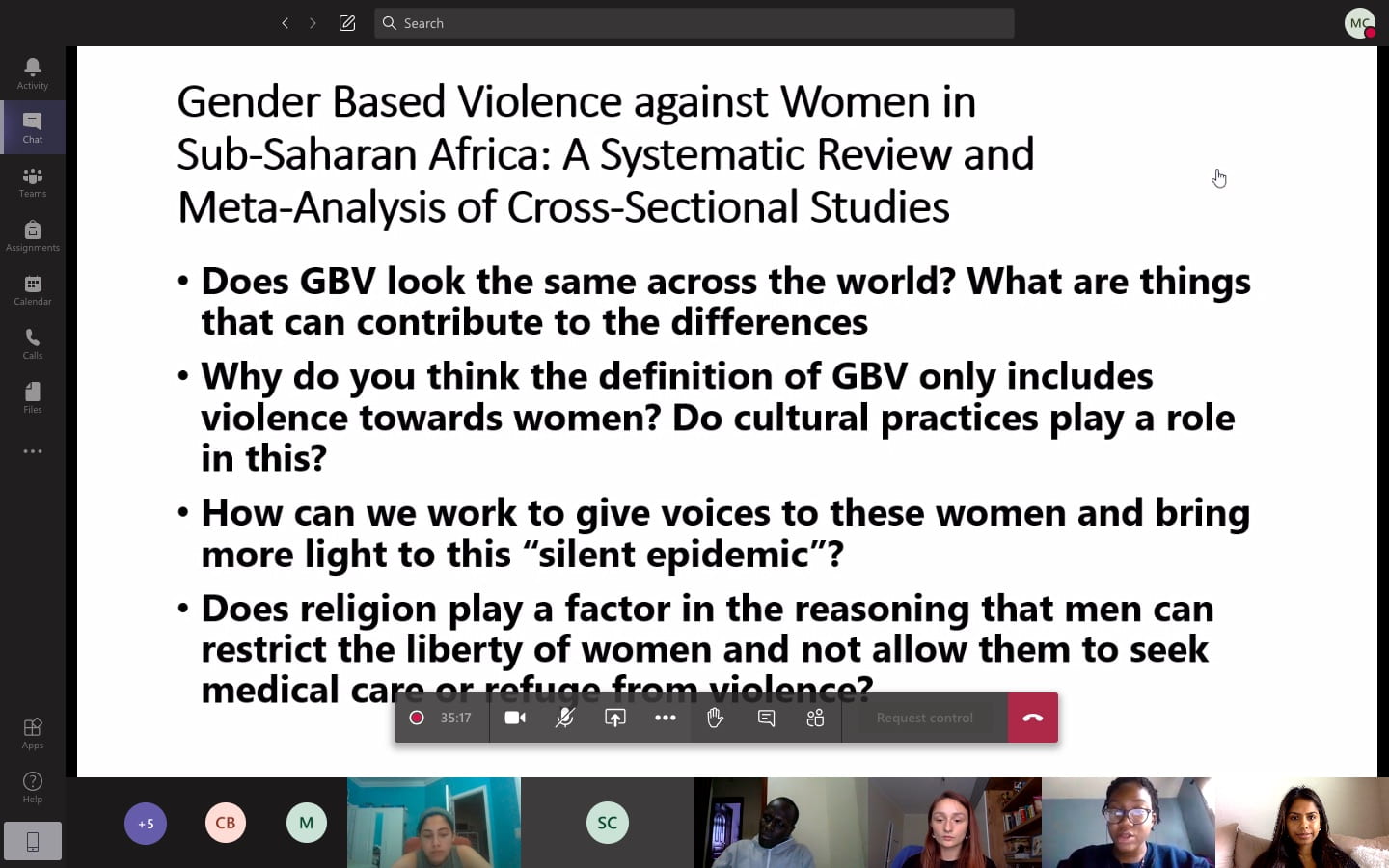
This screenshot shows online discussion of gender-based violence in Africa. Chithirala is pictured at bottom right.

--

This summer, although the COVID-19 pandemic suspended study abroad programs, students participated in a Study Abroad and Honors College pilot program to complete virtual international internships.

Chemistry major Meghana Chithirala completed a virtual international internship through SIT (the School for International Training), earning direct U of A credit and gaining valuable work experience. Interns with the SIT program based in Kenya complete a five weeks placement at Kenya Medical Research Institute (KEMRI)/Centers for Disease Control (CDC) or other organizations working on public health related issues in Kisumu, deepening knowledge of public health promotion and management in the tropics. Learn more about Meghana's Virtual Internship in Public Health in the Tropics in Kenya. 

Interested in pursuing a virtual international internship? This innovative program allows students to put accessibility and mobility concerns aside to develop meaningful professional connections with international companies, NGOs, health and education organizations, and so on. Although it’s not a substitute for a traditional on-site experience, these programs provide a project-based pathway for students to connect with international organizations. Learn more about options to internationalize your degree plan by adding a virtual international internship to your semester.

17 May 2019

Living My Dream #HogsAbroad in Tanzania


My study abroad experience started as most peoples' do. CHAOTIC. The night before, I realized that not everything would fit in my traveling backpack so the day of my flight I had to pack in the REI store while buying a new backpack. After that problem was solved I then had to catch a 29-hour flight to Tanzania. Once landing, I realized that my brand-new travel backpack was nowhere to be found… the airline had lost it. So yes, I was in a foreign country, with no clothes, no tent, no sleeping bag, and basically none of the essential things that I was going to need. I WAS DEFEATED. However, the story does not stop there. After, the first couple of minutes of pure panic, fear, and even a little regret, I was greeted by 24 new friends and staff that over time would become my family… I KNEW THAT I WOULD BE OK. 

The other 4 months of my study abroad trip were a lot less chaotic. I was basically living my dream. I was able to study wildlife as close as possible. I got to see the big 5 of Africa (even the white rhino which is very rare), and through experiential learning, I got to grow academically as well as personally. There was nothing like camping in the middle of a national park, being able to look up and see the incredible night sky and hear all the animal sounds. It was truly an unforgettable experience. 

Although the start of my study abroad semester did not go as planned, it helped me come to terms with the fact that not everything is going to be perfect while abroad, and even if you plan something to a T, it still has the possibility of getting messed up. The biggest lesson I learned while abroad is to expect the unexpected and just roll with the punches because usually the things that do not go as planned make for the best stories! I think that no matter what program you choose for studying abroad it will have its challenges. However, it’s those challenges that allow you to grow and become a better version of yourself. There is truly nothing like studying abroad, so I am here to tell you if you are even remotely thinking about it JUST DO IT. There is no doubt in my mind that it will be the best experience that you will get in college. So if you are looking for a sign that you should study abroad, here it is…STUDY ABROAD!!!
--
Junior Biology major Kayla Lane spent the spring 2019 term in Tanzania studying wildlife conservation and political ecology with SIT with the help of our Office of Study Abroad Scholarship.

Don't miss your opportunity to study or intern abroad! Start your search at http://studyabroad.uark.edu/search/

24 October 2018

Featured Destination: Thailand

Interested in study abroad, but don't know where to start? There are lots of ways to do it and so many places where you might go. Each month we'll feature a new destination, and November's highlighted country is Thailand!

Visit the “land of smiles” located in the heart of Southeast Asia. University of Arkansas students will experience a mix of ancient temples and modern industry, with stunning beaches in the south, and majestic mountains in the north. With courses offered in English and Thai, no language barrier will hold you back.

PROGRAM HIGHLIGHTS
Dale Bumpers College of Agricultural, Food and Life Sciences
J. William Fulbright College of Arts and Sciences

SCHOLARSHIPS
There are many resources and scholarships available for study abroad. Most scholarships and financial aid that students currently receive may be used to study abroad. There are also many scholarship opportunities specifically for study abroad available through the University of Arkansas and outside organizations. For more information visit studyabroad.uark.edu/funding.

WHAT FORMER STUDENTS HAVE SAID

“Thailand stood out to me because of how different it is than the United States. In no other place can you see traditional Thai medicine taught in front of an ancient 150 foot long golden statue of the Buddha and an ultra modern luxury shopping center right across the street from one another. We lived in a research station in the jungles of Northeast Thailand that had one of the highest concentrations of venomous snakes in Asia, where researchers from all over the world would come to study the unique life that called that environment home. I loved every part of my study abroad experience and my only advice to potential students is to bring plenty of bug spray and drink lots of water.” - Brady Martin, Animal Science major, Tropical Ecology in Northeast Thailand, Summer 2017

3 EASY STEPS TO STUDY ABROAD
So, what's next?
  1. Drop by the Study Abroad House Monday-Friday between 3:00 – 5:00 p.m. to learn about program options and funding opportunities. 
  2. Meet with your Academic Advisor to discuss your academic plan. 
  3. Schedule an appointment with your Study Abroad Advisor. 
--
Check out these 5 Reasons to Study Abroad in Thailand.
For additional information visit studyabroad.uark.edu or contact us at studyabr@uark.edu, or 479-575-7582.

14 August 2018

Featured Destination: China

Interested in study abroad, but don't know where to start? There are lots of ways to do it and so many places where you might go. Each month we'll feature a new destination, and September's highlighted country is China!

As the third largest country in the world, China offers University of Arkansas students diverse opportunities for a study abroad experience. China has emerged as a global leader, making it a hub for business and technological advancements. With a rich history that dates back over 3,000 years, China also provides students with a unique cultural experience. As programs offer courses in both English and Chinese, there is no need to let a language barrier hold you back!

Study abroad in China to experience a blend of modern technology and ancient history!
PROGRAM HIGHLIGHTS
Below are some highlighted programs in Italy for specific U of A colleges. Programs may focus on specific areas of study, and many are open to all majors.

U of A Faculty-Led
U of A Exchange

SCHOLARSHIPS

There are many resources and scholarships available for study abroad. Most scholarships and financial aid that students currently receive may be used to study abroad. There are also many scholarship opportunities specifically for study abroad available through the University of Arkansas and outside organizations. For more information visit studyabroad.uark.edu/funding. And, be sure to explore these scholarship programs:
WHAT FORMER STUDENTS HAVE SAID
“I gained a better understanding of Hangzhou and Chengdu’s history through field trips and personal excursions. My Chinese language independence increased because of this trip and I definitely plan on studying abroad in the future.” -Brandi Taylor, sophomore Economics major, Summer 2018 Intensive Mandarin in China.

3 EASY STEPS TO STUDY ABROAD
So, what's next?
  1. Drop by Monday-Friday between 3:00 – 5:00 p.m. to learn about program options and funding opportunities.
  2. Meet with your Academic Advisor to discuss your academic plan. 
  3. Schedule an appointment with your Study Abroad Advisor. 
--

For additional information visit studyabroad.uark.edu or contact us at studyabr@uark.edu, or 479-575-7582.