Search This Blog

Showing posts with label January Intersession 2017. Show all posts

07 September 2017

Meet One of Our Study Abroad Peer Advisors: Eric Williams! #HogsAbroad

 Hello Friends,

My name is Eric S. Williams, and I am a senior accounting major, information systems minor in the Walton Honors program here at the University of Arkansas. I moved around frequently during my childhood, so I do not really have a hometown. My mother currently lives in Arlington, TX, though, so that’s where I go home. I love to travel. I have been to 58 countries that span 6 continents. I studied abroad twice in my college career. I went to Vietnam for the 2017 January Intersession and then Ireland for Summer 2017, both faculty-led programs with the Walton College.

Vietnam – January Intersession 2017

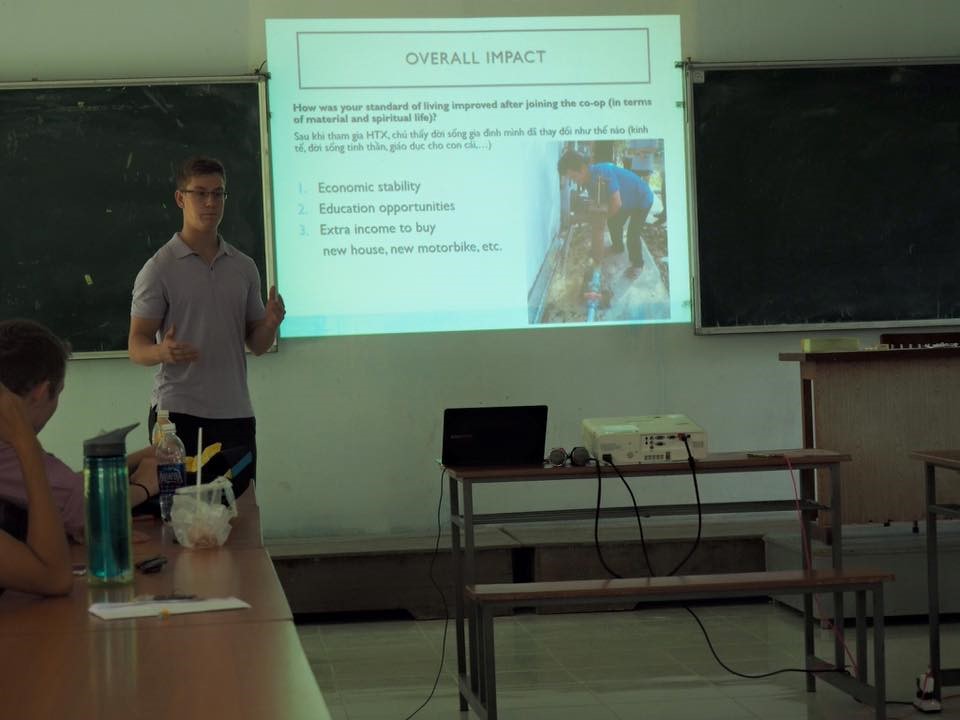
Vietnam was such a rewarding and unique experience. While there, we worked on two projects. The first project was to install biogas for some of the families. These biogas digesters provided fertilizer for their farms and electricity for their homes. The second project required us to interview farmers in the cooperative and collect data. Using the data, we compiled a presentation and gave advice on how they could improve their business practices.
 
 Ireland – Summer 2017
 A month in Ireland over the summer was a great learning experience. We visited all four of the Big 4 Accounting firms, and as an accounting major, this was very exciting to me. We spent a day with Eurofound to learn about the European Union and their relationship with Ireland. We also did fun stuff like a day tour of Belfast, Northern Ireland, kayaking the River Liffey, and touring the Guinness Storehouse. It was a wonderful bonding experience, as most of us still keep in contact with each other regularly.


In addition to being a peer advisor at the study abroad office, I also intern with the Razorback Sports Network as a Student Production Assistant. There, I help produce some of our home sporting event broadcasts. My favorite thing to do at the sports network is run replays for the videoboard.
As a peer advisor, I am very passionate about traveling. I love working at the study abroad office, and I can’t wait to talk to you one on one in the office and help you have an amazing experience overseas.

--
Come meet Eric and the other peer advisors at a Hogs Abroad 101 information meeting! These hour-long sessions are held Tuesdays and Wednesdays during the fall and spring semesters, from 4:00 pm - 5:00 pm in the Center for World Languages, Literatures and Cultures (JBHT 207).

13 June 2017

Experiential Learning in Indian Agriculture #HogsAbroad

img_2545
University of Arkansas students and professors outside of Amer Fort in Jaipur, India. #hogsabroad
My entire college career has consisted of lecture halls, high tuition rates, theoretical concepts and week-long homework assignments, and endless cups of coffee. However, my education was missing a small, innovative approach that would help me find my favorite learning style. An opportunity presented itself to me in the last semester of my graduate career through the study abroad office at the University of Arkansas. There was a two-week course being offered called Experiential Learning in Indian Agriculture and it was led by two professors: one from the plant science department and one from the environmental, soil and water science department.

Eight students participated in this international experience and were from departments within the university, such as agricultural education, hospitality, psychology, animal science, agricultural business, apparel merchandising and product development, and agricultural economics.

The class would take place in India, specifically in the cities of New Delhi, Agmer, Jaipur, Agra, Meerut, Modipuram, and Rishikesh. In these places we discovered Indian culture through language, food, textile designs, farming, religion, and hospitality. Many cups of tea were drank and butter cookies consumed amongst the company of Indian agriculture leaders, educators and students. It was an experience of a lifetime and I HIGHLY recommend that any student seeking an extraordinary educational experience choose to study abroad with the Dale Bumper’s college to India.

Agriculture in India

India is famous for its spices. It is no secret and every dynasty within the past two-thousand years has coveted the famed cardamom, clove, cumin, coriander, mustard seed, and black pepper spices that India so exquisitely produces. Markets were full of bowls of beautiful, colorful powder that every tourist could not wait to get their hands on. The National Research Center of Seed Spices (NRCSS) in Ajmer has been doing development research on every spice that Indian farmers are producing. Our group was able to tour their top secret facility to learn about the types of projects going on there. We also enjoyed a visit to a small farming village behind the institute that produced marigolds. We were greeted by the sound of drums and thousands of marigold pedals falling upon us. Not even Dr. Vibha, our Indian professor, had experienced such a classy cultural welcome before. It was definitely an original occurrence!

img_2265
Students viewing all the different products made from seed spices at the NRCSS.
The next few days the group went on tours of massive greenhouses throughout the state of Rajasthan. We met farmers who were growing cucumbers and tomatoes by the ton within state-of-the-art greenhouses. The extra land around the houses was covered in sweet peas. These farmers were making more than Indian businessmen! It was wonderful to see these structures because they were providing jobs to the locals and bringing in agritourism to the area. It was an educational experience for the students in agriculture-related fields and hospitality. Also, every house was being run by solar power panels. This renewable energy decreased the amount of waste produced by the houses while increasing the yield per hectare of food production. Since India has not approved any genetically modified crops besides Bt cotton, making the most of the arid land is very difficult without these greenhouses. Most of the desert is used for camel and goat herding.

img_6541
A view of the greenhouses, solar panels, and farm crew in Rajasthan.

There are MANY agriculture education institutions in India. On our trip we visited three: Delhi University – South Campus, Dayalbagh Educational Institute (DEI), and Sardar Patel University. The most fascinating university, in my opinion, was DEI because of its framework and system of operations. DEI is located in Agra, India (the city where the Taj Mahal is located) and is focused on educating students to become a complete person. The philosophy of DEI is stated below and can be found on their website here.

“The Institute has introduced a scheme of innovative and comprehensive education at university and non-university general and technical education levels which aims at excellence but not at the cost of the relevance, which inculcates dignity of labour, encourages initiative and creative work, which is multi-disciplinary, which prepares men for the increasingly techno-oriented society of tomorrow without uprooting them from their agricultural moorings, which will generate in the alumni the basic values of humanism, secularism and democracy by exposing them to the principles of all the major religions of the world and to their own cultural heritage, thus developing in them an integrated personality of well-adjusted men whose world has not been broken into fragments by narrow domestic walls.” — DEI

The school does not currently offer any degree for agriculture, but is moving forward with the creation and implementation of one that should be in place by next year (2018). However, a majority of their campus is dedicated to farming, which feeds the DEI student and faculty population as well as a small village that is stationed on the campus. Additionally, DEI has a dairy research institution where they produce high quality milk, cheese, yogurt, and ice cream. About 35 liters of this milk is exported each month, but only to private buyers.

img_6905
The scratching machine at the DEI dairy farm.

Lastly, DEI is the leading university in the world in consciousness studies. The dairy farm is hoping to make a discovery linking a cows consciousness to the quality of milk it produces. This effort is being supported by continuous music being played for the cattle and an automatic grooming machine that turns on when a cow approaches it seeking out some relief. And DEI has very cheap tuition demands. You will only pay about $1000 USD for approximately five years of top-notch education. I may consider studying abroad permanently?

Exploring India: The Taj Mahal

While in India, we did a lot of exploring landmarks, markets, cuisine, and museums. The most iconic of all the explorations was, of course, the discovering of the Taj Mahal tomb. This place was birthed from one of the most epic love stories of our time, and has survived on of the most heartbreaking betrayal known to man. The Mughal emperor, Shah Jhan, built the tomb to house the remains of his most beloved wife, Mumtaz Mahal. On her deathbed she requested that he build a memorial of their love on top of her grave to represent their eternal love. It took the emperor 22 years to build the Taj, in the meantime almost bankrupting India. In that day, around $40,000,000 USD was used to build the Taj (try figuring that in todays monies), and a majority of it went to the laborers and craftsman responsible for the construction and decoration of the project. It is believed by historians that Jhan was going to build a second Taj for himself, but using black marble instead of white, across the Yamuna river. He was dethroned and imprisoned by his son Aurangzeb and was not able to visit the Taj Mahal after it was completed. However, he was able to see the tomb from his cell window.

img_6882
The Taj Mahal in Agra, India.

The architecture and design of the Taj Mahal is very interesting. A variety of semi-precious stones are inlayed in the white marble, such as onyx and emerald. The carvings are so specific and so complex and the government of India has declared the it a protected art. Currently, there are about 400 families who are direct descendants of the people who built the Taj Mahal, but only 65 are still practicing this art. They do touchups on the Taj as the old materials crack and wither away. Surrounding doorways and windows are intricate designs of flowers and/or Arabic markings, which is the creation story and judgement found in the Quran.

The four towers surrounding the Taj are strictly decorative. They lean approximately one degree outward so that incase of an earth quake, the main structure would not be harmed.
The platform that the Taj is resting upon is being supported by massive beams that go about 20 meters into the ground. Since the structure is built next to a river, the weight from the marble would not be supported by the loose soil. These beams hold the whole structure steady. Additionally, the platform that the Taj Mahal rests on is leveled in weight by a mosque to the left and an exact replica of the mosque to the right. Both of the structures are exactly equal in weight to the Taj Mahal.

img_4469
Group pic – we are all happy to be here!

There are so many more mysteries to be discovered of the Taj Mahal’s history and its design. Over 20,000 people were put to work to construct this masterpiece and it is still standing 400 years later. I have been asked, “What is so impressive about a building?” My response is simple… This is not just a building. It is a memorial of religion, love, history, and monarchy. There is more hand-craftsmanship in this one building than in all the continent of Asia. This is the product of dedicated men and women who loved their king enough to, in some cases, devote their entire life to creating this one masterpiece. With that being said, if you are near Agra and miss the opportunity to stand in awe at the Taj Mahal, then you are missing out – seriously.

img_6848
The mosque that resides next to the Taj Mahal.
img_6838

It is absolutely imperative that each and every one of you purchase a plane ticket to India in order to experience this wonderful work of art. No excuses allowed. 

--
For information about Bumpers College study abroad programs, go to Bumpers' international page. Bumpers College offers faculty-led programs to Belgium, England, China, India and Mozambique; courses and exchanges in France and Austria; internships in Greece and Scotland; and research in Brazil, the Philippines and Greece.

08 June 2017

So..What Happens in Vietnam in January? #HogsAbroad #TBT

Saturday (3:00 AM (Central) 12/31/16) – Monday afternoon (3:10PM (Vietnam) 01/02/2017)

Wow 14 hours in the air is trash - $9,000 for first class would have definitely been worth it (as long as I wasn’t paying). Three hours in Tokyo was a blast, great food, happy people (didn’t leave airport – went through security again (much more relaxed than USA)). A surprising number of people in both Tokyo (everyone, granted it was an international terminal) and Ho Chi Minh spoke English and a decent amount accepted USD at a fair rate, however, not being able to speak the language and not having data is still much harder than I thought it would be. 

My roommate, Garrison, and I woke up this morning (Monday) at 6:00AM and after eating a fantastic breakfast (tiny pancakes, juice, fried rice, toast -- not much protein here, mostly carbs) went on a walk to the river.
We thought we knew our way back and ended up going in the wrong (opposite to be specific) direction. After giving up on finding our way back (8:20AM, supposed to leave hotel with group at 8:45AM), we hailed a cab but the driver had no clue where our hotel was, didn’t speak English and we had no address to give him because we had no data to look it up --- ended up getting someone on the driver’s phone who spoke some English and got back to the hotel around 8:43AM (don’t tell Thuy!)

Vietnam has been a blast for the whole 13 hours I have been here. Everyone is nice and friendly.
It seems like everyone in Vietnam rides a motor bike (dirt bike, moped, etc…), all wearing helmets and most wearing a bandana or mask for the smog, but the rich have (VERY) nice cars (saw two Maybachs, many Mercedes, a few Range Rovers) and huge houses (complexes really) --- communism at work, Right?

Most everything is cheaper in Vietnam. Red Bull is only 10,000 Dong (less than $0.50) for 250ml (and is much sweeter and in a different (short, yellow) can), beer and alcohol ranges from 15,000 Dong to 60,000 Dong per bottle ($0.75-$3) and sales tax (not certain if there is any) is included in price (finally, someone gets it). The one obvious thing I found in Vietnam that was always very close (if not higher) than US prices is chocolate --- later in the trip I asked Chi (Peacework worker) and she said there is a high “chocolate tax” in addition to the lack of milk in Vietnam (which I’m not exactly sure the reason for, but I would say the lack of everyone having refrigeration is a contributing factor).

Our Peacework Rep (Thuy) is very knowledgeable and found us two students (college) who gave us a tour around HCMC and then accompanied us to the American War Museum and lunch.
The museum was about what I expected (a lot of gift shops) but did highlight the facts of the war without much twist, there was also an exhibit about the Vietnamese taken prisoner by other Vietnamese (caged and shackled, tortured).

Professor Kopp seems really cool, expects us to learn on our own and make the experience more “student lead” than many faculty-lead studies ---- most students approve.

Lunch was an experience. Many courses brought out separately. Sat near student guide (spoke excellent English, majoring in financial advising), he was outgoing and knowledgeable, loved to learn about us and the U.S. but also explaining himself and Vietnam to us, funny guy (mostly good food, tried some fruit even).  

We are now on a bus from HCMC to Can Toh (4ish hours). The Vietnamese countryside is beautiful. I need a pair of nice, leather flip-flips so I can fit in here.


Monday afternoon (4:56PM (Vietnam) 01/02/2017)

Stopped at a market half way to Can Toh. Area outside HCMC much poorer, lower quality of life – basically towns all the way so far, much greenery – beer (especially Heineken) seems very popular here.


Wednesday Morning (6:05AM (Vietnam) 01/03/2017)

Yesterday we went to the College of Rural Development (Campus #2) and had meetings with our student volunteers, the dean, Professor Kopp and Peacework about what the specifics of our projects are. We were assigned a report that is due today (haven’t started, went out with some new friends after Club English last night).

The international dorms at campus #2 are reasonably nice, better than Hotz Hall, I haven’t been able to find a gym yet but hopefully will sometime today (update from post-trip: never found a gym). Redbull is only $0.378 per 250ml can (by the 6 pack) at the corner store on campus. Club English was a blast and we went to a high-class club with some Vietnamese students afterwards that let us and our new friends in even though we weren’t dressed nice because we are American. 


Saturday Morning (4:23AM (Vietnam) 01/06/2017)

On Wednesday night we went out to karaoke with the volunteers. Karaoke is huge in Vietnam, nothing like karaoke in the US, each party has their own room and there is food and drink service. I talked to An (pronounced Ang, spelt Anz on Facebook) about it and he said he goes to karaoke at least a few times a year.

On Thursday we had lecture over the lime co-op and Arkansas agriculture (interacting with local students – I didn’t really pay attention the last half of Kopp’s lecture because I was passing notes with Vietnamese students, sorry I’m popular).
On Thursday night just a few of us went out with one of the volunteers (Anz) to the mall. The mall in Can Tho is very different from any mall I have been to in the US. The supermarket was located on the 2nd and 3rd floor and the first floor had a variety of shops, clubs, restaurants and stands (like stands in US malls).

On Friday we built a biogas digester for a family of 10. They were very friendly. A biogas digester is a large simple machine that takes organic waste and converts it into gas that can be used by the family for cooking.

Thursday Morning (9:30AM (Vietnam) 01/11/2017)

On Saturday morning we went to the floating market at 4:30AM. What an experience, I have never seen anything like it. We ate noodle soup and went to a rice polishing factory, a rice noodle factory and a small rice wine dispensary. I got some amazing pictures with some great friends.


My group met to work on survey questions and then some of us went to eat at Omega.

On Sunday I slept all day until 6:00PM and then the group met for a team dinner of Pizza Hut. It wasn’t the same as back home, but it was nice to have something out of the usual VN food palate.  I went to bed early Sunday night after going back to the carnival and mall for a short time.

On Monday we started interviews with farmers in the co-op. Many were satisfied with their current situation with the co-op but others raised very valid concerns and subtly expressed their dissatisfaction with the co-op. 

On Monday night I went out with some Vietnamese friends (Guppy) to their English class and then to Paradise Karaoke, I swear everyone here can sing. 

On Tuesday we continued interviews and the responses were very similar, but we began to find that farmers who were not totally dependent on the co-op were much better off and much more satisfied with the co-op. 
On Tuesday night we celebrated Eli’s birthday, all the cakes in VN are phenomenal and only about $12.
On Wednesday morning we left the international dorms and finished up our last round of interviews. We arrived at Campus #3 in the afternoon and the business team had a meeting with Professor Kopp discussing our findings and entering data to be analyzed for the presentation (Thursday afternoon).
Wednesday night we had a big party after dinner for all the students at the Can Tho University who might be interested in volunteering for the program next year. Afterwards I went to a local spot with Guppy, her boyfriend and a new friend, it was much cheaper than what we have been eating, and much better, my share for the meal was only 20,000 VND and I got a large drink. I had great conversation about life in VN and the US, college and life in general. I am hoping to visit Can Tho next summer for a week either just before or right after the Japan study, a budget of $200 should have me living lavish.     
It is now Thursday morning and we are analyzing data and preparing for our presentation, Zac, Marissa, Kali and myself are by far the best team (I promise I’m not being bias). I just used an ATM for the first time and avoided the fee (except the base 30,000 VND), get a foreign transaction fee free card!

Sunday Evening/Morning (depending on how you measure) – Somewhere over the Pacific

10/10 “We Don’t Talk Anymore” just came on the plane’s radio and I almost cried – miss VN more than I miss the US honestly. 

The presentation went phenomenally well -  what else would you expect with Zac and I presenting though – Professor Kopp and the CTU professor were very impressed. Afterwards we had a short meeting where we said goodbye to Ms. Kim, who worked very hard to make our trip easy and did a very good job, and left for the island with the Vietnamese volunteers. 
Thursday night was spent in a coastal city across from Pho Quoc Island. 

Friday morning we boarded the Superdong IX (dead serious, that was the name of the “ferry” that cut through the ocean at a solid 50mph), it was about a 90-minute ride to Pho Quoc where we met our tour guide (I forget his name, something with a J, maybe Jack, no, not Jack), he was an interesting character, speaking with an Australian accent despite never having been to Australia. We went to a fishing village/market, a Buddhist temple (with the best candy ever, can’t even describe it, you had to be there) and a seafood lunch.
At 4:30pm we went squid fishing, stopping to get some fried bread beforehand, and no one caught anything except the owner of the boat, but I saw that happen real time and it was an experience, to say the least. We ate on the boat before heading back in.
I woke up around 8:30am Saturday morning, went to eat and then on a run.

That afternoon we went to a pearl farm and I bought myself a nice ring – would have preferred a watch, but no one understands the value of men’s jewelry – and then headed to the airport to fly back to HCMC. 

In HCMC we went to a farewell dinner at an Indian restaurant (nice switch up of flavors, solid food, 10/10 would recommend) and then to the tallest building for drinks and a formal farewell ceremony (PSA: zooming up 50 floors in 30 seconds makes your ears pop). Then we basically all split up and did our own things, I stuck with a few Americans and the Vietnamese volunteers and went to the night market and then to Thi Bar where I experienced live music in English, Spanish and Vietnamese from a Portuguese singer in downtown Ho Chi Minh City, Vietnam (what even). We got back to the hotel at 1:30am and left at 4:00am – and here we are. 

Oh, and my phone won’t charge, so that’s fun!
Thank you, Vietnam, for good laughs, good times, good food, good experience, and great friends who showed me it all. 

Thank you, Vietnam, for everything, see you soon.
WR         
--
Make plans to join the group to Vietnam next January! Find out more about the Community Development in Vietnam program at http://studyabroad.uark.edu/vietnam

25 April 2017

Students Gain Global Insight On Agriculture #HogsAbroad in India

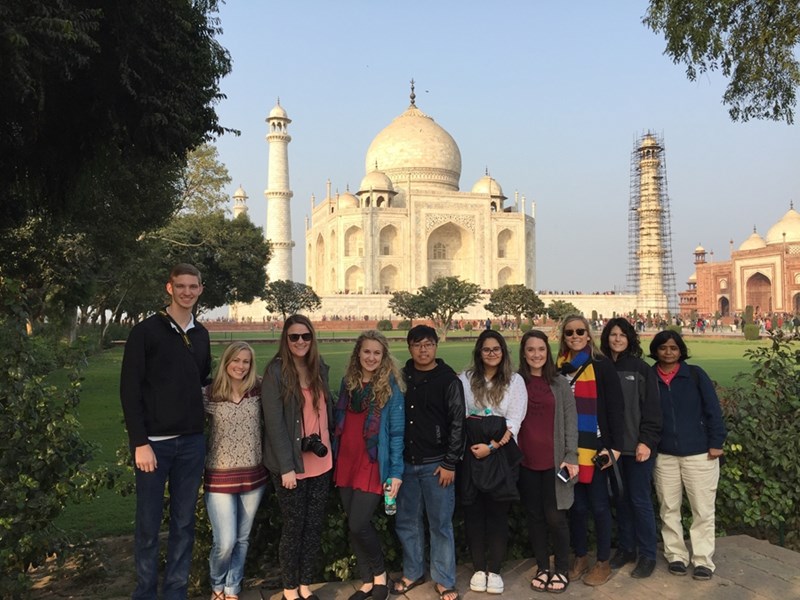
The Bumpers College group participating in the agricultural International Programs trip to India included (from left) Paul Wolf, Macie Kelly, Taylor Pruitt, Tara Harris, Steven Thao, Belkins Tejiera, Jordan Nichols, Molly Claire Laws and Department of Crop, Soil, and Environmental Sciences professors Mary Savin and Vibha Srivastava.
Students from various disciplines recently participated in the Dale Bumpers College of Agricultural, Food and Life Sciences' international experiential learning program in India.

Jordan Nichols, Tara Harris, Macie Kelly and five other students joined Department of Crop, Soil, and Environmental Sciences professors Mary Savin and Vibha Srivastava on a faculty-led trip over the January intersession.

"India is nothing like any other culture," said Nichols, a master's degree student in agricultural economics. "India is a powerhouse in agriculture. It introduces students to the challenge of agriculture that you wouldn't see here in the U.S."

"They had such great hospitality," said Harris, a sophomore from Newport majoring in apparel merchandising and product development with a minor in agricultural business. "Everything they had, had some ornate design, and for some reason, they really liked taking selfies with us."

The Bumpers College program combines lectures with hands-on learning experiences to give students an understanding and practical knowledge of the lifestyles within India, and the different methods within agriculture and society India is using to further develop the country.

"India has an enormous, increasing and overwhelmingly younger population of 1.2 billion," Savin said. "Agriculture is an important sector of the economy, especially for rural citizens, and the country is an important exporter of agricultural products. Students gain a deep appreciation for the culture, challenges faced by Indians and approaches undertaken to meet challenges by going to and personally interacting with the people of India."

"Overseas, India was a very influential trip for me, my first influence experiencing another culture," said Kelly, an agricultural education major from Mountain Home. "You leave America, something you are accustomed to and the trends and modernism here, and you go to a culture such as India - it's honestly amazing to see the different ways people operate overseas."

"When I started this trip, my expectations were that India is dirty and overpopulated, but very rich in culture," Nichols said. "However, coming back, I have learned that the people there are unified in their pursuit to become a developed country. The people are very devoted. They finish what they start, and non-profits and religious groups are doing a lot of work to help."

The India program was one of the few Bumpers College offered during the January intercession.
"January was a good time," Harris said. "It was not too cold, and it was not too hot. It allowed us to experience things that we may not have gotten to experience in a trip during the summer."

Students were exposed to multiple cultural experiences, visiting Delhi, Agra and Jaipur.

"I was very happy that we could provide a broad view of Indian agriculture and food industry by visiting big and small farms, research institutes and industries, and by interacting with farmers and their families, students and faculty, and industry professionals," said Srivastava. "Our students experienced urban and rural cultures and the hospitality of Indians at multiple locations. We also experienced the rich history of India by visiting several monuments and palaces."

"If you want a unique agricultural experience, this is the place to go," Nichols said. "This trip is perfect for agricultural economics students, plant science students, crop, soil and environmental science students, as well as agricultural communications students. If you want to learn about the world of agriculture, this shows scope, and that the dynamic is different from the U.S."

Experiences for the group included lodging at the Umaid Bhawan hotel, visiting the University of Delhi South Campus and Dayalbagh Educational Institute, touring an active sugar factory and a rug factory, visiting major landmarks such as the Taj Mahal and riding elephants to the palace in Jaipur.
"I would 100 percent recommend a study abroad program to anyone who is considering it," Kelly said. "Not only did I learn about the industry that I have selected for a future career, I have learned about agriculture and different practices, and how to put that in a worldly perspective. It's honestly an amazing experience that I would recommend to anyone, no matter where you're going. I believe that if you're interested in a study abroad program, that worldly experience will only make you more prepared for your future."

"Participating in a study abroad program allows students the opportunity to experience first-hand what another country is really like, reflect on their per-conceived notions, build their knowledge base and develop interpersonal skills that allow students to interact successfully as global citizens," Savin said.

"Before returning home, we relaxed at the foothills of Himalayas by the river Ganges that descends from the mountains at that very place to start its long journey through the plains of India and into the Bay of Bengal," Srivastava said. "Overall, I feel the exposure to India, a vastly different country that has emerged as an important world economy, helps students develop a global perspective that will be helpful when they step into the real world."

--
For information about Bumpers College study abroad programs, go to Bumpers' international page. Bumpers College offers faculty-led programs to Belgium, England, China and Mozambique; courses and exchanges in France and Austria; internships in Greece and Scotland; and research in Brazil, the Philippines and Greece.