

This opened the door to reach families in rural villages like Maya Mopan, who have very limited access to healthcare.
In her free time, Roshni explored the country with friends on excursions that ranged from hiking in the rainforest to cooling off underneath a waterfall to snorkeling with sharks, stingrays and manatees.
The hotel that we stayed at in Dangriga, the Chalenor Hotel, is full of countless memories. Breakfast, dinner, health team meetings, and social gatherings all occurred on the rooftop of this hotel. In addition to that, we would all spend most of our evenings hanging out in one room and bonding with the rest of the team. In the course of just three weeks, Chalenor became our home away from home, and we had a great experience living there.

As soon as we arrived in Dangriga, Belize, we started planning for the free health screening clinics we were going to do about twice a week. One of the first things we did was get trained to run all of the stations (BMI, blood glucose, eye exams, blood pressure, health consultation, women’s cancer). We also started advertising for the clinics as soon as we could. This picture is of two health team students making posters for the screening clinics. The posters were placed throughout the town in popular areas so more people would be aware of it.
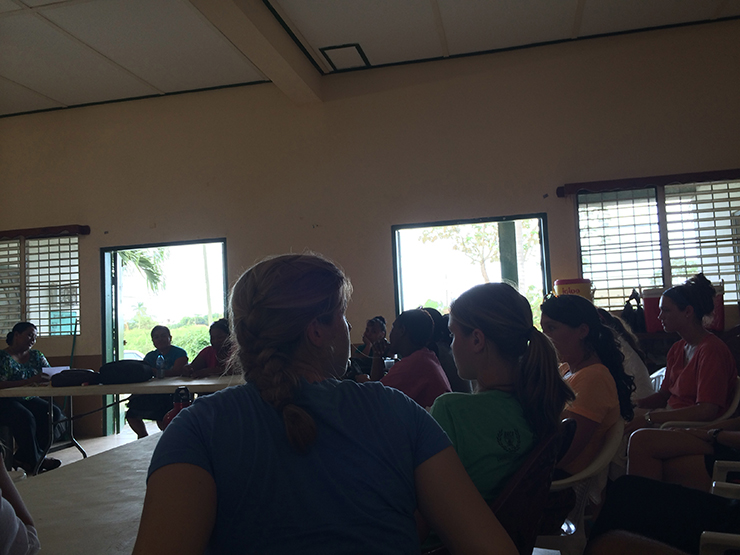
Another project that the health team took on was doing screening clinics in rural villages. This project was more challenging and required more patience because it was something that had not been done in the past. In order to go through with this project, the health team and our faculty leaders met up with the local Red Cross team to discuss our goals. The picture shows the health team in discussion with the Red Cross team of Dangriga. Most of the discussion consisted of planning the logistics behind the project. Establishing this relationship between the health team and the Red Cross community of Dangriga was very important –– not only was it helpful for the time being but it will also be very important for the coming years.
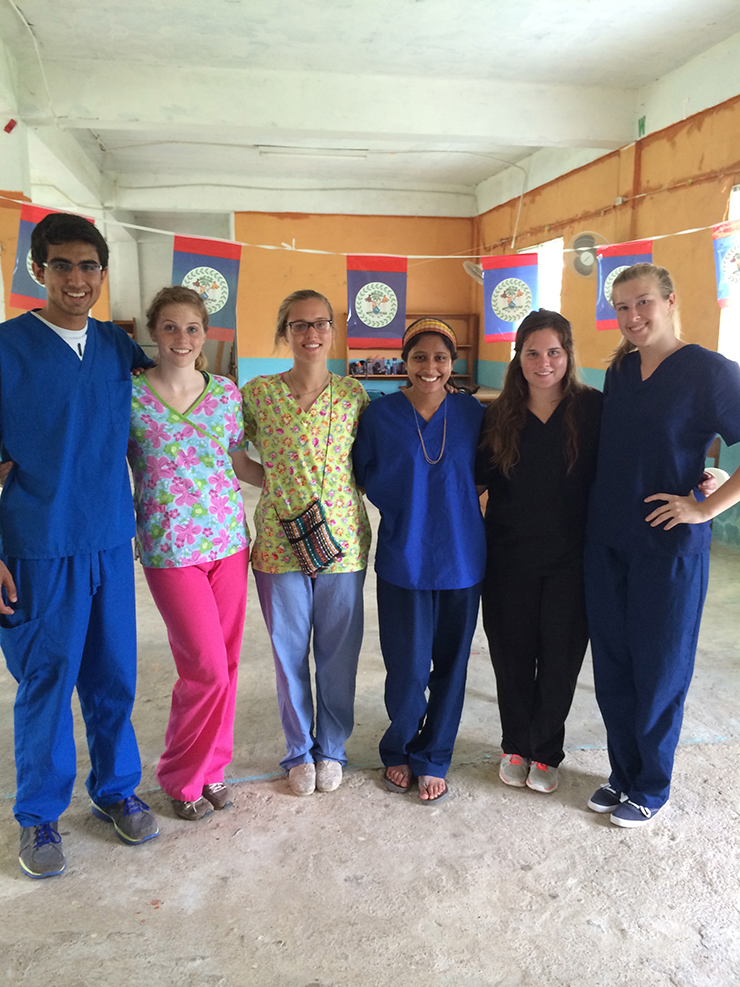
During the second week, we started making the trips to rural villages for the screening clinics. About six students would go on each trip, and this picture is of one of the trips. We went to a Mayan village called Maya Mopan. This was my first rural visit, and it was extremely different from the city of Dangriga. There were no cars, large buildings, or even large groups of people found anywhere. For the screening clinic at Maya Mopan, we set up stations for checking blood pressure and blood glucose, while we also had educational stations about women’s cancer, hygiene and nutrition.

During our time in Maya Mopan, we had the chance to have lunch at a local family’s house. This experience was like none other for us, because the family made an authentic Mayan dish. It was a family of about six people who lived in the house, which was one room approximately 300 square feet. The kitchen, dining area, living room, and sleeping area were all in the same room. Instead of sleeping on beds or cots, they used hammocks, which were tied against the wall. The family that provided us with lunch was very gracious and welcoming.
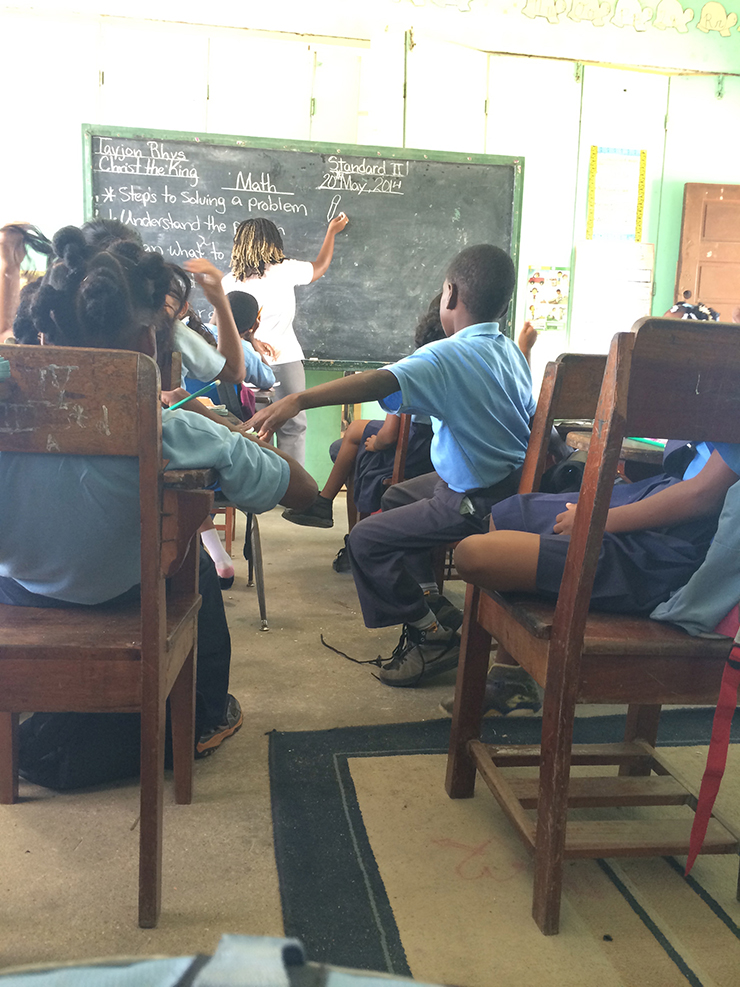
Another project that we also worked on while in Belize was health education at local grade schools. Before we actually started teaching, we all had to shadow a couple of classes to adapt to the different teaching styles that they have there. It was different from the schooling in the United States, because there was no technology involved. The teaching style was also different because it was more lecture based rather than discussion based. Also, this particular school that I shadowed was right next to the beach. In the past, this school had problems due to this particular proximity to the beach, and it is still an ongoing concern. For the time being, the local residents try to maintain the beach by keeping it clean and keeping watch for incoming heavy tides.
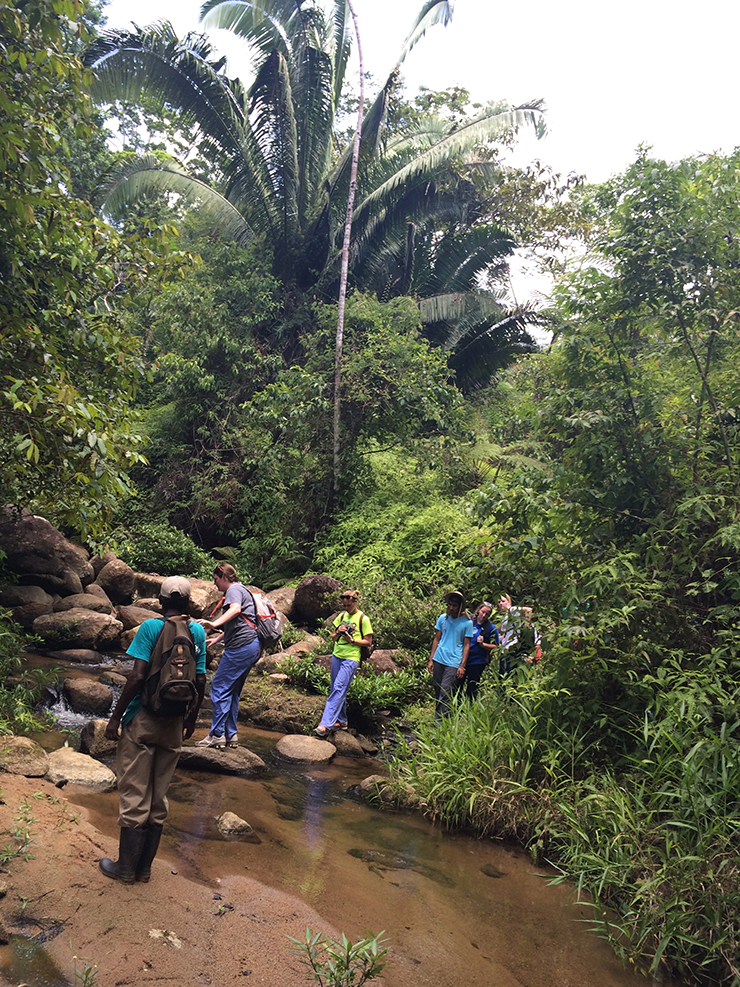
When we weren’t working or prepping for projects during the week, we went on excursions. One of the excursions we went on was a hike through a rain forest called Billy Barquedier National Park. We hiked about a mile up the forest, which was a very hefty hike. We came across various animal noises, jaguar footprints, and creeks. Once we got to the top, we took a turn and started hiking through a downward beaten path. Not even five minutes into this new path, most of us started slipping and sliding in the mud. At one point, I slipped and ended up hanging off of a tree branch about two feet off of the ground. After getting through the rough pathway, we finally got to the bottom and came across a creek, which led to a beautiful waterfall. We spent the next few hours cooling down at the waterfall and enjoying the weather.

Lunchtime was always our favorite time of the day because that was when we got to eat at our favorite local restaurant, Richie’s. It was about a five minute walk from our hotel. Their tostados, burritos and fresh watermelon juice made the perfect midday meal. The best part about this local restaurant was the price. Most of us did not pay more than $3 US for a freshly cooked meal.
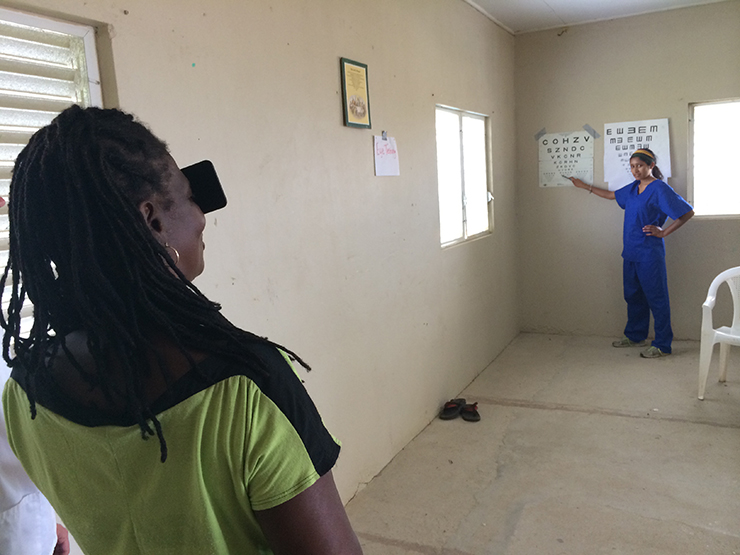
The screening clinic was a project that I was a leader for along with four other students. Each leader took turns being a supervisor during the clinic, and we also rotated working each of the different stations. The station that I am working in this picture is the vision acuity station. We used two different acuity tests for more accuracy. Once they were done with the acuity exam, the women were taken into a separate room for a brief discussion about breast and cervical cancer. The men were taken into another room for further eye examination.
There were several other teams that were a part of the community development program that worked on various projects as well. Some of these teams included engineering, social, business, ecology, and anthropology. Along with working on our own projects, we were highly advised to join the other teams on their respective projects. This picture is of me showing one of the social team members how to check blood pressure.
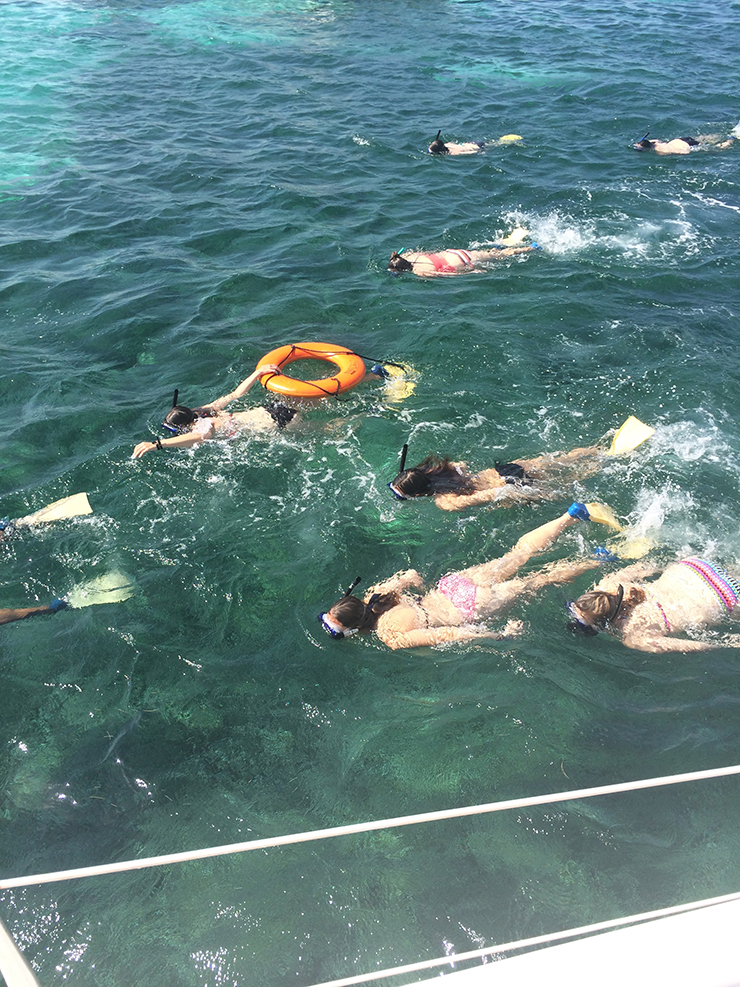
The first weekend that we were there, we went on an excursion to Caye Caulker Island. The island was only about five miles long and was located right next to the Belize Barrier Reef, which is the second longest coral reef system in the world. While we were there, we spent a full Saturday snorkeling. Twenty-three University of Arkansas students and two faculty members all boarded a beautiful sailboat and snorkeled at four different sites, one of them being a shark and stingray alley. Countless sharks and stingrays surrounded us as soon as we entered the water. At the last site that we visited, our tour guide spotted two rare manatees swimming side by side. Our tour guide said that that was his first time in his ten years as a guide to see two manatees swimming in such close proximity. The seven hours we spent snorkeling that day were some of the most breathtaking hours of my life. It was a completely different world down there with all of the beautiful coral, schools of different fish, and sea turtles.
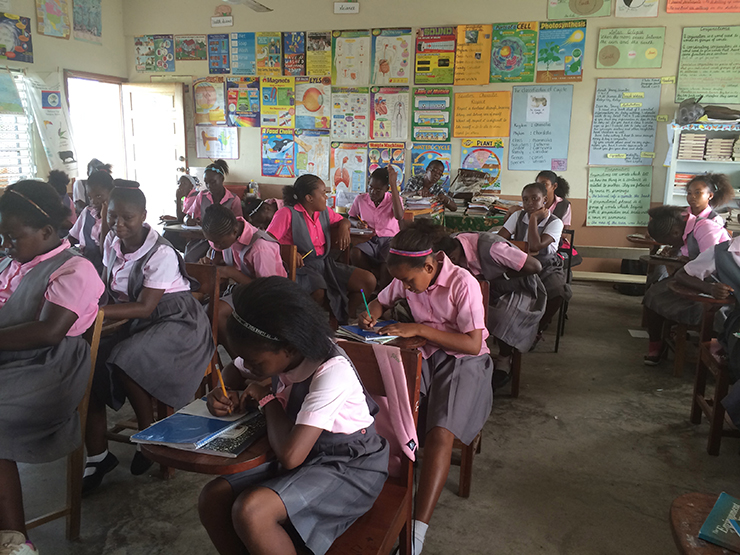
During the third week, I taught a couple of health and personal hygiene classes for standards 6 and 8 along with two other health students. We started each class with an icebreaker, and then we slowly transitioned into asking questions about general health. As this was my first time ever teaching a class of students, I was a little nervous about it. However, my co-health team members were extremely helpful, and we were all able to work together during the discussion. Towards the end of each class, we did anonymous Q&A with all of the students to give them a chance to ask questions they did not feel comfortable asking out loud. This specific picture shows some of the students writing down questions for us to answer.
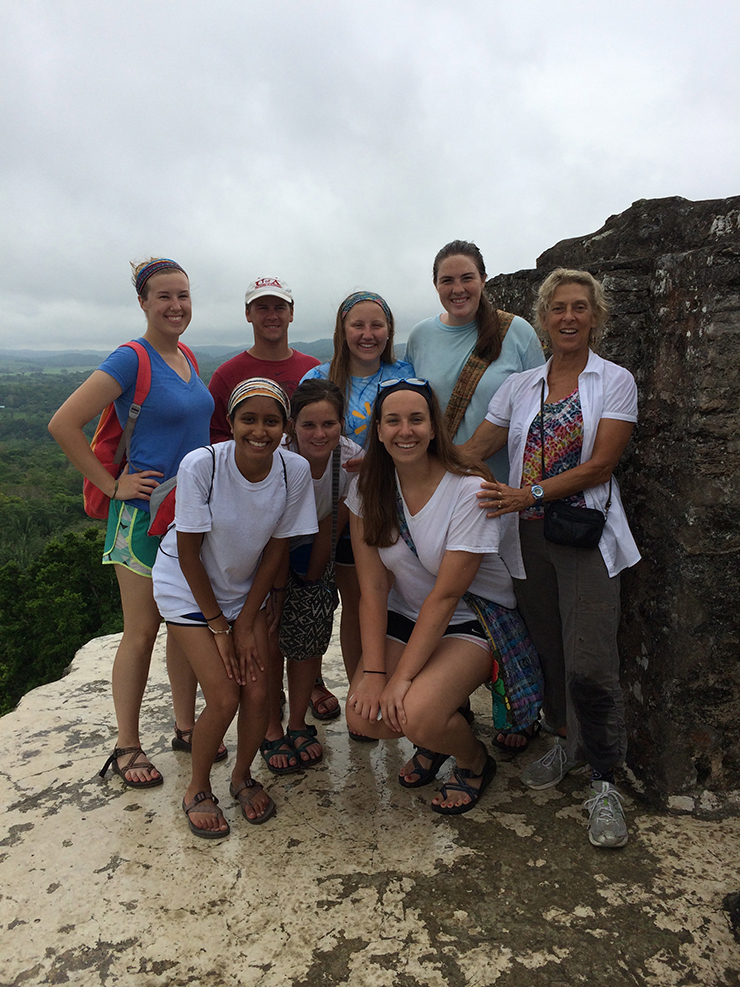
The second weekend of this trip was spent in San Ignacio, Belize. San Ignacio is right next to the border of Guatemala. In fact, we could see the border from our hotel, which was on top of a hill giving us an incredible view of San Ignacio. One of the excursions that we went on during our weekend in San Ignacio was to the Xunantunich Mayan ruins. There were multiple monuments at this archeological site, but the most astounding monument was the El Castillo. El Castillo is in the shape of a pyramid, and it is the second tallest structure in Belize. The view from the very top of this monument was incredibly breathtaking. It was also a little scary standing at the top because there were no safety bars or fences. This is a picture with a few health team members along with one of our faculty leaders, Dr. Henry, on top of El Castillo.
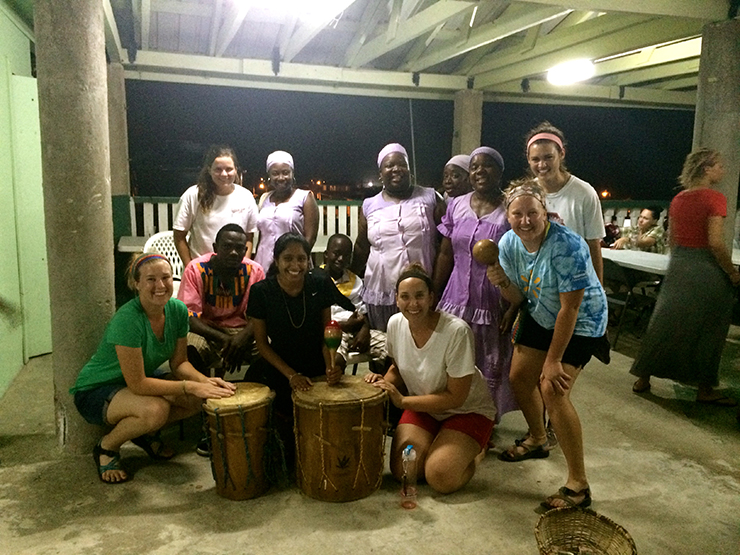
During the last week, a group of traditional Garifuna dancers came to the rooftop of the Chalenor hotel and performed for the entire Belize study abroad group. The performers did an amazing job at depicting Garifuna culture through their dance moves and music. The main components of the music were drums and a few other percussion instruments. They also performed a very popular Belizean dance called the Punta, which puts a lot of emphasis on hip movement. By the end of the night, the Garifuna dancers made everyone in the audience get on their feet and dance with them, and we most definitely danced the night away with them.

The Friday before we departed Belize, we had Community Day at the local park, which was right on the beach. Each respective team set up booths with fun and educational activities for all of the local schools to come and visit. Most of this day was spent playing with young children and dancing on the beach with them. Throughout the day, we also handed out prizes to kids who completed certain activities or answered questions regarding health correctly. This picture shows a few young students showing how to properly brush teeth. Community day was one of my favorite days, not only because the local residents and students came, but also because all of the U of A teams were together for an entire day. It was definitely the best way to end a fantastic and unforgettable trip.
This article was originally p March 6, 2015
---
To learn more about the Community Development in Belize program, visit http://studyabroad.uark.edu/belize
